0%

LED Strip Lighting has moved from decorative accent to a practical tool for retail displays, kitchens, offices, and architectural details. The International Energy Agency’s 2023 lighting update reports that LEDs account for nearly half of global lighting sales. That shift gives buyers more choice, but it also makes supplier comparisons harder. Similar-looking reels can differ in brightness, color consistency, heat management, and driver compatibility.

Lighting researcher Dr. Mariana Figueiro has described light as “the most powerful synchronizer of the human circadian system.” Her point matters to buyers: a strip’s color temperature and control options can affect how a space feels and functions. Yet specifications alone do not tell the whole story. A high lumen-per-meter figure may come with uneven output or unwanted glare. Details matter.

This guide to 10 Best LED Strip Lighting Suppliers for Global Buyers focuses on practical checks, not marketing claims. It considers product range, customization, sample availability, quality documentation, lead times, and after-sales support. Buyers should compare CRI, color-bin consistency, IP rating, dimming behavior, and thermal design. Ask for test reports and a sample reel. Check how the strip performs around corners and inside an aluminum profile. Small differences show up quickly.

A supplier’s website can look polished. That is not proof of reliable production. Some questions will remain. Global sourcing always involves trade-offs, and this list is a starting point—not a substitute for testing the product against your project requirements.
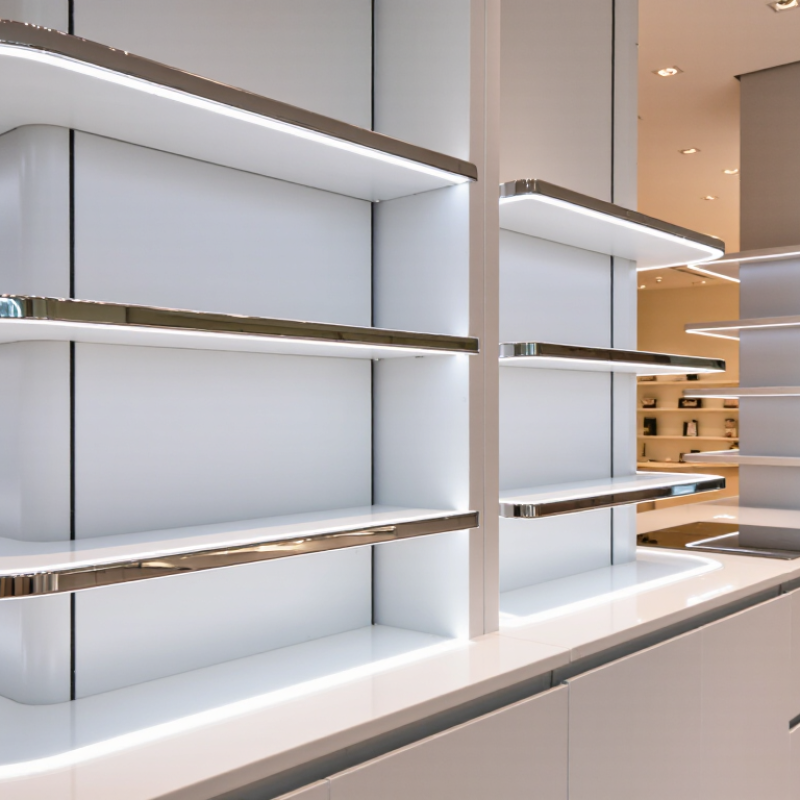
10 Best LED Strip Lighting Suppliers for Global Buyers

LED Strip Lighting Basics: 12/24 VDC, Lumens per Meter, and 2,700–6,500 K CCT

For LED strip lighting, voltage, delivered light, and color temperature should be compared together. A 12 VDC strip draws more current than a 24 VDC strip at the same wattage, which can increase voltage drop over long runs. Check the supplier’s maximum run length and power-feed guidance; a brighter start and dimmer far end is a common installation problem. Compare lumens per meter at the stated operating voltage, not just LED count. Ask whether the figure measures the bare strip or includes a diffuser. Small detail. It matters.

CCT describes whether white light looks warm or cool: 2,700 K is warm, while 6,500 K appears cooler and bluer. CCT does not tell you how naturally colors will look; request color-rendering data as well. ANSI C78.377-2017 provides chromaticity specifications for solid-state lighting, while IES TM-30-20 offers a broader method for evaluating color rendition. The IEA’s 2023 Global Status Report for Buildings and Construction estimates that buildings account for about 30% of global final energy use. That figure is not specific to strip lights, but it underlines why system wattage and actual light output deserve attention. I would still verify test conditions; supplier figures are not always directly comparable.

Buyer Benchmarks: CRI ≥90, IEC 60529 IP Ratings, and LM-80 Data

For global buyers, a supplier’s LED strip specifications deserve closer inspection than a polished product photo. Start with color quality: a CRI of 90 or higher can help preserve natural-looking skin tones, wood grain, and food colors. Yet CRI alone is incomplete. Ask for R9 values and test reports for the actual strip configuration, especially when the lighting will be used in retail displays or hospitality spaces. Small details matter.

Check any stated IP rating against IEC 60529 and the intended installation. An IP65 rating, for example, does not mean every connector, cut end, or power connection is equally protected. Request documentation that identifies the tested assembly, and confirm whether the rating applies after installation. A sample can look convincing on a desk. It may behave differently in a damp outdoor channel.

LM-80 data can help buyers assess LED package lumen maintenance under specified test conditions. It is useful evidence, not a guaranteed service-life figure for the complete strip. Ask how the data relates to the LEDs, drive current, and operating temperature in the quoted product. Compare reports, not just claims. Supplier documents are sometimes unclear, and that deserves a follow-up question. Practical buyers also request batch consistency details, warranty terms, and a sample run before approving large orders.

How to Evaluate Suppliers: Certifications, Customization, MOQ, and Lead Times

When comparing LED strip lighting suppliers, request certificates and test reports for the exact product configuration you plan to buy. A document for a similar strip may not cover its voltage, coating, or power supply. Check that model numbers match across quotations, labels, and reports. Ask for proof. Also confirm who issued each report and when it was updated.

Customization is useful only when the details are clear. Specify LED density, color temperature, CRI, reel length, cut intervals, dimming method, and IP rating. If the strip will sit in a warm cabinet or near moisture, describe the installation conditions, not just the desired appearance. Request a sample and inspect color consistency, adhesive grip, and connector fit. A polished sample can still differ from mass production, so ask how the supplier controls batch variation.

Clarify MOQ by configuration; custom colors or packaging may change the minimum order. Get lead times in writing for samples, production, and shipping, and ask what happens if a component is delayed. Low prices can look convincing, but unclear schedules create costly surprises. I would not judge a supplier by a fast reply alone. Their answers should be specific, even when the answer is “we need to check.”

10 LED Strip Lighting Suppliers Compared by Product Range and Global Reach

Comparing ten LED strip lighting suppliers means looking beyond catalog size. Some offer flexible strips, rigid bars, controllers, and power supplies in one range. Others focus on a narrower selection but provide more customization, such as unusual color temperatures or specific cut intervals. Check whether product specifications include voltage, LED density, brightness, and environmental ratings. Clear details make it easier to match a strip to a display case, workshop, or outdoor installation.

Global reach is not just a map of shipping destinations. Ask about stock locations, quoted lead times, export packaging, and technical support across time zones. A supplier with regional inventory may deliver faster, while a broader manufacturer might offer more variants but require longer production runs. Request sample reels and inspect solder joints, adhesive backing, and color consistency before placing a large order. Small differences show up quickly across a long run.

No supplier leads in every category. That is the awkward part. A wide product range can make selection harder, and fast shipping does not guarantee useful after-sales support. Compare warranty terms, documentation, and communication quality alongside price. For each candidate, record which products are readily available and which require custom production. The shortlist should reflect the project’s actual scale, installation conditions, and delivery window, not just a polished catalog.

Global Sourcing Checklist: Samples, Compliance, Warranty, and Total Cost

Treat a sample as a test, not a showroom favor. Order the exact strip, driver, connector, and diffuser planned for production. Run them at the intended voltage and record watts per meter, color temperature, CRI, adhesive grip, and surface temperature. Small differences matter.

Request current test reports for the destination market, and check that model numbers match the product labels and quotation. A report for a similar model is not proof. Confirm warranty duration, exclusions, replacement procedures, and responsibility for freight. The U.S. Department of Energy’s Energy Saver guidance says LEDs use at least 75% less energy and can last up to 25 times longer than incandescent lighting. Treat these figures as general context, not a strip-specific guarantee.

Calculate total cost per installed meter, including drivers, channels, connectors, shipping, spare stock, installation, and likely replacements. The International Energy Agency has estimated that lighting accounts for about 15% of global electricity consumption, so measured power deserves attention. Estimate running costs using local tariffs and operating hours. Check voltage drop on long runs; a bright one-meter sample may fade at the far end. No spreadsheet catches every site condition. Keep a production sample for comparison after delivery.

10 Best LED Strip Lighting Suppliers for Global Buyers - Global Sourcing Checklist: Samples, Compliance, Warranty, and Total Cost

Shortlisting framework: The entries below are anonymized supplier capability profiles, not named vendors or a verified ranking. Confirm every specification, certificate, warranty term, and price directly with the supplier for the exact product and destination market.

Supplier capability profile Best suited for Sample and technical checks Compliance evidence to request Warranty and service checks Total-cost items to compare
1. Standard flexible-strip manufacturer General indoor residential and commercial projects using single-color or basic color-changing strips.
  • Check voltage, power per metre, LED density, cut intervals, and connector type against the datasheet.
  • Test a sample at the intended run length and dimming level.
Request product-specific test reports and destination-market documentation. For EU sales, check applicable legislation and the supplier’s EU Declaration of Conformity where required. Get the warranty period, start date, exclusions, claim evidence, replacement process, and responsibility for return freight in writing. Compare strip, power supply, connectors, packaging, inspection, freight, duties, and expected installation waste.
2. High-CRI and premium-white specialist Retail, hospitality, display, and other applications where color appearance and consistency matter.
  • Request measured CRI/Ra and, where relevant, R9 and chromaticity data for the exact sample.
  • Compare samples side by side at the same operating conditions and check color consistency between reels.
Ask for traceable photometric or color-measurement reports and confirm that the reported data applies to the quoted configuration. Check whether coverage includes color shift or only complete failure, and how the supplier handles variation between production batches. Include the cost of tighter color selection, batch matching, incoming inspection, and any rejected or unusable reels.
3. RGB, RGBW, or addressable-strip supplier Decorative lighting, signage, entertainment, and installations needing dynamic color or pixel control.
  • Confirm controller protocol, channel arrangement, pixel or segment length, data direction, and maximum specified run length.
  • Test the strip with the intended controller and power supply.
Request electrical safety and electromagnetic-compatibility documents applicable to the complete product and intended market; verify the exact model numbers. Clarify whether controllers, receivers, and accessories are covered separately from the strip and how compatibility issues are assessed. Include compatible controllers, amplifiers, power supplies, signal cabling, injection points, and commissioning time.
4. COB continuous-light strip specialist Installations seeking a visually continuous line of light with minimal visible LED points.
  • Inspect uniformity, color appearance, bend behavior, adhesive, and thermal performance in the intended channel.
  • Confirm cut intervals and electrical specifications from the product datasheet.
Request reports for the exact strip and any supplied driver. Do not treat a component report as proof that a complete lighting assembly meets every local requirement. Ask how the supplier defines failure and whether discoloration, adhesive failure, and light-output degradation are covered. Account for compatible channels, diffusers, drivers, end caps, installation labor, and replacement access.
5. Outdoor and IP-rated strip supplier Outdoor, damp-location, or washdown-related applications where the specified protection level is appropriate.
  • Check the complete assembly, including end caps, joints, and cable entries—not just the strip itself.
  • Verify the stated IP rating and installation conditions for the exact configuration.
Request the test report supporting the claimed IP rating. Under IEC 60529, the IP code describes protection against access, solid objects, and water under specified test conditions. Confirm whether field-cut ends and re-sealed joints remain within the warranty conditions, and document the approved installation method. Include sealing accessories, suitable enclosures, cable glands, corrosion-resistant hardware, labor, and maintenance access.
6. Custom PCB and strip-design manufacturer OEM projects requiring a particular width, layout, copper design, LED arrangement, or connector position.
  • Approve a pre-production sample and controlled drawing before mass production.
  • Confirm dimensions, polarity, cut locations, revision control, and acceptance criteria.
Request material declarations and product-specific reports for the final design; check whether design changes require updated documentation. Define responsibility for tooling, engineering changes, obsolete components, and repeat-order consistency. Compare tooling or engineering charges, minimum order quantity, setup costs, lead time, and the cost of design revisions.
7. Tunable-white strip supplier Projects that need adjustable white appearance, such as ambient lighting or time-of-day scenes.
  • Verify the stated CCT range, channel control method, dimming compatibility, and output at both ends of the range.
  • Test the strip with the planned controller and driver.
Request photometric data and electrical-safety documentation for the exact strip and any bundled control equipment. Ask whether warranty coverage applies to the strip, driver, and controller individually, and how intermittent control faults are diagnosed. Include compatible multi-channel drivers, controls, wiring, commissioning, and any additional power-supply capacity required.
8. Silicone neon-flex supplier Architectural outlines, signage, and applications needing a diffused linear appearance in a shaped housing.
  • Check bend direction and minimum bend radius, end treatment, mounting clips, color uniformity, and specified cut points.
  • Inspect a sample after bending and installation in the intended orientation.
Request reports for the complete flex assembly and confirm that test conditions match the intended use and installation method. Clarify coverage for the housing, end seals, connectors, and any damage caused by bending or incorrect mounting. Compare cost per usable installed length, mounting hardware, corner pieces, end caps, shipping volume, and installation labor.
9. Smart-control and dimming integration supplier Connected lighting projects that require compatibility with a defined control system or dimming method.
  • Test the exact strip, driver, controller, firmware, and control interface as one system.
  • Check dimming range, flicker behavior, reset behavior, and loss-of-connection response.
Request documentation for each supplied electrical or radio-enabled component and verify applicable market requirements for the finished configuration. Check software-support period, firmware update process, replacement compatibility, and which party handles system-level troubleshooting. Include gateways, licenses or subscriptions if applicable, compatible drivers, setup labor, support, and future replacement risk.
10. Project-focused OEM and kit assembler Buyers seeking coordinated kits with strips, drivers, connectors, controls, and project-specific packaging.
  • Request a complete kit sample and bill of materials; test fit, polarity, connections, and operation before approval.
  • Confirm that substitute components require buyer approval.
Request model-specific documentation for each kit component and check whether the assembled system needs additional assessment in the destination market. Identify one accountable contact for claims, define component-level coverage, and agree on spare-parts availability and response times. Compare the complete landed kit cost, packaging, labeling, kitting labor, inspection, freight, duties, and spare-component stock.

Global buyer reminder: IP ratings, declarations, listing or certification marks, and warranty coverage apply only as stated in the relevant test report, certificate, declaration, and contract. Compare landed cost using the same specification, order quantity, shipping terms, destination, and inspection level.

FAQS

How do 12 VDC and 24 VDC strips differ on long runs?

At equal wattage, a 12 VDC strip draws more current. This can increase voltage drop. The far end may look dimmer. Check maximum run length and power-feed guidance.

How should I compare LED strip brightness?

Compare lumens per meter at the stated operating voltage. Ask whether the figure describes the bare strip or includes a diffuser. LED count alone is not enough.

What does CCT tell me about white light?

2,700 K looks warm; 6,500 K appears cooler and bluer. CCT does not show how naturally colors look. Request color-rendering data too. A sample helps.

What documents should I request from a supplier?

Request certificates and test reports for the exact configuration. Check that voltage, coating, and power supply match your order. Compare model numbers across documents and labels. Ask who issued each report and when it was updated.

Which details should I specify for a customized strip?

State LED density, CCT, CRI, reel length, cut intervals, dimming method, and IP rating. Describe the installation, such as a warm cabinet or damp area. Details can be missed.

What should I inspect in a sample reel?

Check color consistency, adhesive grip, connector fit, and solder joints. A polished sample may differ from mass production. Small differences show across a long run.

How can I avoid unclear minimum orders and delivery schedules?

Ask for the MOQ by configuration. Get separate written lead times for samples, production, and shipping. Ask what happens if a component is delayed.

What should I compare besides price and product range?

Check stock locations, warranty terms, technical support, documentation, and communication quality. Fast shipping does not guarantee useful support. No supplier leads in every category.

Conclusion

This guide helps global buyers understand the essentials of LED Strip Lighting, from choosing 12 VDC or 24 VDC systems to comparing lumens per meter and selecting a suitable color temperature between 2,700 K and 6,500 K. It also explains how to assess quality using practical benchmarks, including a CRI of at least 90, appropriate IEC 60529 IP ratings for the installation environment, and LM-80 data for evaluating LED performance over time.

Buyers can use the supplier comparison framework to review product range, customization options, certifications, minimum order quantities, lead times, and international reach. Before placing an order, request samples and verify that product documentation matches project requirements. Consider warranty terms, compliance records, shipping, and other costs together—not just the quoted unit price. A structured sourcing checklist can make supplier evaluations more consistent and help buyers choose lighting products suited to their application, budget, and delivery schedule.

Elowen

Elowen

Elowen is a dedicated marketing professional with a strong understanding of the company’s products and the needs they are designed to meet. Through ongoing research and close collaboration with colleagues across the business, Elowen turns product knowledge into clear, practical insights for......