0%

Choosing LED Light Strips in 2026 means looking beyond color and price. Brightness, color quality, power requirements, and installation conditions all shape how a strip performs. There is a lot to compare. A bright strip can still make a kitchen counter feel harsh if its color temperature is wrong. For a gaming desk, smooth dimming and reliable color effects may matter more than maximum output. Check brightness ratings, measured in lumens, and look for a color rendering index suited to the task. Small details count.

Start with the space. Measure the run, note where the power supply will sit, and check whether the strip needs to bend around corners. For kitchens or bathrooms, verify the product’s protection rating and follow its installation guidance; not every strip is suitable for damp areas. Confirm voltage, controller compatibility, and dimmer support before buying, especially when connecting multiple sections. Adhesive backing may struggle on dusty, textured, or warm surfaces, so clean and dry the area first. Specifications can be confusing, and marketing terms do not always make comparisons easy. That part deserves a second look. This guide explains how to assess LED Light Strips by use case, technical features, and practical setup. The right choice is the one that fits your space, works with your equipment, and delivers the light you actually need—not simply the most impressive product description.
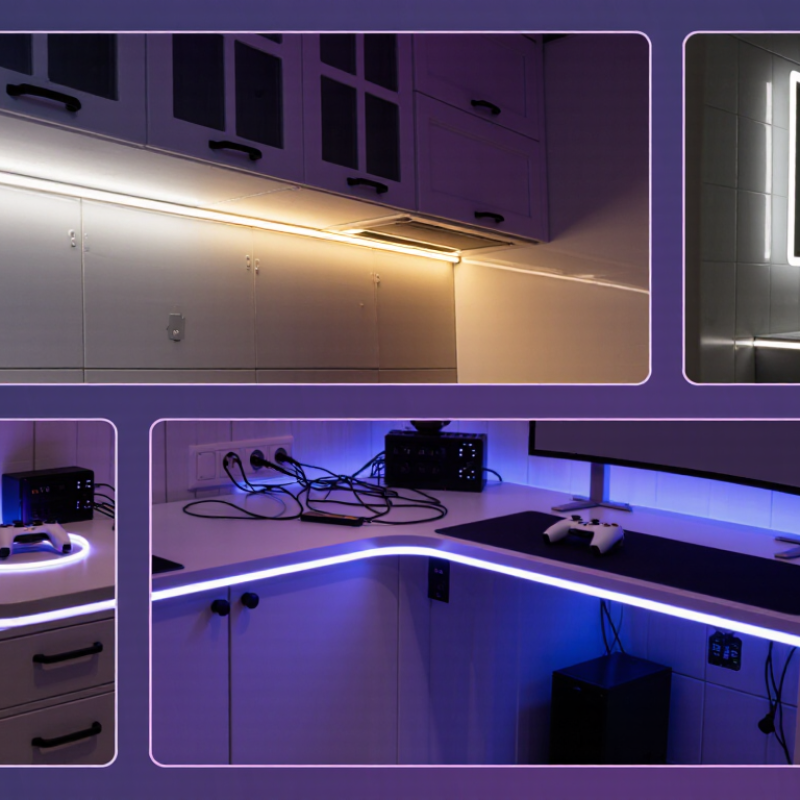
How to Choose LED Light Strips in 2026

Identify the Lighting Purpose and Installation Environment

Before comparing LED light strips, decide what the light needs to do. A strip under kitchen cabinets should brighten a work surface, not merely create a colorful glow. Check its brightness and color rendering, especially if you often prepare food there. For a bedroom shelf or a recessed ceiling edge, softer output may feel more comfortable. Warm white can make a room feel relaxed, while cooler white often suits focused tasks. Still, color preferences are personal; a specification sheet cannot predict how a shade will look against your paint.

The installation environment matters just as much. Measure the full run, note every corner, and locate a reachable power outlet before ordering. Dusty, damp, or outdoor locations need a strip and connectors rated for those conditions. Moisture changes everything. On a dry wall, clean the surface and let it dry before applying adhesive; textured paint may weaken the bond. Check that the strip can be cut only at its marked points, and plan how connectors will cross gaps. Leave room for ventilation around the power supply, since trapped heat can shorten component life. I once underestimated how visible a power cable would be. That small detail changed the whole installation plan. When wiring or mounting requirements are unclear, follow the product instructions or ask a qualified installer.

Compare Strip Types, Brightness, Color, and Control Options

How to Choose LED Light Strips in 2026

Compare strip types, brightness, color, and control options before choosing a strip for a shelf, desk, or kitchen. SMD strips use visible individual LEDs and suit many general lighting projects. COB strips create a more continuous line of light, which can look cleaner under a cabinet. Check the strip’s width and cutting marks, too; a perfect color temperature won’t help if it cannot fit the channel. Details matter.

Compare brightness in lumens per meter, not just watts, and consider how close the strip sits to the surface. A bright strip behind a diffuser may feel softer, while exposed LEDs can create distracting dots. For white light, choose a color temperature that fits the room: warmer tones often feel comfortable in living spaces, while cooler light can make task areas appear crisp. RGB strips offer changing colors, but RGBW models add a dedicated white LED for more useful everyday white light. Check the controller’s dimming range, app or remote options, and compatibility with your power supply. For longer runs, voltage drop can make the far end look dimmer, so verify recommended run lengths before buying. These numbers can be confusing, and product specifications are not always presented consistently. Leave a little room for testing.

How to Choose LED Light Strips in 2026 - Compare Strip Types, Brightness, Color, and Control Options

Compare common LED strip types by their light output characteristics, color options, and control needs. Actual performance varies by model, LED density, power, and installation conditions.

Strip Type Brightness and Light Quality Color Options Typical Controls Best Suited For What to Check Before Buying
SMD 2835 White Available in a broad range of brightness levels. Single-color versions can provide efficient, even general or task lighting when the LED density is adequate. Usually one white color temperature per strip, such as warm, neutral, or cool white. Compatible dimmer or controller matched to the strip’s voltage and dimming method. Under-cabinet lighting, shelves, coves, and other applications needing practical white light. Check lumens per meter, watts per meter, color temperature, color-rendering rating (CRI), and whether a diffuser is needed to hide visible LED points.
COB White Closely spaced light points create a nearly continuous line of light. Brightness varies by product and power rating. Typically a single white color temperature; tunable-white versions are also available. Compatible white-light dimmer; tunable-white models need a controller designed for their channels. Visible installations, shallow channels, and applications where a smooth, dot-free appearance is important. Compare rated lumens per meter and watts per meter. Confirm cut points, minimum bend radius, voltage, and whether the strip needs a heat-dissipating channel.
Tunable White (CCT) Brightness depends on the model; output may change as the strip shifts between warm and cool white. Adjustable white color temperature, commonly controlled by blending warm-white and cool-white LEDs. Two-channel CCT controller, compatible dimmer, or a supported smart-lighting system. Rooms where the white tone should change for different tasks or times of day. Check the stated color-temperature range, channel wiring, controller compatibility, and whether both white channels can be dimmed together.
RGB (often SMD 5050) Can produce saturated colors by mixing red, green, and blue. Mixed RGB white is generally less suitable than a dedicated white LED for accurate, high-quality white illumination. Many mixed colors; the strip itself may not include a dedicated white LED. RGB controller. Smart or app-based control depends on the included or separately purchased controller. Accent lighting, decorative effects, and color-changing displays. Check whether a separate white channel is present, controller channel compatibility, maximum run length, and power requirements.
RGBW Color effects plus a dedicated white channel. Dedicated white generally gives a more useful white-light option than mixing RGB alone. RGB colors and a separate white LED channel; white color temperature varies by model. RGBW-compatible controller with the correct channel layout and voltage. Spaces needing both colored effects and functional white lighting from one strip. Confirm whether the white channel is warm, neutral, or cool; check controller compatibility, lumens per meter for white, and total power draw.
Addressable RGB / RGBW Brightness and appearance depend on LED density and the specific product. Individual pixels or groups can show different effects along the strip. Programmable colors and animations; addressable RGBW versions may also offer a dedicated white channel. Addressable controller matched to the strip’s data protocol, wiring, and power requirements. Animated accents, signs, gaming setups, and installations requiring independently controlled sections. Verify the data protocol, pixel or segment spacing, controller support, power injection guidance, and whether the strip is 5 V, 12 V, or another specified voltage.

Buying tip: For brightness, compare the manufacturer’s rated lumens per meter rather than LED count alone. Match the power supply to the strip’s voltage and total wattage, allow suitable headroom, and check voltage-drop guidance for long runs. For damp or outdoor locations, confirm the stated ingress-protection rating and use compatible connections.

Calculate Length, Voltage, and Power Requirements

How to Choose LED Light Strips in 2026
Calculate Length, Voltage, and Power Requirements

Measure the route along the actual surface, including corners and cabinet edges. A paper sketch helps, but it can miss a small offset. Add a little extra length for routing; do not assume every strip can be cut anywhere. Check its marked cut points. Then note the strip’s rated voltage and keep it consistent with the power supply.

Power is based on both length and consumption per metre. For example, a five-metre strip rated at 10 watts per metre needs 50 watts. A supply rated around 60 watts gives useful headroom, provided its output voltage matches the strip. Check the product’s stated limits, too. Long runs may look dimmer at the far end because of voltage drop; shorter sections or power feeds at more than one point may help. The best layout is not always the neatest on paper.

Tips: Measure twice, especially around corners. Keep connections accessible, and avoid loading a supply to its full rated capacity. If the strip’s wattage or maximum run length is unclear, check the technical sheet before buying.

Check Safety Ratings, Durability, and Smart Home Compatibility

Before buying, inspect the strip’s safety markings, power-supply rating, and installation instructions. Look for certification from a recognized testing organization, and confirm that the adapter’s output matches the strip’s requirements. A mismatch can cause flickering, excess heat, or early failure. For kitchens or bathrooms, check the product’s water-resistance rating and whether it applies to the strip, connectors, and power supply. One protected section does not make every connection splash-safe. Keep the power supply ventilated, and avoid pressing the strip tightly against fabric or other heat-trapping surfaces. I admit, bright packaging can still sway me; it is not a useful safety test.

Durability depends on more than a thick-looking coating. Check the stated operating temperature, cut points, bend limits, and adhesive guidance. Dusty paint, textured walls, and sharp corners can weaken a bond, so test a short section before fitting the full run. Leave room for heat to escape, especially inside a cabinet. For smart control, verify which connection method the strip uses, such as Wi-Fi, Bluetooth, or a hub-based protocol. Then confirm that its controller works with your preferred home system and supports the features you need, like dimming or schedules. App compatibility can change, and setup is not always as smooth as the product page suggests. A little uncertainty remains, so save the instructions and check updates before installation.

LED Light Strip Water-Protection Ratings

Use the IPX rating to compare water-ingress protection when choosing a strip for a room, kitchen, or outdoor location. The chart shows classification levels, not a linear measure of performance. IPX ratings cover water only; the first IP digit, when present, refers to protection against solid objects and dust.

For smart-home use, separately check that the controller supports your preferred platform and wireless protocol, and that its voltage and power requirements match the strip.

Compare Costs, Warranties, and Product Support

In 2026, choosing LED light strips is not just about the price per roll. Compare the full cost, including the power supply, connectors, mounting clips, and dimmer. A low shelf price can rise once you add what your setup needs. Check the strip length and brightness, too. For a kitchen shelf, measure the run and note where outlets sit before ordering. Keep the receipt.

Tips: Read the warranty before checkout. Check how long coverage lasts and whether it includes the power supply, color changes, or only complete failure. Ask whether you pay shipping for a replacement. Ask before buying. Save the product listing and order confirmation; support teams may request photos or a batch label.

Product support matters when a strip flickers or an adhesive backing loosens. Look for clear setup instructions, accessible troubleshooting, and a way to reach a real support team. It is easy to underestimate the time needed to compare these details. I might still choose the cheaper option, but I would want to know what happens when one section stops working. A written warranty is more useful than a vague promise.

FAQS

How should I choose a light strip for a kitchen counter?

Check brightness and color rendering so food and work surfaces appear clear. A colorful glow alone may not provide enough task light.

Which light color works best in bedrooms and work areas?

Warm white often feels comfortable in bedrooms. Cooler white can suit focused tasks, but paint and personal taste affect the result.

What should I measure before buying a strip?

Measure the actual route, including corners and cabinet edges. Mark the outlet location and leave extra room for cable routing.

Can any light strip be cut to fit?

No. Cut only at marked points, and check whether connectors can cross gaps. Details matter.

What should I consider for damp or dusty locations?

Choose strips and connectors rated for the conditions. Moisture changes everything. Follow the installation instructions if requirements are unclear.

How do SMD and COB strips differ?

SMD strips show individual LEDs and suit many general projects. COB strips create a more continuous line, which may look cleaner under cabinets.

How much power does a light strip need?

Multiply its watts per metre by the strip length. A five-metre strip rated at 10 watts per metre needs 50 watts. A matching 60-watt supply offers some headroom.

Why might a strip look dimmer at one end?

Long runs can experience voltage drop. Shorter sections or power feeds at multiple points may help. Check the recommended run length before buying.

How can I avoid installation problems?

Clean and dry the mounting surface, allow ventilation around the power supply, and keep connections accessible. I once underestimated cable visibility; the plan changed.

Conclusion

Choosing LED Light Strips in 2026 starts with understanding where and why you plan to use them. Consider whether the goal is task lighting, accent lighting, or a decorative effect, and assess the installation environment, including available space and exposure to moisture or heat. Compare strip types, brightness levels, color options, and control methods to find a setup that suits both the room and your preferred experience.

Before buying, measure the installation area and calculate the required strip length, voltage, and power capacity so the components work together reliably. Check safety ratings, durability, and compatibility with your existing smart-home setup. Finally, compare the total cost, warranty terms, and available product support. Taking these factors into account can help you select lighting that fits your needs, performs consistently, and offers good value over time.

Elowen

Elowen

Elowen is a dedicated marketing professional with a strong understanding of the company’s products and the needs they are designed to meet. Through ongoing research and close collaboration with colleagues across the business, Elowen turns product knowledge into clear, practical insights for......