Featured CE Certified Programmable LED Strips & Controllers
Explore our SGS-verified, CE-compliant addressable LED strip series, high-density FCOB pixel ribbons, and multi-protocol SPI/PWM/DMX smart controllers engineered for commercial, architectural, and OEM projects.
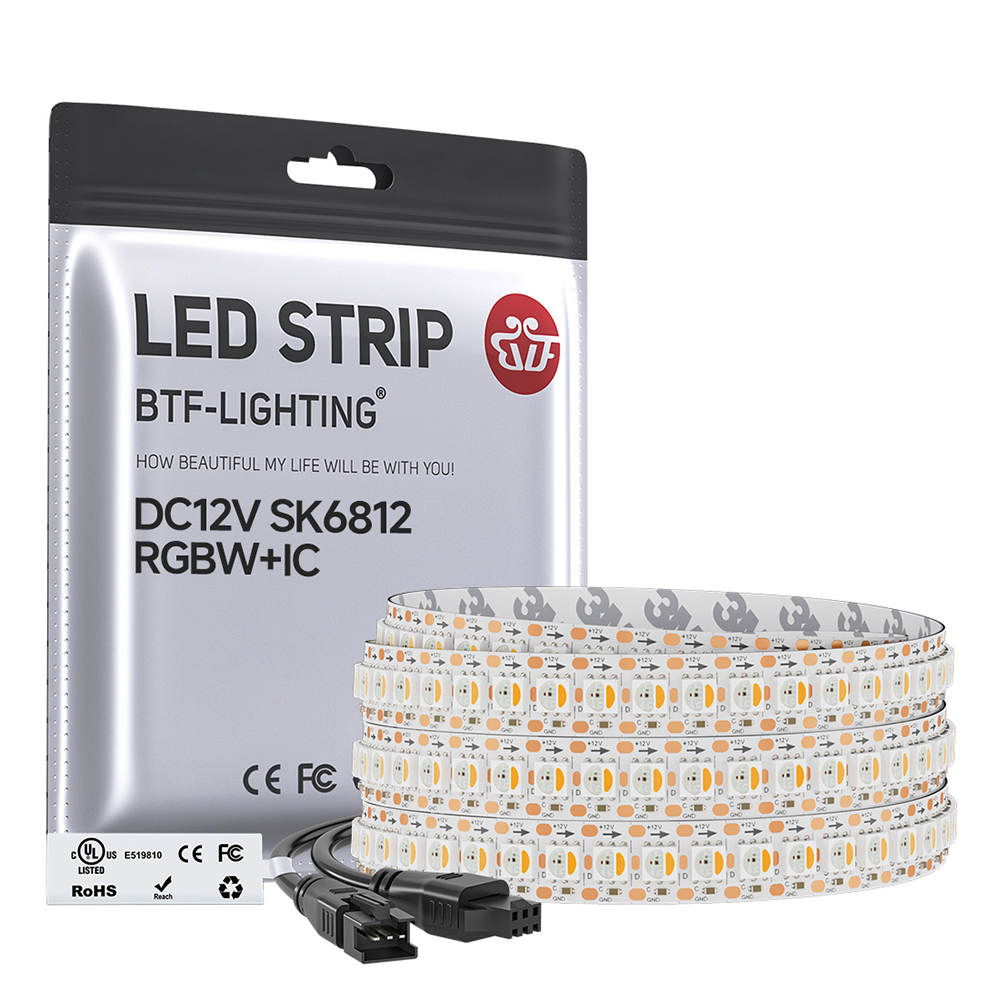
New Hot Addressable Individual RGBWW RGBCW 144LED/m SK6812 12V RGBW
Per-pixel addressable RGBW strip with dedicated warm/cool white channels. High 144 LEDs/m resolution for seamless animation rendering.
View Product Technical Specs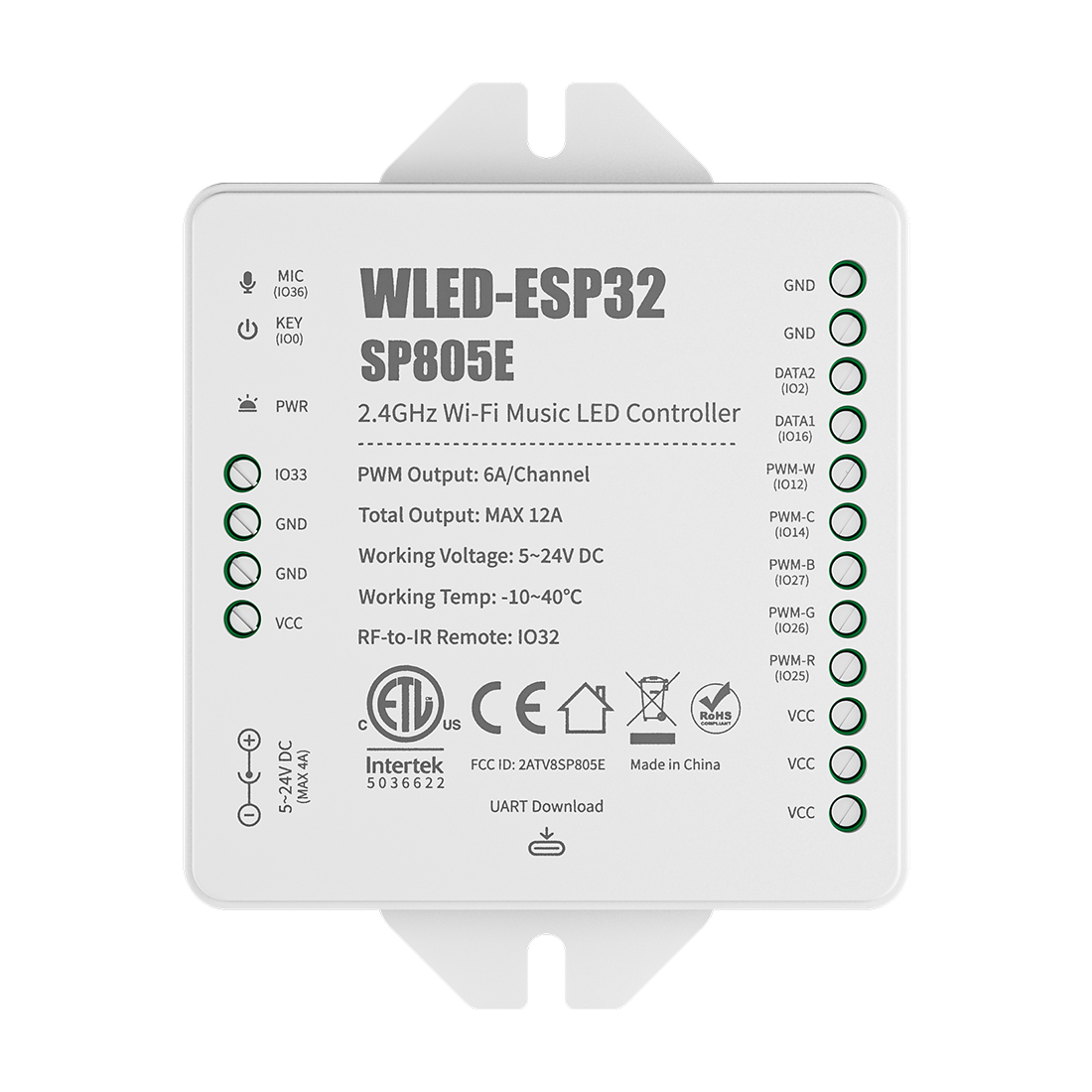
ETL Listed ESP32 WLED SP805E With Mic DIY Dynamic Modes Controller
Advanced ESP32 architecture running WLED firmware. Integrated microphone for real-time acoustic music synchronization, USB-C UART flashing, and dual PWM/SPI support.
View Product Technical Specs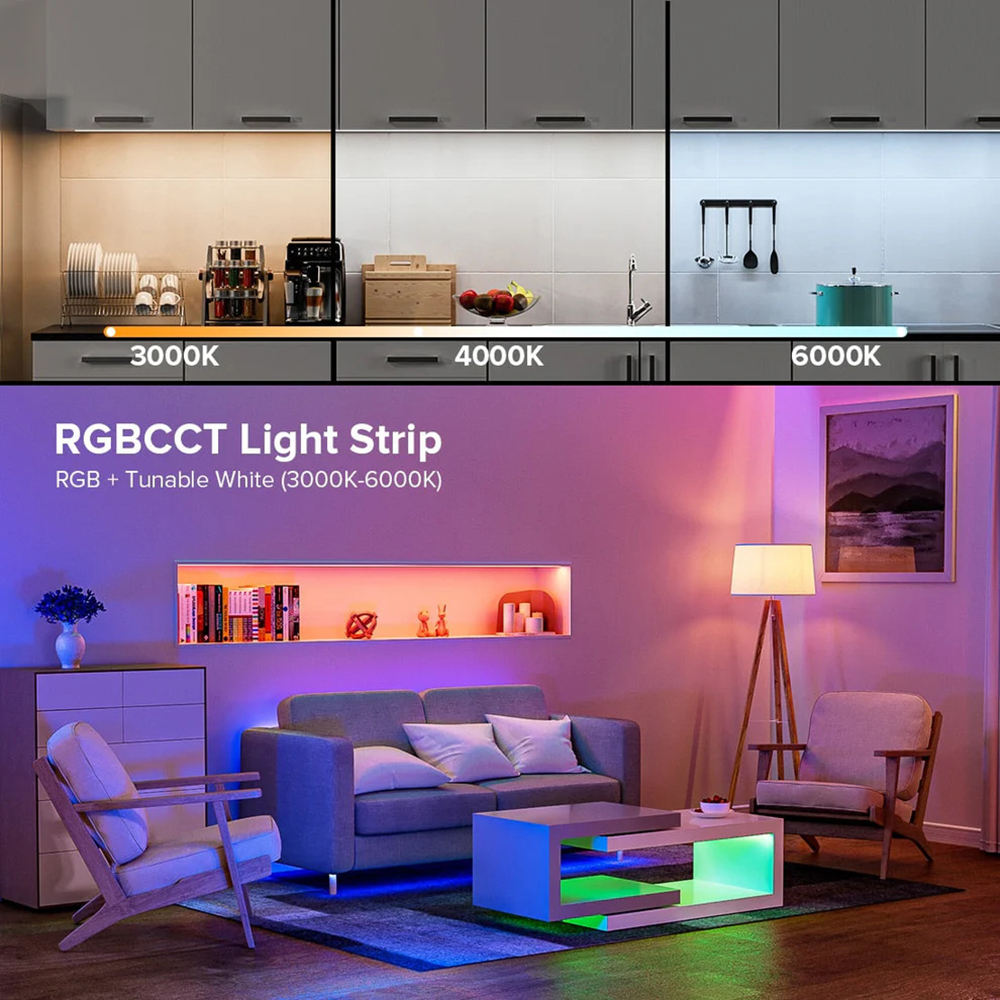
6Pin 12mm DC24V 840 LEDs RA90 Dimmable Flexible FCOB RGB CCT Strip
Flip-Chip on Board (FCOB) continuous lighting line. Features 840 chips/m delivering spotless linear illumination with high RA90 color fidelity.
View Product Technical Specs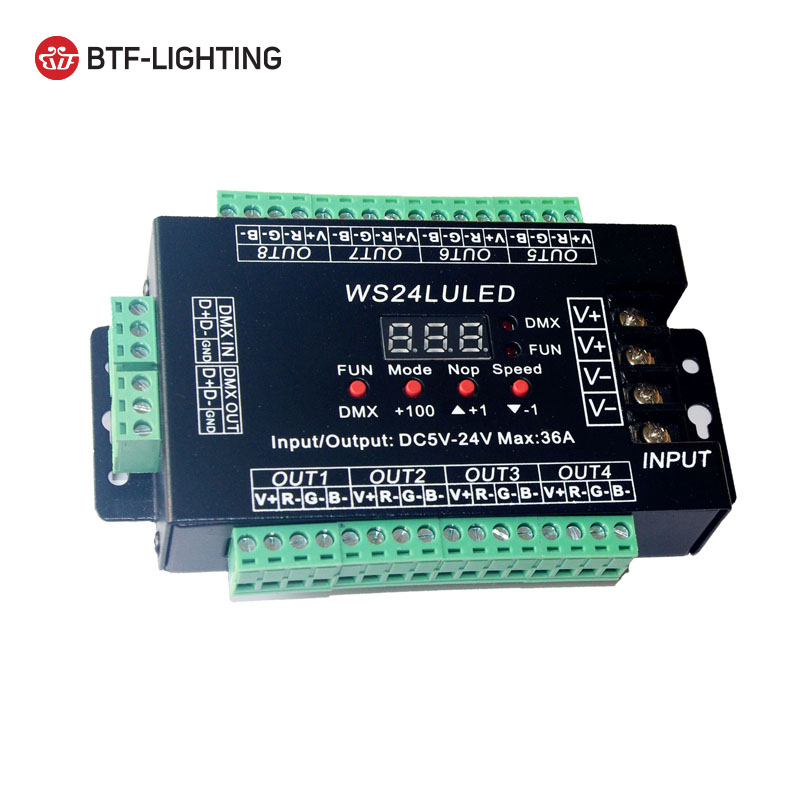
DC5V-24V 36A 8-Port RGB Digital Display Decoder 24CH DMX512 WS24LU
Heavy-duty 24-channel DMX512 to PWM decoder for stage, studio, and commercial building automation. High 36A power capacity with visual digital parameter display.
View Product Technical Specs
Tuya WiFi Alexa Google Home Smart RGBCCT Dimmer LED Controller
Universal smart home lighting controller compatible with Tuya Smart / Smart Life apps, Amazon Alexa, and Google Assistant voice automation.
View Product Technical Specs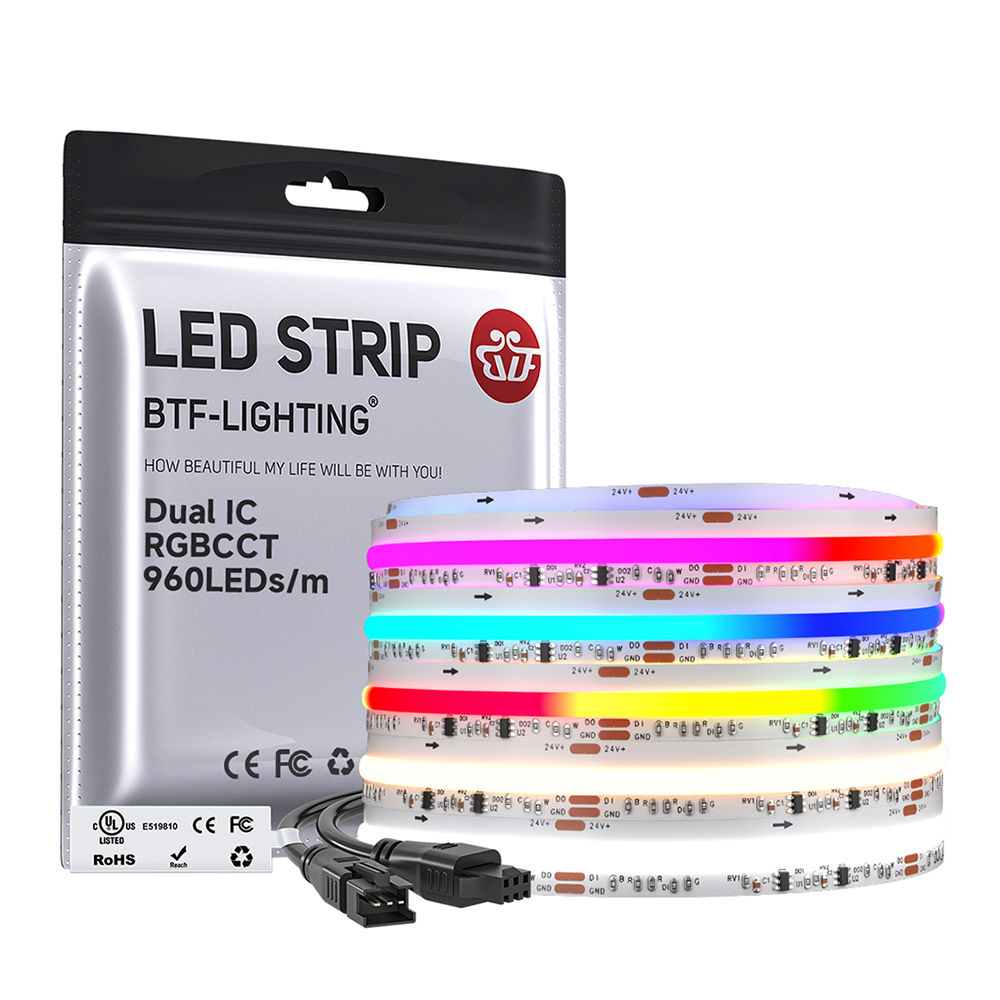
High Density FCOB DC24V 960LEDs/m RGBCCTIC WS2811 Addressable Strip
Next-generation addressable COB strip combining 960 chips/m density with embedded WS2811 pixel control for fluid dynamic color chasing with no spot diffusion needed.
View Product Technical Specs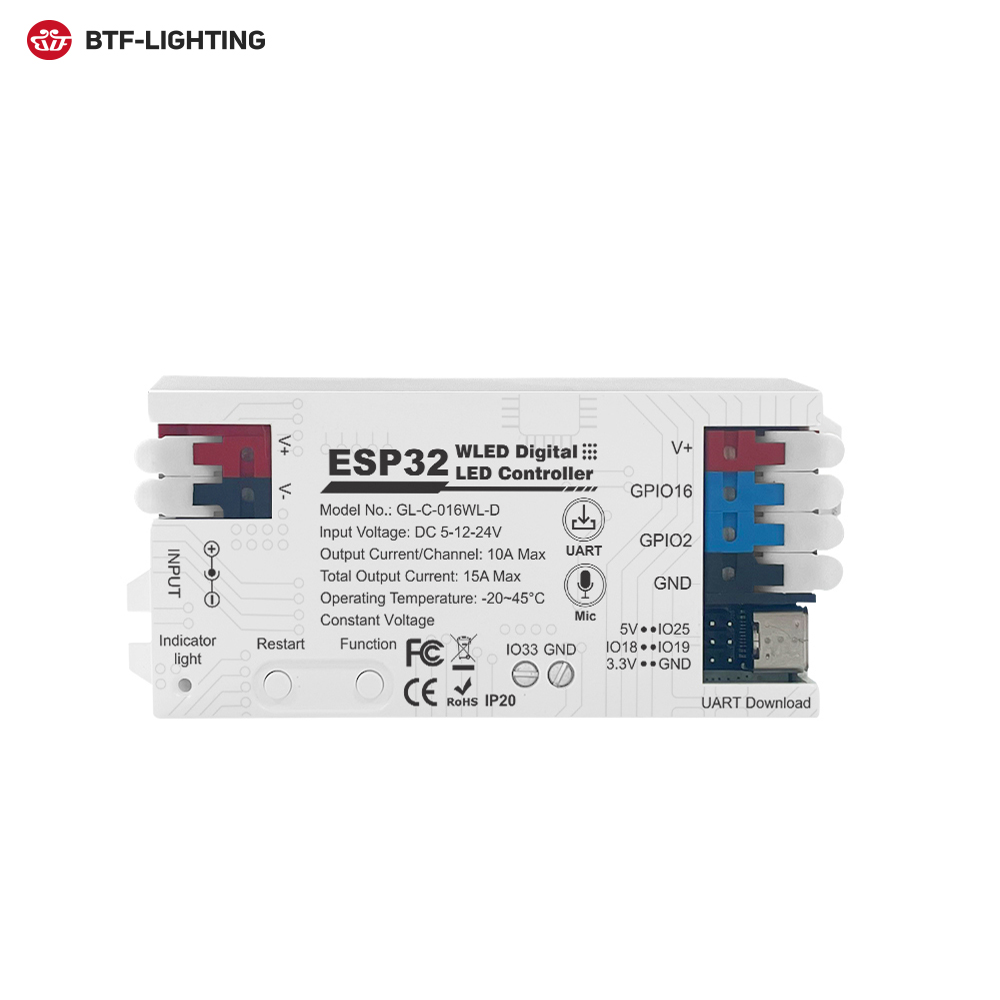
ESP32 WLED WiFi Addressable Pixel Controller SP803E/SP805E Compatible
Industrial-grade ESP32 pixel driver with USB-C programming port, web UI controls, and multi-protocol support for WS2812B, WS2815, and SK6812 ICs.
View Product Technical Specs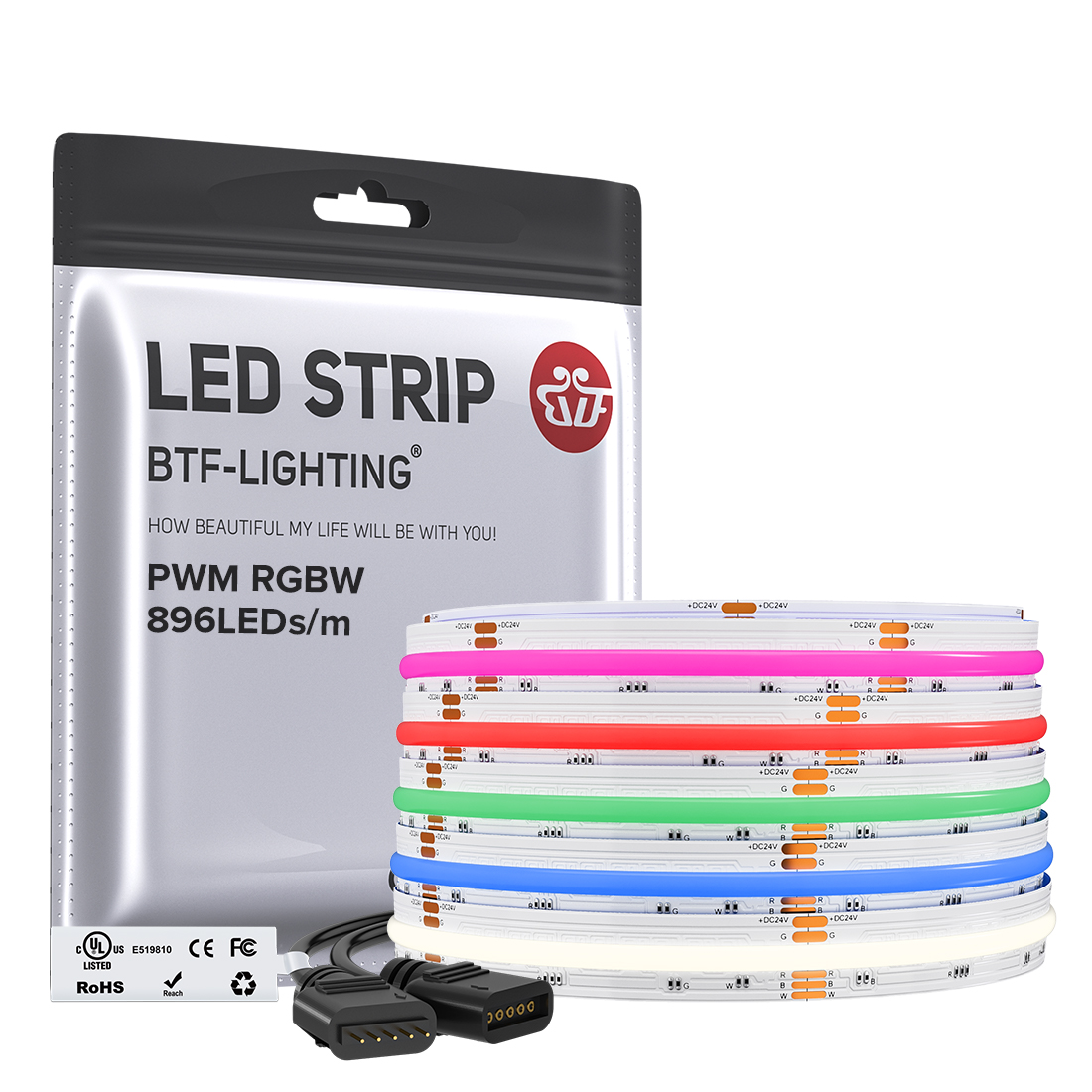
UL/CE Listed DC12V/24V FCOB RGBW 896LEDs/m Uniform Linear Strip
High-density 896 LEDs/m FCOB tape certified under UL and CE standards. Delivers continuous, spot-free RGB plus dedicated warm/cool white lighting.
View Product Technical SpecsCE Certification & Quality Assurance Standards for Global Exporters
An engineering analysis of European market compliance, electromagnetic compatibility (EMC), Low Voltage Directives (LVD), and quality control benchmarks for commercial programmable LED lighting arrays.
In global B2B procurement, sourcing CE certified programmable LED strips requires going beyond a decorative vendor catalog. Programmable or addressable LED systems integrate sophisticated integrated circuits (ICs), continuous pulse-width modulation (PWM) switching, and high-frequency data lines onto flexible printed circuit boards (FPCBs). These complex electronics generate micro-electromagnetic emissions and high thermal output that require rigorous compliance engineering to clear customs, pass electrical audits, and ensure long-term site reliability.
Shenzhen Livdo Lighting Technology Co., Ltd. operates as an SGS-verified manufacturer adhering strictly to European Union directives and international safety frameworks. Key engineering directives governing our programmable LED strip and controller manufacturing include:
- LVD EN 62471 / EN 62031 Safety Mandates: Evaluates photobiological LED safety, insulation resistance, creepage distances, and thermal performance under maximum ambient load to prevent short circuits and operational hazards.
- EMC EN 55015 & EN 61547 Emission Limits: Ensures high-speed digital switching ICs (WS2811, SK6812, WS2815, ESP32 microcontrollers) do not inject radiative or conductive radio-frequency interference back into local power grids or wireless networks.
- RoHS & REACH Hazardous Substance Elimination: Strict testing of solder joints, phosphor silicone encapsulants, and 3M adhesive tapes to ensure complete absence of lead, cadmium, mercury, and polybrominated biphenyls.
- ETL & UKCA Cross-Market Alignment: For North American and British distribution, select controller units (such as our ESP32 WLED SP805E and smart PWM series) carry ETL and UKCA markings, accompanied by formal Declarations of Conformity (DoC).
Selecting the Optimal Programmable LED Protocol: WS2811, WS2815, SK6812 & FCOB SPI
A detailed comparative evaluation of data protocols, operating voltages, signal failover mechanisms, and physical phosphor encapsulation methods to help lighting integrators minimize field failure rates.
A primary failure point in commercial programmable lighting installations stems from selecting an mismatched IC architecture. B2B buyers must evaluate signal redundancy, voltage drop physics, and spatial pixel density against project constraints.
| IC Protocol | Operating Voltage | Signal Lines | Redundancy / Failover | Primary Industrial Application |
|---|---|---|---|---|
| WS2811 | DC12V / DC24V | 1 Data Line (NRZ) | None (Standard Chain) | Long-run architectural perimeter lighting, building facades, linear coves where 3-LED or 6-LED group control is acceptable. |
| WS2812B | DC5V | 1 Data Line (NRZ) | None | Short high-resolution installations, wearable electronics, interior accent displays, custom LED matrix panels. |
| WS2815 | DC12V | Dual Data (DI + BI) | Fail-Safe Breakpoint Resume | Commercial hospitality, retail displays, and high-spec installations where a single LED chip failure must not break downstream signals. |
| SK6812 RGBW | DC5V / DC12V | 1 Data Line (NRZ) | None | Dynamic color-changing combined with true 2700K-6500K functional white lighting (4-in-1 channel control). |
| FCOB SPI (WS2811 IC) | DC12V / DC24V | 1 Data Line | Segment Level | Premium continuous linear chasing, diffuser-free slim profile channels, high-end museum and residential lighting. |
Deep Dive: Single Data vs. Dual-Signal Breakpoint Resume (WS2815 / GS8208)
In standard single-wire digital strips (such as WS2812B or early WS2811 designs), data transfers serially from the controller through each LED's integrated driver logic. If a single bond wire breaks or an internal driver fails due to electrical overstress, all subsequent LEDs down the line lose their data clock and freeze or go dark. This creates costly maintenance calls for high-ceiling or recessed installations.
To eliminate this vulnerability, WS2815 and GS8208 IC architectures introduce a Backup Data Line (BI). The controller sends parallel data signals across both Primary Data (DI) and Backup Data (BI). If Pixel #12 suffers physical damage, Pixel #13 automatically switches its source input to the backup line, preserving downstream animation continuity. Furthermore, running on DC12V significantly reduces current draw ($I = P / V$), suppressing heat generation and mitigating long-run voltage drop.
Flip-Chip on Board (FCOB) vs. Surface Mount Device (SMD) Pixel Density
Traditional SMD programmable strips (e.g., 5050 or 3535 packages) leave physical gaps between LEDs, requiring deep aluminum profiles with thick opal diffusers to achieve a uniform line of light. In contrast, FCOB (Flip-Chip on Board) technology directly bonds bare semiconductor chips onto a flexible copper substrate, encapsulated under a continuous linear phosphor gel matrix.
With chip densities ranging from 720 to 960 chips per meter, FCOB SPI addressable strips deliver completely dot-free dynamic lighting inside shallow 6mm aluminum channels, eliminating unsightly dark spots while maintaining wide 180° beam angles and high color rendering indexes (RA90+).
Future Sourcing & Procurement Trends in Programmable LED Strips
Strategic market analysis for distributors, lighting designers, and importers on emerging hardware technologies, energy efficiency regulations, and smart IoT control integration.
1. Shift Toward 24V & Higher Efficiency Architectures
Global decarbonization policies and EU ErP EcoDesign directives are driving the phase-out of inefficient low-voltage circuits. Sourcing trends show a rapid migration from 5V pixel strips to 24V FCOB addressable arrays. 24V systems reduce line current by 75% compared to 5V systems of equal wattage, minimizing thermal dissipation, allowing longer single-feed runs (up to 10–15 meters without power injection), and cutting copper wire costs across large project installations.
2. Open-Source Firmware & Smart IoT Convergence
Commercial buyers are increasingly shunning locked-in proprietary lighting protocols in favor of open, interoperable ecosystems. Embedded microcontrollers utilizing ESP32 processors running WLED software have emerged as the industry standard for custom installations. Combined with Tuya WiFi, Zigbee 3.0, and Matter-compliant bridges, future-proof LED installations now require controllers that effortlessly interface with DMX512 consoles, Art-Net Ethernet nodes, and voice ecosystems simultaneously.
3. High Color Fidelity (RA90+) & Pure White Integration
While early programmable lighting focused on high-saturation RGB rainbow effects, modern commercial projects require dual-purpose functionality. High-end retail, hospitality, and residential projects demand addressable strips with dedicated Warm/Cool White emitters (SK6812 RGBW or WS2814 4-in-1 chips) possessing a high Color Rendering Index (CRI RA90+, TLCI 95+). Sourcing trend data indicates 40% annual growth in RGBCCT addressable demand over standard RGB formats.
Frequently Asked Questions for Importers & Technical Buyers
Answers to common engineering, compliance, and ordering questions encountered during commercial programmable LED strip procurement.
Q1: What minimum technical documentation should I request for CE compliance?
To verify authentic CE compliance, request a full test report package from an accredited third-party lab (such as SGS or TÜV) covering LVD (EN 62031/EN 62471) and EMC (EN 55015/EN 61547). The manufacturer must also issue an official Declaration of Conformity (DoC) listing the precise model numbers, FPCB revisions, and working voltages matching your shipment invoice.
Q2: How do I calculate and mitigate voltage drop across long programmable strip runs?
Voltage drop occurs due to internal resistance in the copper trace of the flexible PCB ($V = I \times R$). To mitigate brightness loss and color shifts toward red at the end of runs: (1) Select 12V or 24V operating voltages over 5V; (2) Specify heavy 2oz or 3oz rolled-annealed copper FPCBs; (3) Implement dual-ended or intermediate power injection feeds every 5 meters for 5V/12V strips, or every 10 meters for 24V strips.
Q3: What is the MOQ and turnaround time for custom OEM LED strip specifications?
For standard stocked SKUs (e.g., WS2815, FCOB RGBW, standard controllers), MOQs start as low as 2–5 rolls. Custom OEM projects—including customized PCB copper widths (5mm to 15mm), custom CCT binning, buyer-label anti-static packaging, or bespoke firmware programming—typically carry an MOQ of 1,000 to 3,000 meters, with production lead times averaging 10 to 15 working days.
Q4: How does your factory verify IP rating integrity for outdoor installations?
We offer IP20 (indoor dry), IP65 (silicone spray/heat-shrink coating for damp locations), IP67 (silicone tube encapsulation), and IP68 (solid silicone extrusion for submersion). IP67/IP68 batches undergo 100% water immersion testing, salt spray corrosion testing for coastal environments, and thermal shock testing in environmental chambers prior to reel packing.
Q5: Are your SPI smart controllers compatible with Third-Party software like xLights or MadMapper?
Yes. Our Ethernet Art-Net SPI pixel controllers and ESP32 WLED units natively receive DMX over IP (e1.31 / Art-Net) frames. They integrate seamlessly with professional lighting control software including xLights, MadMapper, TouchDesigner, Resolume, and QLC+ for advanced stage show mapping and architectural synchronization.
Q6: What quality control steps prevent LED color binning variations between orders?
We maintain strict MacAdam 3-step Ellipse binning protocols across all single white and CCT chips, and enforce standardized wavelength range specifications for RGB chips (Red: 620-625nm, Green: 520-525nm, Blue: 465-470nm). Spectroradiometers and integrating spheres verify spectrographic output on raw chip arrivals and final assembly reels.
Why Direct Importers Partner with Shenzhen Livdo Lighting
Established in 2014 in Shenzhen, China, Livdo Lighting Technology Co., Ltd. delivers vertically integrated R&D, automated high-speed SMT manufacturing, and direct export supply chain control.
SGS Onsite Audited Facility & Manufacturing Infrastructure
Located in Chuangfu Science Park, Shiyan Street, Shenzhen, our 2,053 m² facility is fully verified onsite by SGS Group. Equipped with multi-zone automated surface mount technology (SMT) lines, high-precision solder stencil printers, multi-temperature reflow ovens, and continuous silicone extrusion lines, we maintain complete control over raw material placement and thermal bonding.
Every meter of LED strip undergoes rigorous in-line optical inspection and a compulsory 100% power burn-in aging process prior to reel winding, ensuring early-life electrical failure screening before export packaging.
OEM/ODM Capability & Global Trade Performance
Backed by over 10 years of international trade experience, over 80% of our annual production is exported to North America, Western Europe, Northern Europe, and Australia. Ranked among top-tier controller and smart strip vendors, our experienced engineering team assists B2B clients with:
- Custom FPCB circuit layout, trace reinforcement, and ground copper balancing
- Custom IC selection and firmware adaptation (Tuya, WLED, DMX512)
- Comprehensive certification documentation (CE, RoHS, FCC, UKCA, PSE, ETL)
- Private-label branding, customized reel lengths, and barcoded export cartons
Request Engineering Specifications & B2B Wholesale Pricing
Partner directly with an SGS-verified Shenzhen factory. Contact our technical team today for sample requests, CE compliance reports, or custom OEM project evaluations.
Contact Us