High-Performance Addressable Strips & Smart Controllers
Explore our top-tier export-grade LED strips, pixel panels, and multi-channel decoders engineered for commercial, architectural, and smart-home integration.
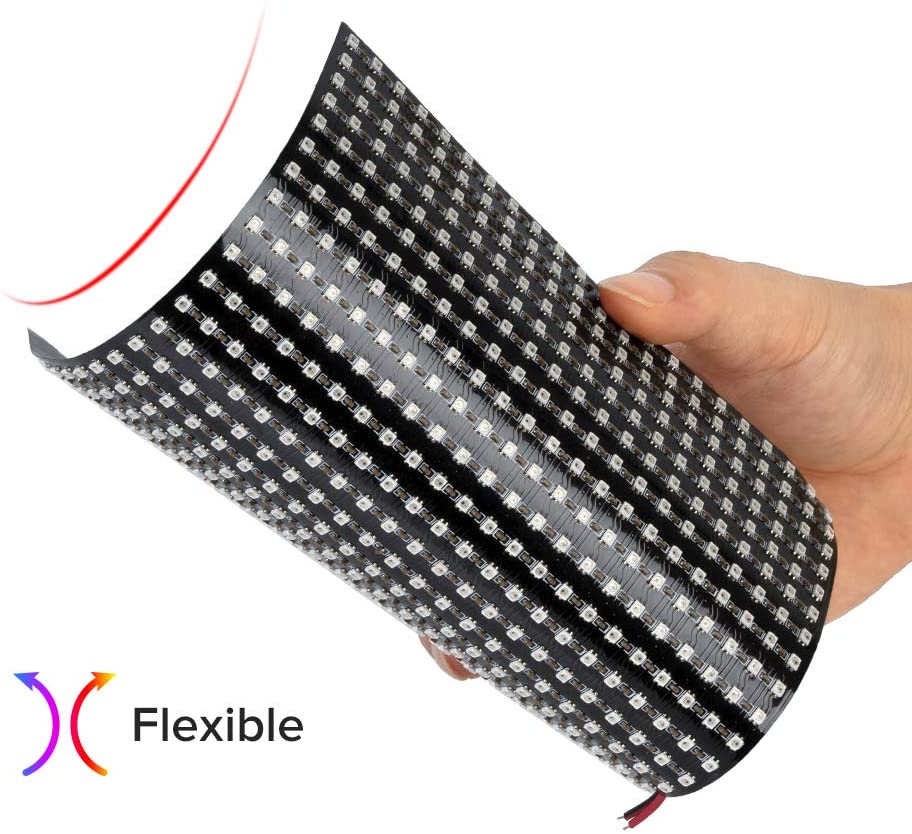
DC5V 484Leds 22x22 11x44 2427 Smd Flexible WS2812B LED Panel Matrix

Tuya WiFi Smart RGBCCT Dimmer LED Light Strip Controller
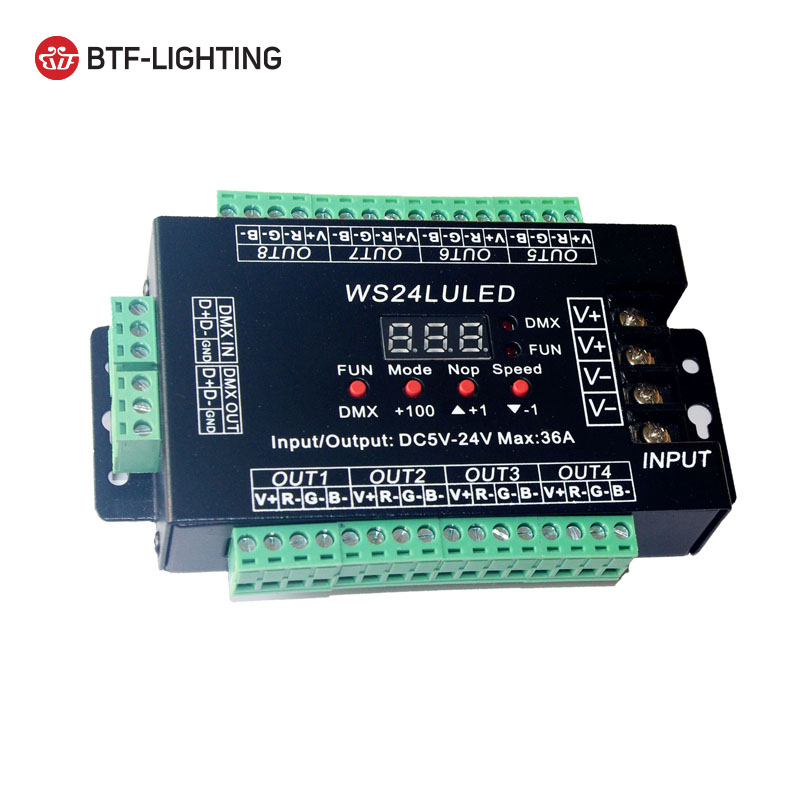
DC5V-24V 36A 8ports Digital Display Decoder 24ch Dmx512 Controller
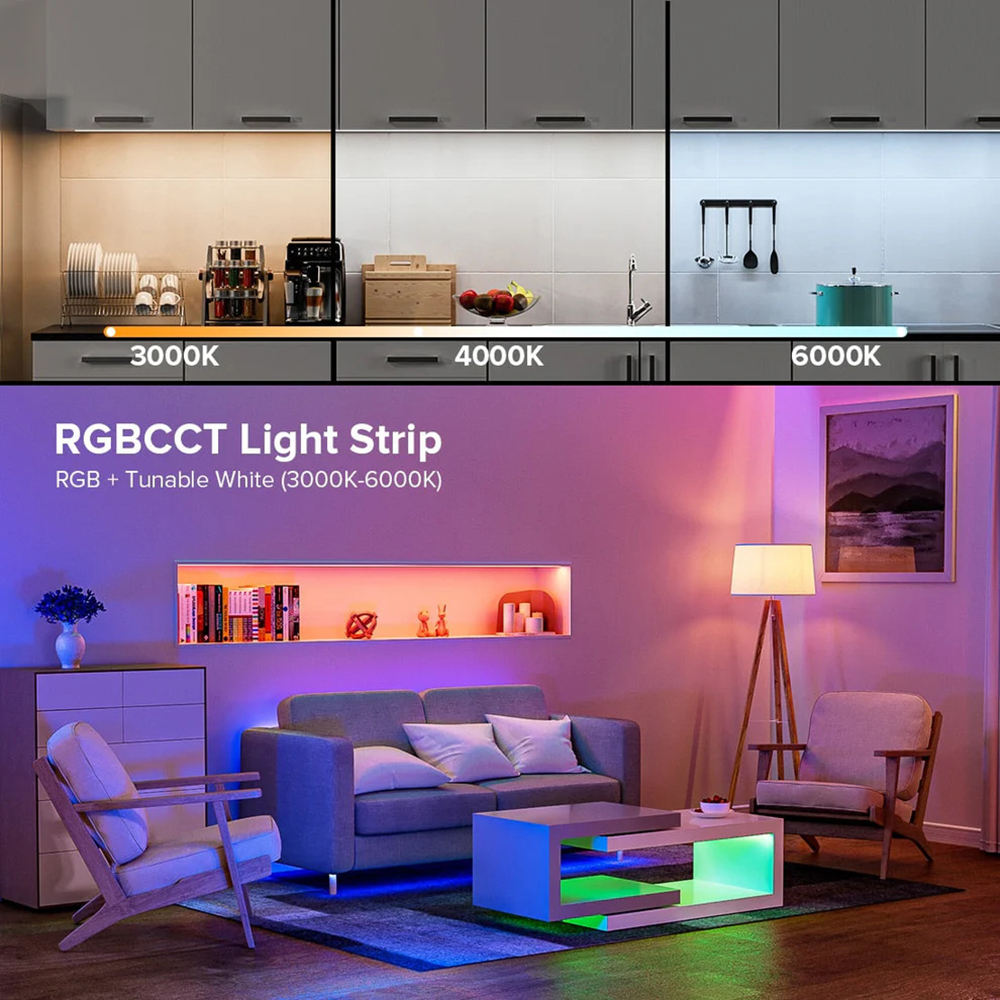
6Pin 12mm DC24V 840 LEDs RA90 Dimmable Flexible FCOB RGB CCT Strip
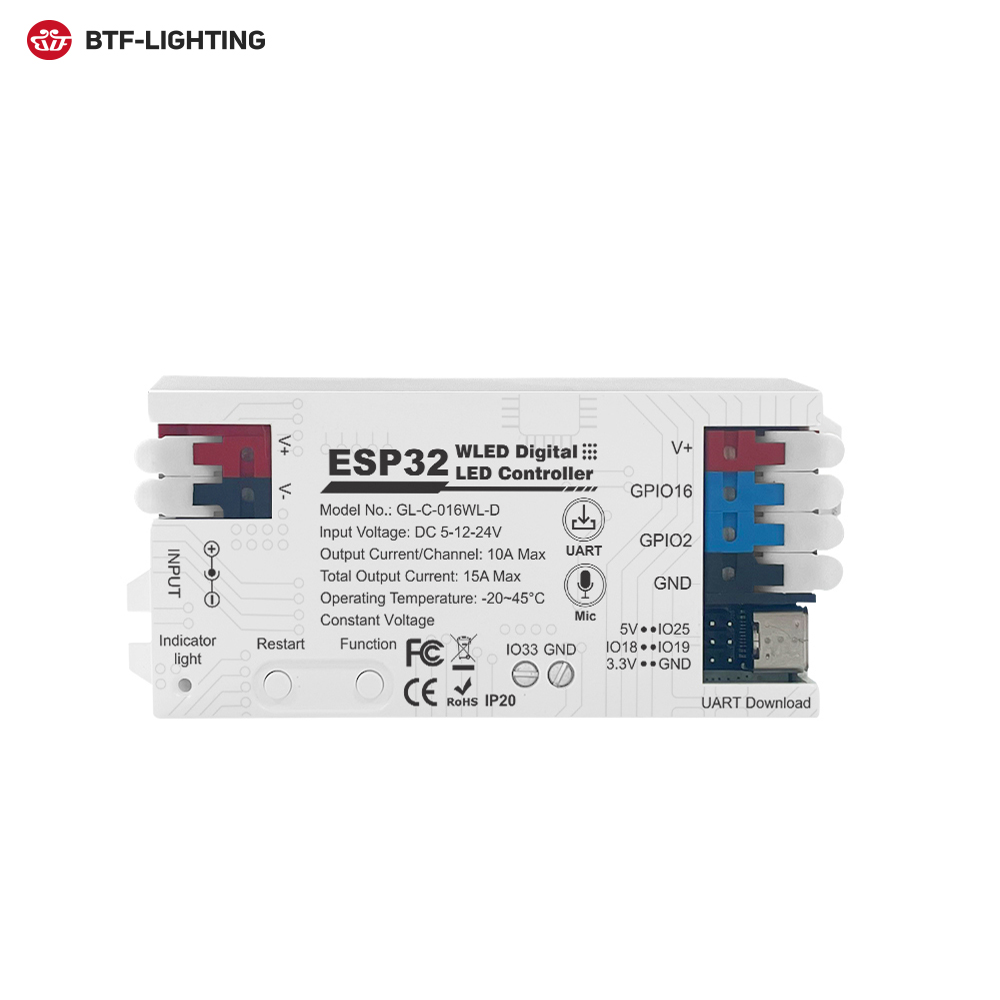
ESP32 Digital WLED Controller WiFi APP Dynamic Lighting DIY USB-C
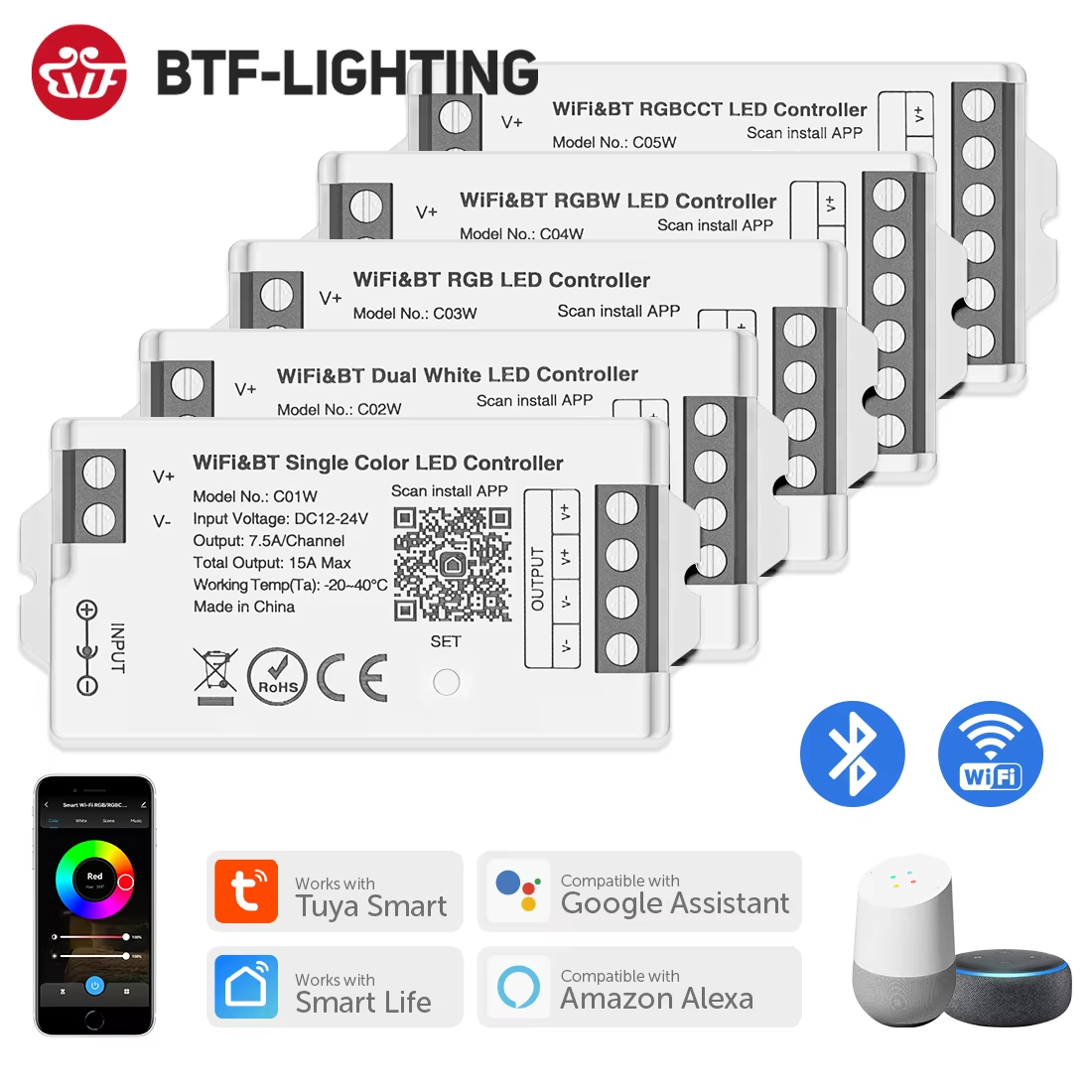
Tuya WiFi Alexa Google Home Voice Control CCT RGBW Dimmer Controller

FCOB RGBW 5M 5050 5in1 24V High Density Changing Color Strip
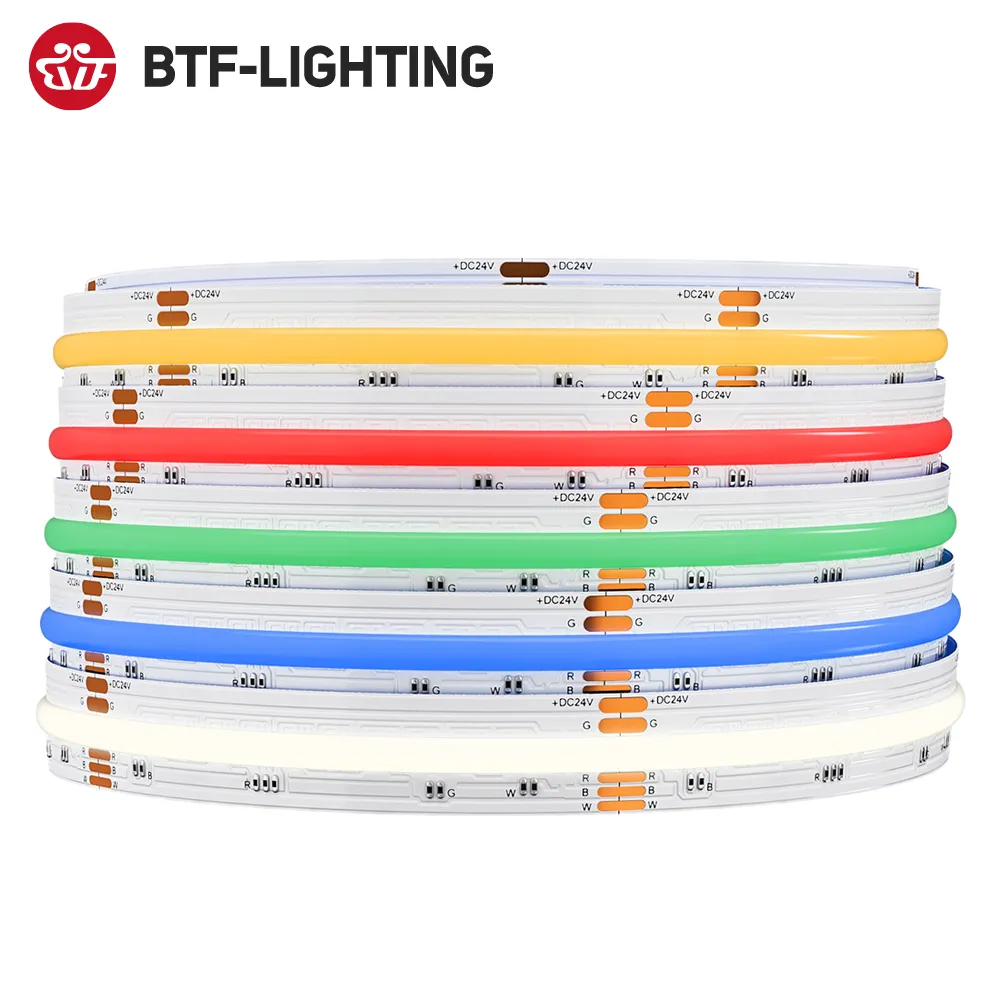
FCOB COB RGBW LED Light Strip 5Pin 12mm DC12V 24V 896 LEDs Flexible Tape
Technical Evolution of Addressable RGB & FCOB LED Strips: An Engineering Overview
In the architectural, decorative, and industrial lighting sectors, China has firmly established itself as the global manufacturing hub for solid-state lighting technology. As the demand shifts from static single-color ribbons to dynamic, individually controlled addressable systems (often designated as digital, pixel, or RGBIC lighting), overseas procurement managers, lighting designers, and importers require deep technical transparency. Navigating the choices between single-data protocols, dual-data redundant topologies, integrated driver ICs, and continuous phosphor Flip-Chip-on-Board (FCOB) architectures dictates project success, installation durability, and overall total cost of ownership (TCO).
Shenzhen Livdo Lighting Technology Co., Ltd. (founded in 2014) operates at the forefront of this industrial transformation. From our SGS-verified 2,053 m² production facility equipped with high-speed surface-mount technology (SMT) assembly lines in Shiyan, Shenzhen, we bridge advanced semiconductor packaging with commercial lighting implementation. This whitepaper provides engineering insights, technical data arrays, and procurement benchmarks designed to assist international distributors in making informed, future-proof purchasing decisions.
Integrated Circuit (IC) Protocol & Architectural Matrix
Selecting the appropriate control IC is crucial when engineering pixel-addressable lighting displays. The table below delineates the electrical, signal, and operational parameters of primary addressable IC protocols deployed across international installations.
| IC Model / Protocol | Working Voltage | Signal Bus Architecture | Control Resolution | PWM Refresh Rate | Primary Application & Key Advantage |
|---|---|---|---|---|---|
| WS2811 | DC12V / DC24V | Single Data Line (NRZ) | 1 Cut Unit (3 or 6 LEDs) | ~800 Hz | Architectural perimeter lighting; cost-effective long runs with low voltage drop. |
| WS2812B | DC5V | Single Data Line (Built-in IC) | Per-LED Individual Pixel | ~1.2 kHz - 2.0 kHz | High-density matrix displays, short ambient runs, wearable electronics, DIY integration. |
| WS2815 | DC12V | Dual Data (Data + Backup Data) | Per-LED Individual Pixel | ~2.0 kHz | Fail-safe commercial installations; continuous signal transmission if a single pixel dies. |
| SK6812 RGBW | DC5V / DC12V | Single Data (4-Channel) | Per-LED Individual Pixel | ~1.2 kHz | Architectural task lighting requiring dedicated warm/neutral white alongside vivid RGB. |
| SK9822 / APA102 | DC5V | Two-Wire (Data + Clock) | Per-LED Individual Pixel | > 19.2 kHz | High-speed POV (Persistence of Vision) displays, flicker-free broadcast & film studios. |
| FCOB SPI (RGBIC) | DC12V / DC24V | SPI Data Bus + COB Phosphor | Segmented Multi-Chip IC | ~1.5 kHz | Continuous seamless line of light without hotspot dots; premium interior linear coves. |
Voltage Drop Mitigation
By transitioning from 5V to 24V step-down architectures or employing dual-ended power injection every 5–10 meters, current draw ($I = P/V$) is dramatically reduced. This minimizes trace resistance heating on 2oz/3oz flexible copper printed circuit boards (FPC) and guarantees uniform luminance from feed point to end point.
Fail-Safe Breakpoint Resume
Dual-signal lines utilized in WS2815 and GS8208 protocols feature a secondary backup data channel ($BIN$). If an individual chip suffers physical or electrical damage, signal bypass circuits route data past the defective node, preventing entire strip blackout across commercial installations.
Continuous FCOB Technology
Flip-Chip-on-Board (FCOB) eliminates wire-bonding interconnects by directly bonding flip-chip LED dies onto the FPC. Covered under a continuous linear silicone phosphor matrix, FCOB strips deliver spot-free, uniform light emission across 480 to 960 chips/m with superior thermal conduction.
Enterprise Quality Infrastructure & Manufacturing Execution
To qualify as a tier-1 OEM/ODM export enterprise in Shenzhen, manufacturing rigor must extend beyond simple component assembly. Livdo Lighting maintains a comprehensive 12-stage Quality Assurance & Reliability Framework across our 2,053 m² SGS-verified footprint.
Incoming raw materials—including pure gold wire die bonds, high-tensile rolled-annealed copper FPCs, imported silicone encapsulation gels, and genuine Taiwan/Epistar semiconductor dies—undergo mandatory spectroradiometric, mechanical stress, and solderability testing. Production batches pass through automated stencil solder-paste printing, high-speed SMT pick-and-place positioning, multi-zone reflow profile ovens, and 100% automated optical inspection (AOI).
Furthermore, all completed product reels are subjected to an intensive 8-hour continuous power burn-in test. Our quality assurance laboratory utilizes integrating spheres for luminous flux and CCT chromaticity verification, salt spray chambers for marine corrosion resistance testing, thermal shock chambers, and specialized wire-pulling testers to guarantee mechanical robust connections.
Global Procurement & Technological Trends (2025–2030)
As international energy efficiency standards tighten (such as EU ErP directives and North American DLC requirements) and smart automation becomes ubiquitous, purchasing officers must anticipate several key paradigm shifts shaping addressable LED strip manufacturing:
1. Matter over Thread and Unified Ecosystem Convergence: The fragmentation of smart home protocols is dissolving. Next-generation addressable LED controllers are shifting from legacy standalone 2.4GHz RF to native Matter-over-Thread and dual-mode Zigbee 3.0 / Tuya WiFi gateways. This allows seamless integration into Apple HomeKit, Google Home, Amazon Alexa, and Home Assistant platforms without proprietary bridges.
2. Ultra-High Density & Hybrid Chip-on-Board (COB) RGBW Integration: Standard SMD5050 addressable ribbons are increasingly replaced in interior architectural coves by FCOB SPI addressable strips. Combining high chip counts (up to 840–960 chips/meter) with digital driver ICs enables smooth, fluid chasing water effects without hotspot shadow artifacts, even when mounted in shallow aluminum extrusions.
3. High-Voltage (24V & 48V) Addressable Architectures: To simplify commercial installations in shopping malls, hotel facades, and sports venues, the market is rapidly moving toward higher voltage addressable protocols. 24V and 48V addressable systems reduce the required power supply feed points by over 60%, drastically cutting wire installation labor and material expenses.
4. Open-Source Firmware Standardization (WLED & ESP32 Integration): Commercial installers and custom lighting integrators are demanding native support for open-source control ecosystems. Manufacturers supplying ESP32-based controllers pre-flashed with WLED software enable real-time UDP synchronization, E1.31 DMX/Art-Net network mapping, and sound-reactive audio visualization without vendor lock-in.
Frequently Asked Questions for B2B Importers & Buyers
What are the Minimum Order Quantities (MOQ) for wholesale and custom OEM orders?
Standard stock LED strips (e.g., standard WS2812B, WS2815, or FCOB rolls) typically carry a low MOQ of 2 to 5 rolls (5 meters per roll). For custom orders involving specialized FPC circuit widths, custom PCB silk-screen branding, specific color rendering indices (RA90/RA95), or custom buyer-label retail packaging, the MOQ ranges from 100 to 500 meters depending on specification complexity.
How do I choose between 5V, 12V, and 24V addressable LED strips?
DC5V strips (like WS2812B or SK6812) offer individual pixel control but experience noticeable voltage drop beyond 2.5–3 meters, making them ideal for short runs, matrix panels, and wearables. DC12V strips (like WS2815 or WS2811) allow 5-meter runs without significant voltage drop and offer signal redundancy options. DC24V strips are engineered for long commercial architectural runs (up to 10 meters per power feed), significantly lowering wiring complexity.
What is the key technological advantage of FCOB over traditional SMD LED strips?
FCOB (Flip-Chip-on-Board) attaches bare semiconductor dies directly to the FPC board, eliminating failure-prone gold wire bonds. Encapsulated under a continuous linear phosphor gel, FCOB produces a 180-degree smooth, dot-free line of light without visible hotspots, superior flexibility, and enhanced heat dissipation compared to traditional discrete 5050 or 2835 SMD packages.
Which waterproof ratings are available for outdoor or harsh environments?
We manufacture four standard protection levels: IP20/IP30 (Non-waterproof for dry indoor profiles), IP65 (Silicone drop-glue or nano-coating for splash resistance in kitchens and bathrooms), IP67 (Silicone hollow tube extrusion or solid silicone injection for temporary immersion and outdoor architectural linear installation), and IP68 (Full silicone extrusion filled with glue for permanent underwater or swimming pool application).
What international compliance certifications do Livdo Lighting products hold?
Our core product catalogs carry full compliance documentation for global market customs clearance, including CE (EMC & LVD), RoHS 2.0, FCC Part 15 Class B, UKCA, and PSE marks. Selected smart controllers hold third-party ETL listed certification. Additionally, our factory is assessed onsite by SGS Group, with complete inspection reports available for download.
What are the accepted international trade terms and payment methods?
We support flexible export terms including FOB (Shenzhen/Guangzhou/Hong Kong), CFR, CIF, EXW, and Express DDP. Payment options include Wire Transfer (T/T), Letter of Credit (L/C at sight), PayPal, and Western Union in USD, EUR, or CNY currencies.
Ready to Scale Your LED Lighting Product Line?
Partner directly with Shenzhen's premier SGS-verified addressable strip and smart controller manufacturer. Request a custom quotation, engineering consultation, or sample testing kit today.