Flagship Digital LED Strips & Controllers
Engineered for high-density diffusion, dynamic color-chasing, and seamless smart home or commercial lighting integration.
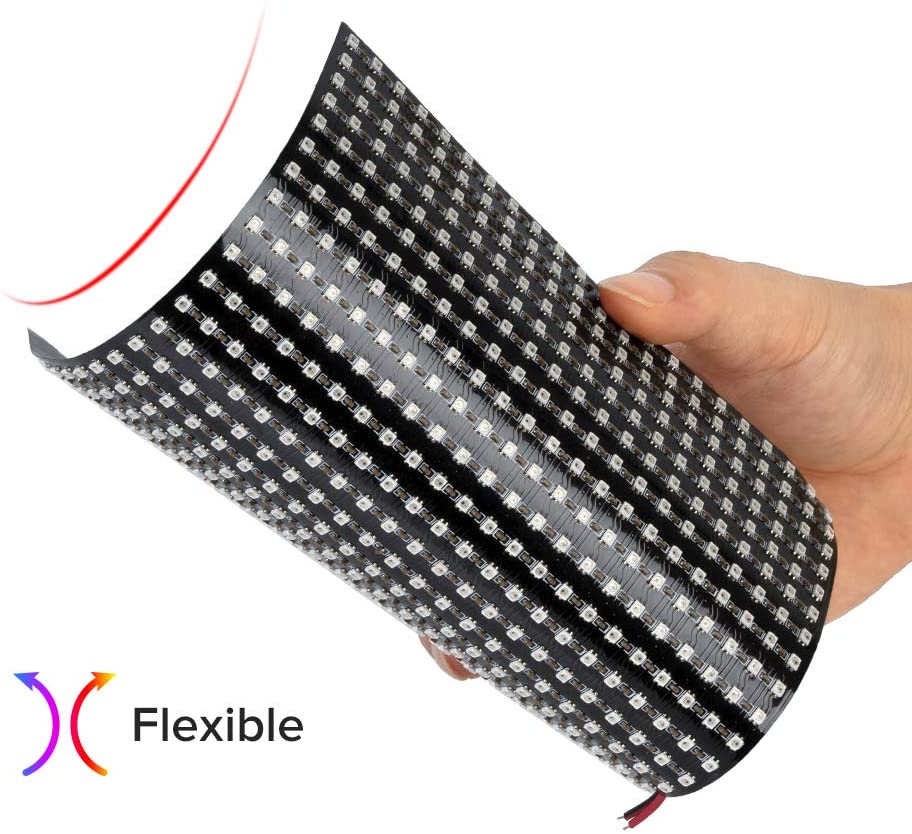
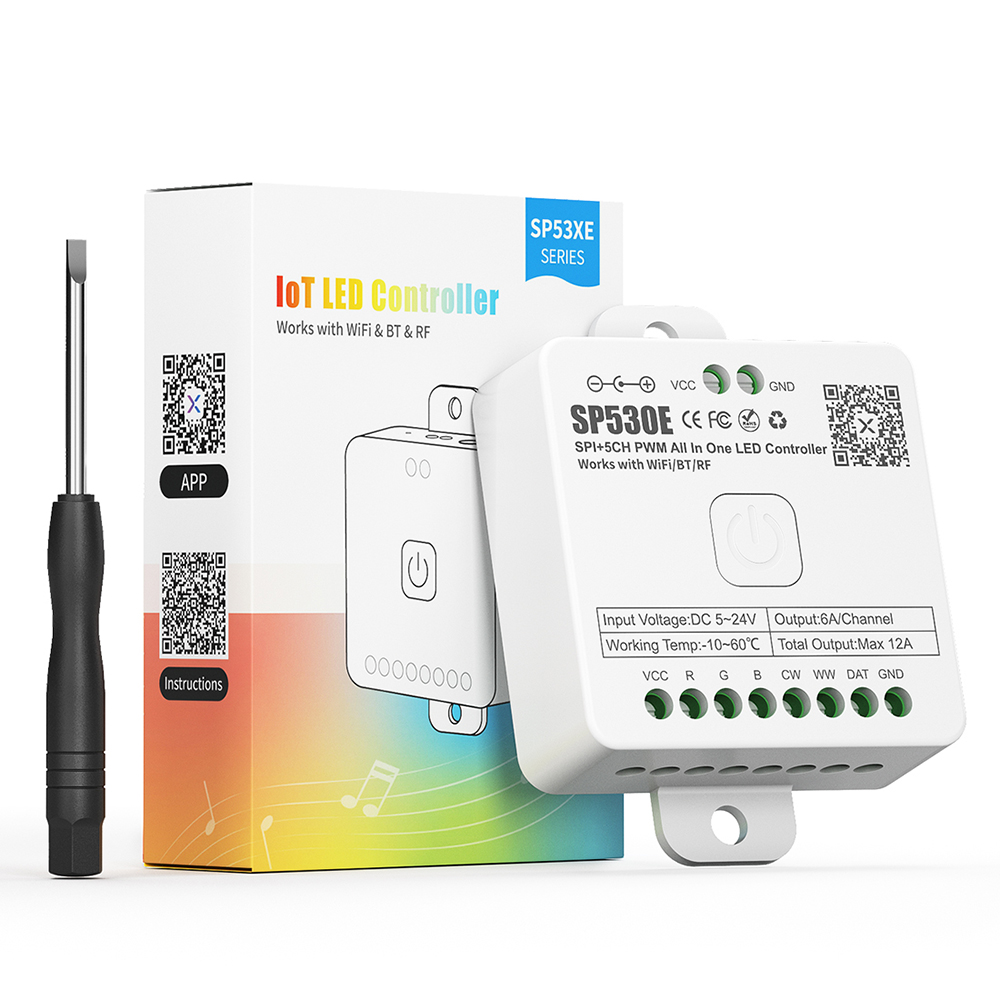

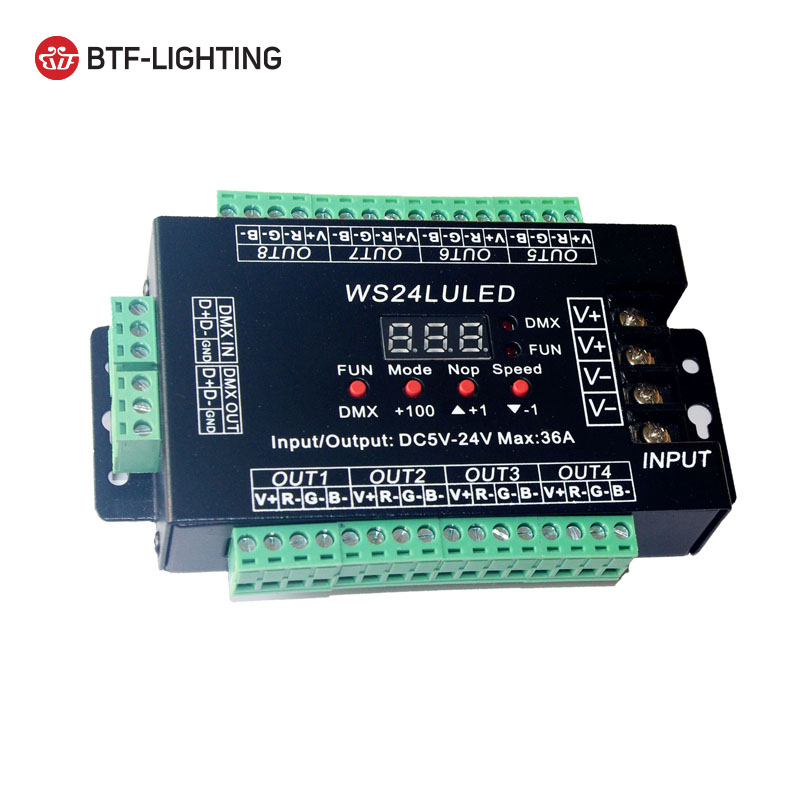
DC5V-24V 36A 8ports RGB Digital Display Decoder 24ch Dmx512 Controller WS24LULED
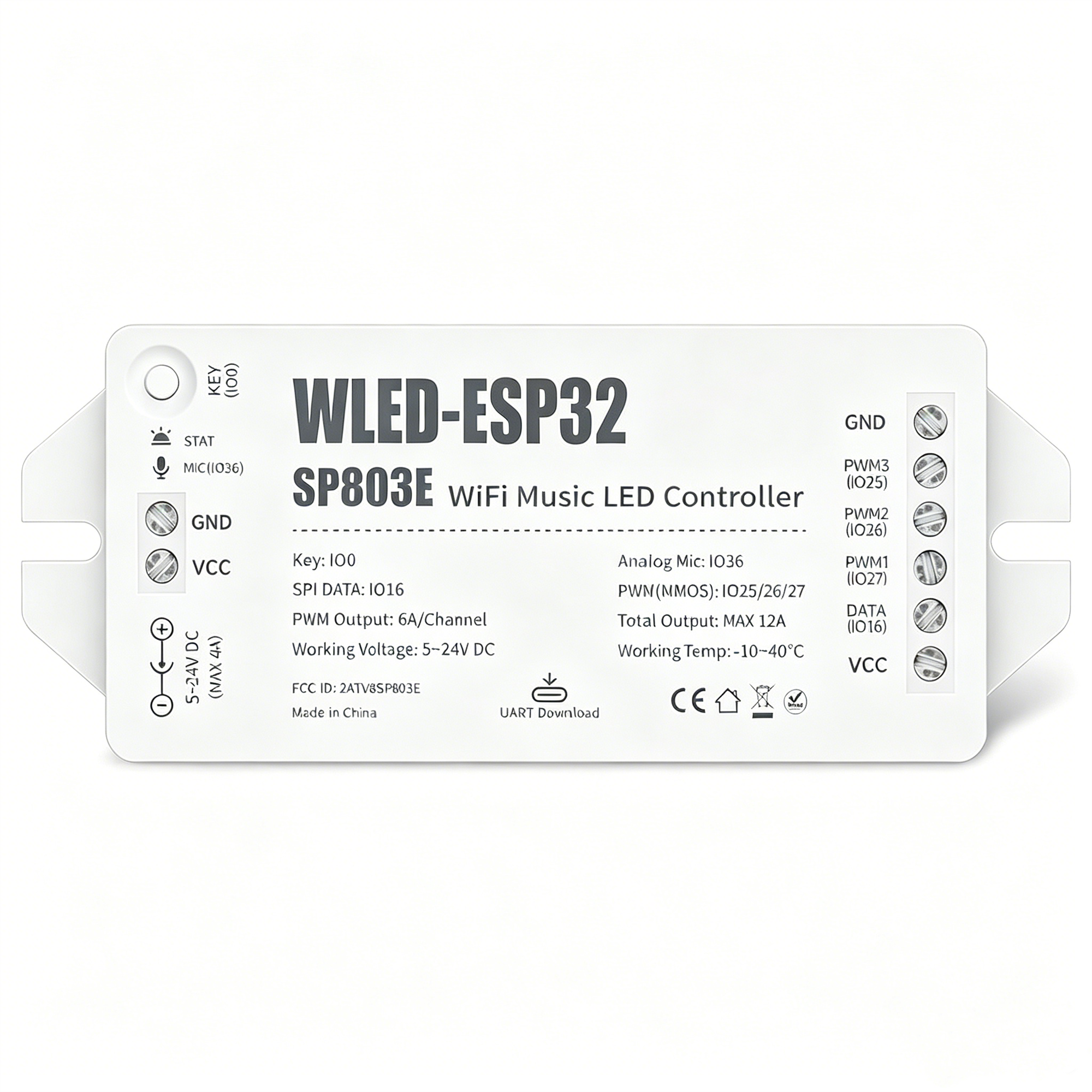
ESP-32 WLED SP803E WiFi Music LED Controller

Industrial Manufacturing Excellence & Technical Capabilities
Operating as Shenzhen Livdo Lighting Technology Co., Ltd., we combine software-to-hardware R&D with stringent SMT packaging standards for global B2B lighting integrators.
SGS-Verified Manufacturing Facility
Founded in 2014 in Shiyan, Shenzhen, our 2,053 m² facility houses high-speed SMT lines, automated reflow ovens, and 100% full-load burn-in aging racks. Verified onsite by SGS Group for absolute supply chain transparency.
Multi-Tier Quality Control Protocol
Every reel undergoes rigorous integrating sphere spectroradiometer tests, salt spray corrosion evaluations, and thermal shock cycles (-40°C to +85°C) to eliminate premature lumen degradation and IC driver dropouts.
Global Compliance & OEM Expertise
Exporting 80%+ of production to North America and Western Europe. Supported by CE, RoHS, FCC, UKCA, PSE, and ETL certifications. We provide full white-label OEM, custom PCB widths, and custom IC protocols.
Comprehensive Engineering Taxonomy of Digital LED Strips
An in-depth whitepaper guide analyzing integrated circuit (IC) signal protocols, thermal envelope management, and copper weight selection for professional procurement specialists.
In the rapidly evolving landscape of architectural lighting and commercial ambient design, sourcing from an authoritative China Wholesale Digital LED Strip Manufacturer & Supplier requires a profound understanding of semiconductor packaging, PCB copper weights, and digital signal modulation protocols. Digital addressable LED strips—frequently referred to as pixel strips or dream-color strips—differ fundamentally from traditional analog PWM flexible tape light. By incorporating micro-integrated control circuits (ICs) directly onto the flexible printed circuit (FPC) board or inside the LED package itself, addressable strips allow individual or small-group pixel control over color, dimming, and animation sequences.
1. Micro-Integrated Circuit (IC) Protocol Classification
Selecting the optimal IC protocol is the single most critical engineering decision when specifying addressable LED strips for scale installations. IC protocols fall into three distinct mathematical and structural categories:
- Single-Data Asynchronous NRZ Protocols (WS2811, WS2812B, SK6812): Utilizing a single non-return-to-zero (NRZ) data line, these protocols operate at fixed timing frequencies (typically 800 kHz). The WS2811 utilizes an external IC driving 3 LEDs per pixel on 12V/24V circuits, making it ideal for cost-effective architectural runs. The WS2812B integrates the control IC directly within a 5050 SMD package operating at 5V DC, delivering compact pixel granularity. The SK6812 introduces a dedicated 4th white channel (RGBW), enabling true monochromatic illumination alongside RGB spectrum rendering.
- Dual-Data Redundant Signal Protocols (WS2815, GS8208): Developed specifically to eliminate single-point operational failures in commercial media facades, dual-data lines feature a Primary Data (DI) line and a Backup Data (BI) line. If a individual LED package or driver IC sustains physical damage, the backup signal line bypasses the broken node, maintaining unbroken signal transmission down the rest of the strip. Furthermore, the WS2815 operates natively at DC12V, dramatically mitigating voltage drop over extended runs compared to 5V solutions.
- Data + Clock Synchronous Protocols (SK9822, APA102): Employing a two-wire interface (Data and Clock), synchronous strips bypass the strict timing limitations of NRZ protocols. Offering ultra-high PWM refresh rates (>4.7 kHz), SK9822 strips eliminate camera flicker in television broadcast studios, virtual production stages, and high-speed shutter photography applications.
| IC Protocol Model | Operating Voltage | Signal Architecture | PWM Refresh Rate | Redundancy Mechanism | Primary B2B Application |
|---|---|---|---|---|---|
| WS2811 | DC12V / DC24V | Single Data (Asynchronous) | ~400 Hz - 800 Hz | None (Series Chain) | Architectural coves, long perimeter accent lighting |
| WS2812B | DC5V | Integrated IC Single Data | ~800 Hz | None | DIY kits, digital matrix panels, small decorative displays |
| WS2815 | DC12V | Dual Data (Primary + Backup) | ~2.0 kHz | Breakpoint Resume | Commercial installations, hospitality, retail display cases |
| SK6812 RGBW | DC5V / DC12V | Single Data 4-Channel | ~1.2 kHz | None | High-CRI ambient lighting requiring dynamic RGB + pure white |
| SK9822 / APA102 | DC5V | 2-Wire (Data + Clock) | >4.7 kHz | High-Speed Sync | Broadcast television studios, film sets, POV matrix systems |
| FCOB SPI (WS2811) | DC12V / DC24V | Flip-Chip COB + SPI IC | ~800 Hz - 1.5 kHz | Option Dependent | Dot-free continuous dynamic linear light profiles |
2. FCOB (Flip-Chip on Board) Packaging vs. Traditional SMD
The transition from traditional Surface Mount Device (SMD 5050 / 2835) technology to FCOB (Flip-Chip on Board) represents a massive leap in linear lighting quality. Traditional SMD strips place encapsulated LED packages at discrete intervals (e.g., 30, 60, or 120 LEDs per meter). In shallow aluminum extrusions or direct-view installations, SMD strips produce harsh optical "hotspots" or dotting, requiring thick frosted diffusers that cut light output by 30% to 45%.
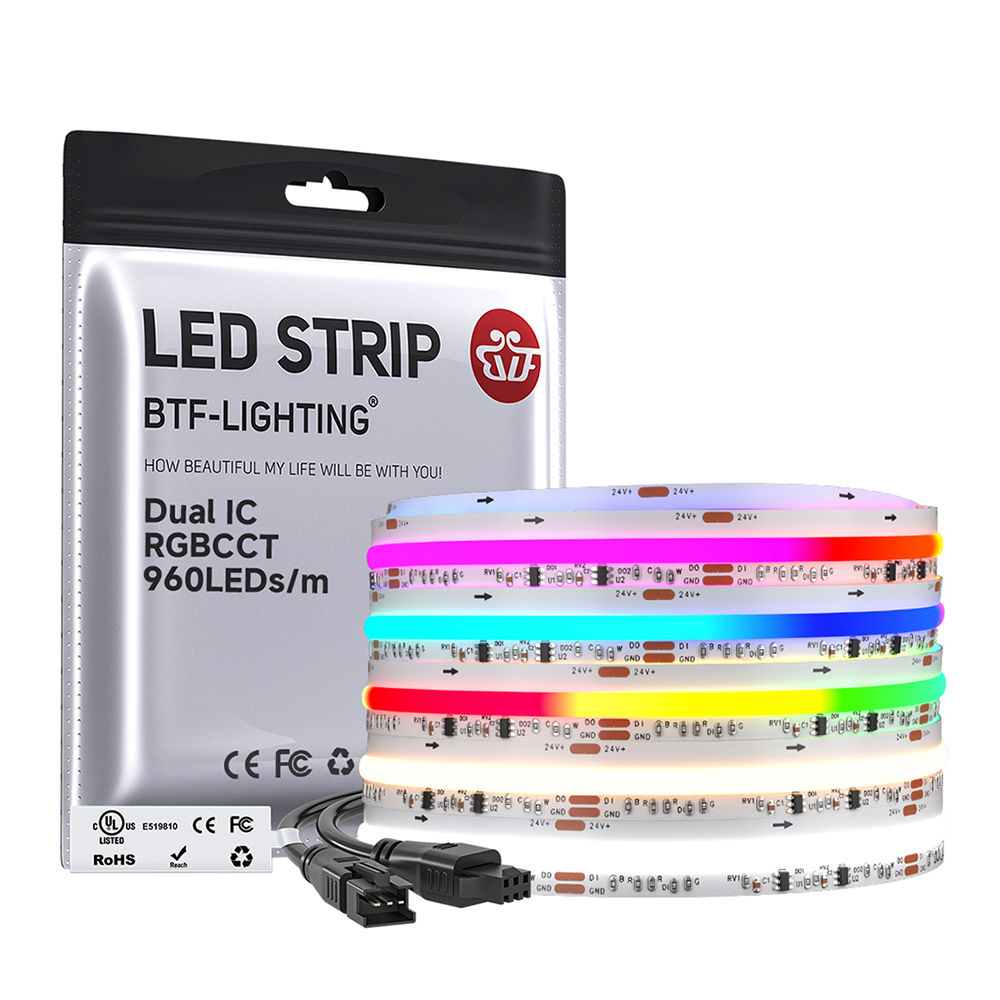
In contrast, FCOB technology mounts raw semiconductor flip-chips directly onto the flexible PCB trace, covering them under a continuous, linear phosphor gel matrix. By packing between 480 to 960 chips per meter, FCOB strips deliver a completely seamless, dot-free line of light with viewing angles exceeding 180 degrees. When integrated with SPI driver ICs (such as WS2811 or SK6812), addressable FCOB strips combine pixel animation capabilities with uninterrupted linear aesthetic lines.
3. Thermal Management & Copper Weight Specification (3oz vs. 2oz FPC)
A major quality differentiator among China LED strip manufacturers lies in the flexible printed circuit (FPC) construction. Cheap market alternatives utilize single-sided 1oz rolled-annealed copper, resulting in severe line resistance, excessive thermal buildup, and noticeable end-to-end voltage drop (visible color shifting to red at the end of a 5-meter reel). At Livdo Lighting, our architectural-grade addressable and FCOB strips are engineered with 3oz or 4oz dual-layer electrolytic copper FPCs. This significantly lowers electrical resistance, reduces thermal junction temperatures ($T_j$), prolongs phosphor stability, and guarantees color consistency across extended continuous runs.
Strategic Procurement & Technology Trends (2026–2030)
Key vectors reshaping the global wholesale LED strip market: From high-voltage addressable architectures to unified smart ecosystem integration.
1. High-Voltage (24V/48V) Addressable Migration
Historical 5V addressable strips required power injection every 2.5 to 5 meters to prevent voltage drop. Modern B2B procurement is rapidly shifting toward 24V step-down IC architectures and 48V constant-current pixel networks, enabling continuous 15-to-20-meter single-ended power runs without brightness decay.
2. Tunable White COB + Dynamic RGBIC Fusion
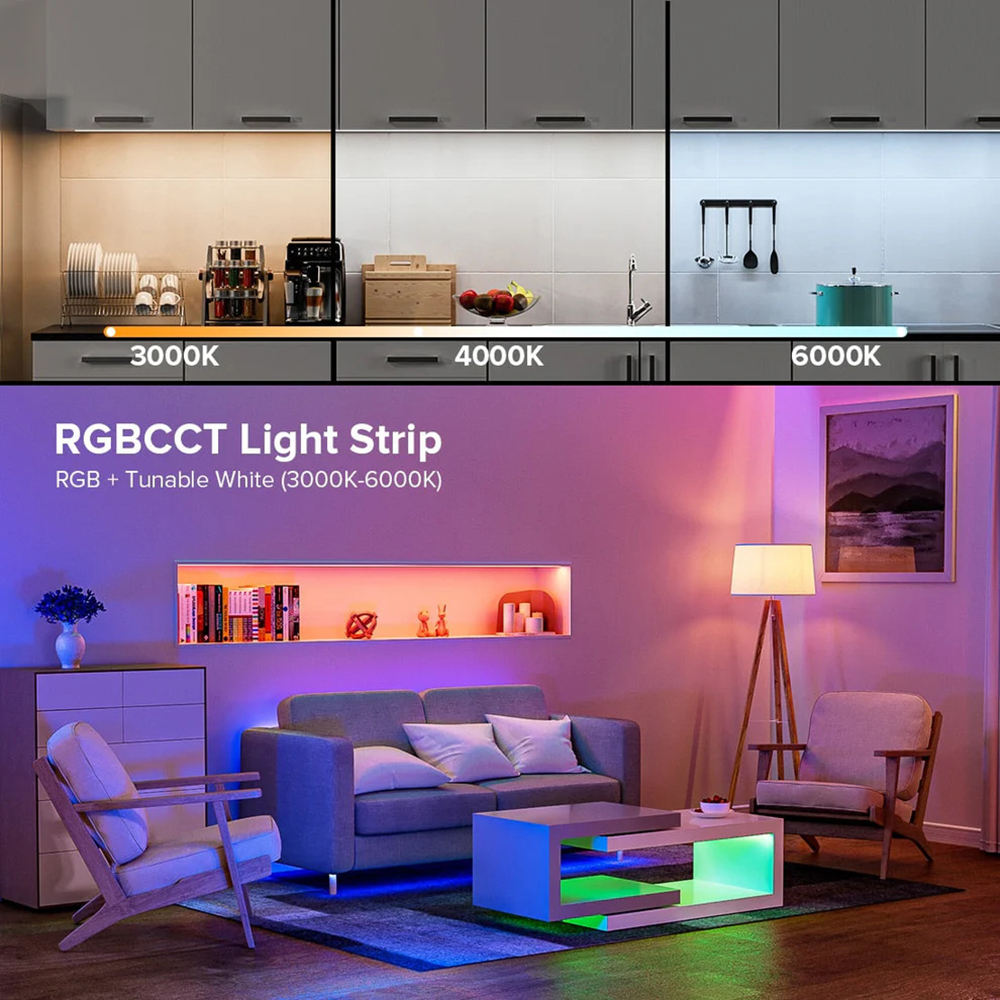
Commercial specifiers no longer accept trade-offs between dynamic dynamic scenes and functional ambient task lighting. The industry vector favors 5-in-1 / 6-in-1 FCOB RGBCCT addressable strips (3000K-6500K CCT range plus full RGB color spectrum) delivering high color rendering index (CRI Ra > 90, R9 > 80).
3. Protocol Standardization: Matter, WLED & Art-Net
Closed, proprietary wireless controllers are being replaced by interoperable smart control hardware. Controllers featuring native ESP32 microprocessors with open-source WLED firmware, Tuya WiFi/Zigbee 3.0 gateways, and Ethernet-to-SPI Art-Net/sACN decoders are becoming mandatory B2B stock requirements.
Frequently Asked Questions for B2B Sourcing & Procurement
Engineering and logistical insights directly addressing the most critical queries raised by global importers and lighting distributors.
Accelerate Your LED Lighting Supply Chain
Submit your technical specification sheet, project drawings, or OEM customization requirements. Our engineering team responds within 12 hours with optimized product matching, photometric data, and factory-direct wholesale pricing.