Engineered Pixel Lighting & Controller Portfolio
Explore our high-demand OEM/ODM product lines. Built with high-grade ICs, robust copper PCBs, and dynamic addressable color capabilities.
Why Partner with Shenzhen Livdo Lighting Technology Co., Ltd.
An SGS-Verified Custom Manufacturer Delivering Uncompromised Quality, Technical Innovation, and Agile Global Supply Chains.
SGS Onsite Verified Facility
Located in Longteng Community, Shiyan Street, Shenzhen, our facility operates under strict ISO-compliant quality management protocols. Fully verified onsite by SGS Group for transparent manufacturing capability.
Full In-House SMT & QC Aging
Equipped with 3 advanced SMT assembly lines, automated solder pasting, reflow ovens, and dedicated integrating spheres. Every production batch undergoes mandatory 100% burn-in aging tests before shipment.
Global Compliance Matrix
Engineered for seamless international customs clearance. Products carry robust test reports and certification documentation including CE, RoHS, FCC, UKCA, PSE, and ETL listed marks on select smart controllers.
Industry Whitepaper: RGBIC LED Tape Engineering & Protocols
A Technical Deep-Dive into Integrated Circuit (IC) Architectures, Signal Redundancy, and Thermal Management for B2B Specifiers.
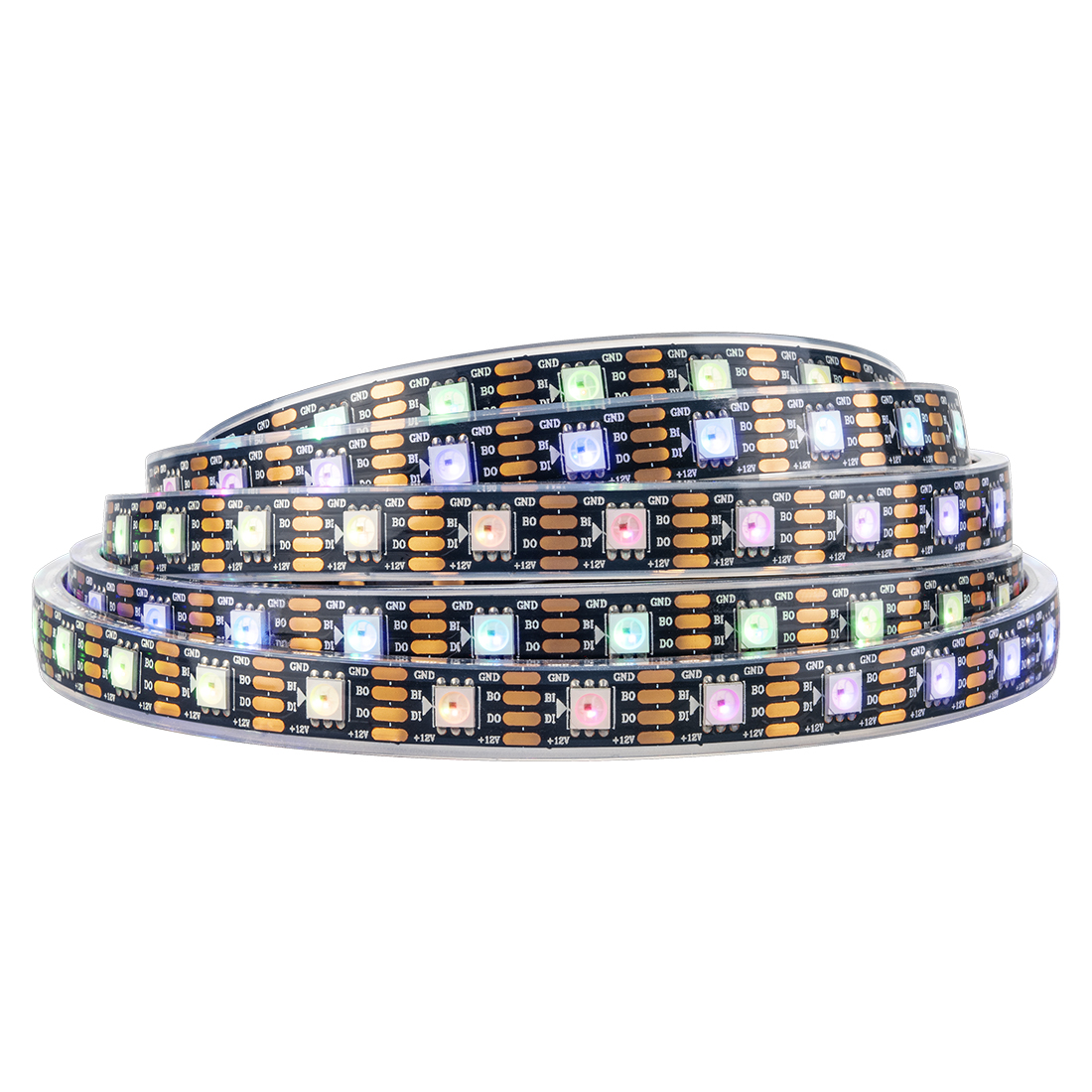
In modern architectural and entertainment lighting, RGBIC (RGB Integrated Circuit) LED tape—frequently categorized as individually addressable or digital pixel lighting—represents a quantum leap over traditional analog PWM strips. Unlike static RGB strips where all LEDs emit an identical hue simultaneously, RGBIC tape integrates microscopic driver ICs directly into each LED package or segment. This allows independent control over color, dimming, and animation frame rates per individual pixel node via Single-Wire SPI or dual-line protocols.
1. SMD 5050 vs. FCOB (Flip-Chip on Board) RGBIC Form Factors
The transition from surface-mount SMD 5050/3535 packages to continuous phosphor FCOB (Flip-Chip on Board) RGBIC technology solves the longstanding issue of pixelation in shallow aluminum profiles:
- SMD RGBIC Strips: Utilize discrete 5050 or 3535 SMD chips positioned at 30, 60, or 144 LEDs per meter. While capable of extreme localized intensity, they require deep diffuser channels to eliminate visible "hotspots".
- FCOB RGBIC Strips: Bind flip-chip micro-LEDs directly onto a flexible copper substrate, covered by a uniform phosphor gel layer. Packing between 630 to 840 chips per meter, FCOB RGBIC delivers a smooth, dot-free line of light with wider 180° beam angles, ideal for high-end hospitality, cove lighting, and commercial retail fixtures.
2. Protocol Benchmark & IC Selection Matrix
Choosing the correct IC protocol dictates system stability, refresh rate, and signal range over long installation runs. Below is the technical specification breakdown verified by our engineering department:
| IC Protocol | Working Voltage | Signal Data Lines | Fail-Safe Backup | White Channel Support | Optimal OEM Application |
|---|---|---|---|---|---|
| WS2811 | 12V / 24V | 1 Data Line (SPI) | No | External / RGB | Long architectural coves, exterior building outlines, cost-effective runs. |
| WS2812B | 5V | 1 Data Line (Integrated) | No | RGB Only | Short DIY accent strips, matrix panels, wearable tech, gaming peripherals. |
| WS2815 | 12V | Dual Data (Data + Backup) | Yes (Breakpoint Resume) | RGB Only | High-reliability commercial projects where single-pixel failure must not interrupt signal flow. |
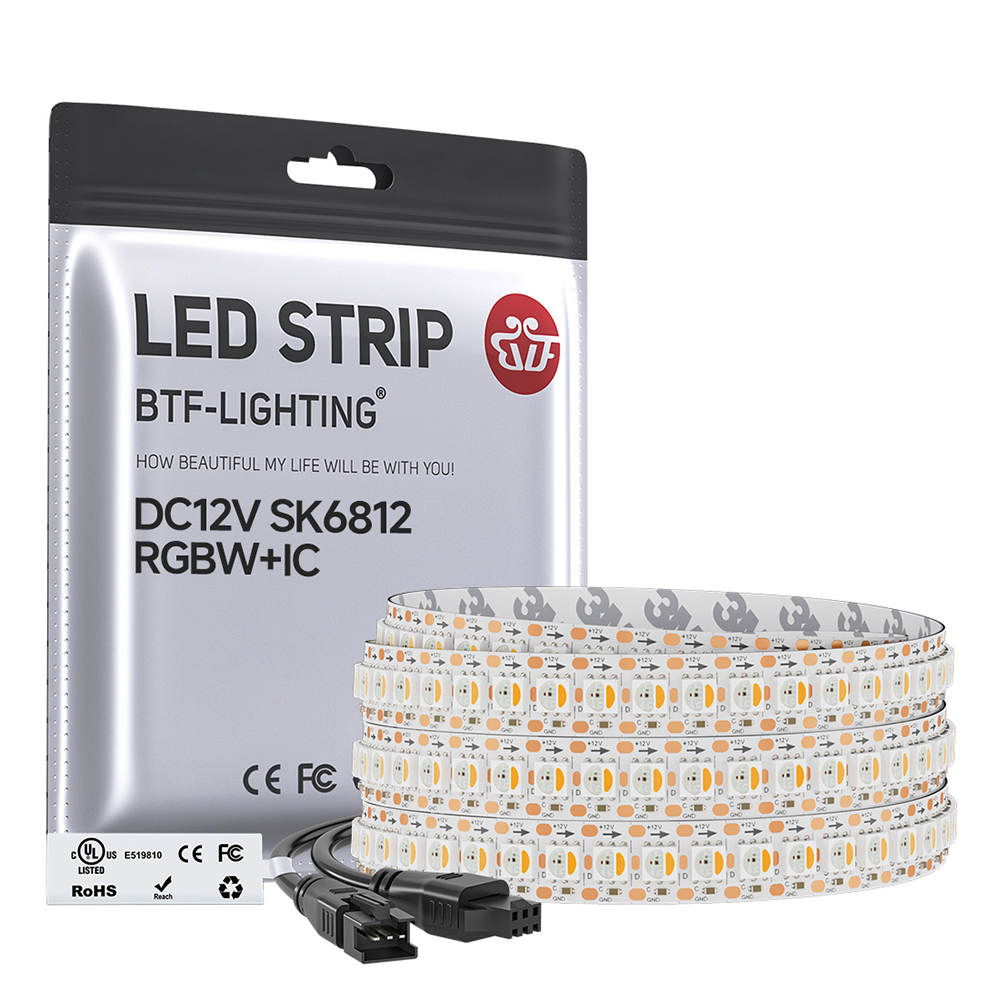
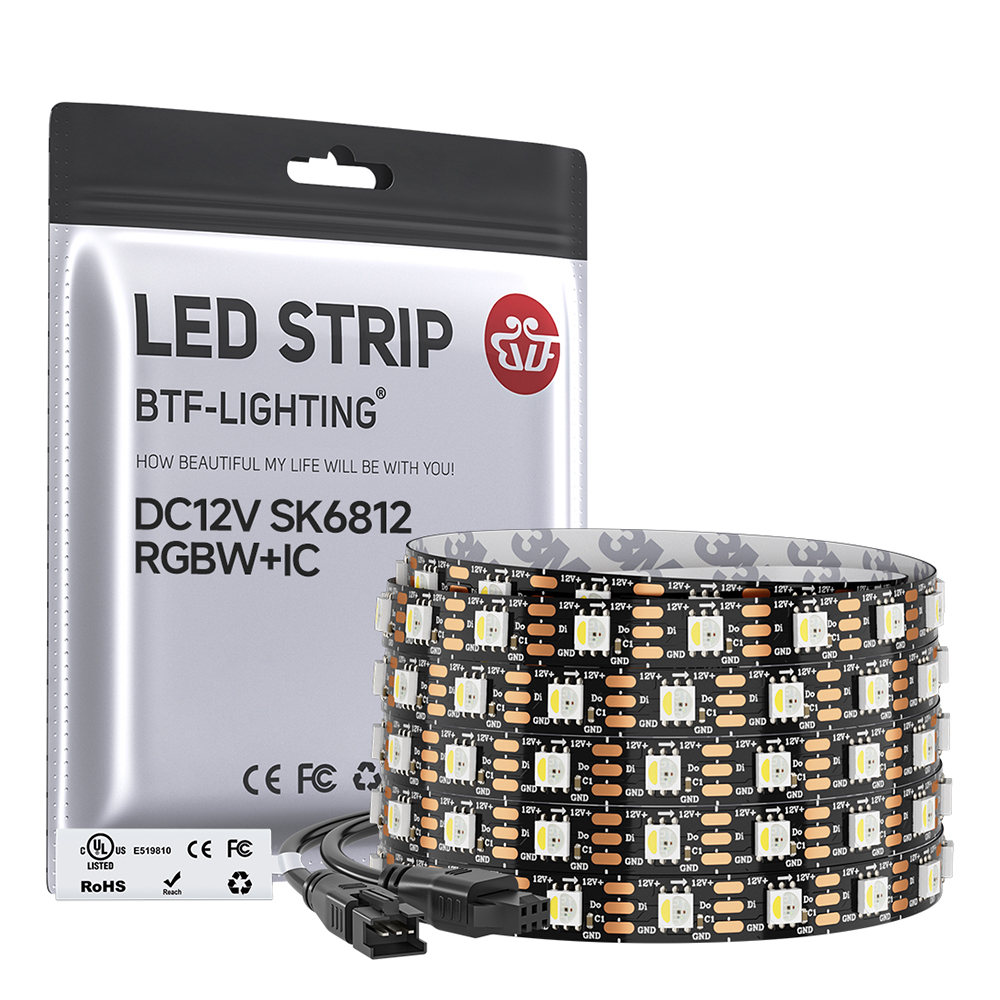
| SK6812 | 5V / 12V | 1 Data Line | No | Dedicated White (RGBW/RGBNW/RGBWW) | High-CRI architectural accent lighting combining color effects with pure functional white light. |
| SK9822 / APA102 | 5V | 2 Lines (Data + Clock) | No | RGB Only | Ultra-high refresh rates (>4kHz), camera-friendly broadcast studios, POV spinning displays. |
| GS8208 | 12V | Dual Data (Data + Backup) | Yes (Breakpoint Resume) | RGB Only | 12V high-density commercial pixel lighting with internal signal shaping and low voltage drop. |
3. Signal Redundancy & Dual-Data Line Engineering
In standard single-data SPI protocols (e.g., WS2811/WS2812B), a single physical defect or burnt IC chip interrupts signal transmission to every subsequent LED down the tape. To guarantee zero site downtime for commercial buyers, Livdo Lighting specializes in Dual-Signal WS2815 and GS8208 RGBIC strips. Featuring a primary data line (DI) and a secondary backup data line (BI), the backup line bypasses a failed chip, passing signal seamlessly to the next pixel without breaking the visual animation chain.
4. Thermal Management & PCB Copper Weight
Operating high-density pixel strips (such as 144 LEDs/m SK6812 or 840 chip FCOB) generates localized thermal stress. Livdo Lighting utilizes 3oz double-sided rolled copper flexible PCBs (FPC). This heavy copper weight reduces line resistance, mitigates voltage drop across 5-meter and 10-meter runs, and acts as an integrated heatsink—preventing color shift and extending LED operational lifespan beyond 50,000 hours.
Future Procurement Trends in RGBIC Pixel Lighting (2025–2030)
Strategic Insights for Lighting Distributors, Wholesalers, and Systems Integrators Navigating the Evolution of Smart Architectural Lighting.
1. Transition to 24V Constant-Current Pixel Architectures
While 5V and 12V have historically dominated digital tape, procurement is aggressively shifting toward 24V step-down RGBIC tape. By doubling voltage and halving working current, 24V strips dramatically reduce line voltage drop, allowing longer single-feed runs (up to 10m–15m) without secondary power injection—lowering labor and cabling costs on large-scale jobs.
2. High Spectrum Fidelity: RGB + Dedicated White (RGBWW/RGBCW)
Pure RGB pixels produce a harsh, synthetic white light with poor Color Rendering Index (CRI < 70). Procurement demand is shifting to 4-in-1 and 5-in-1 chips (e.g., SK6812 RGBW, FCOB RGBCCT) that combine digital color-chasing with architectural warm white (2700K) and cool white (6500K) emitters (CRI Ra > 90, R9 > 80).
3. Unified Control Convergence (Tuya, Matter, Art-Net & DMX512)
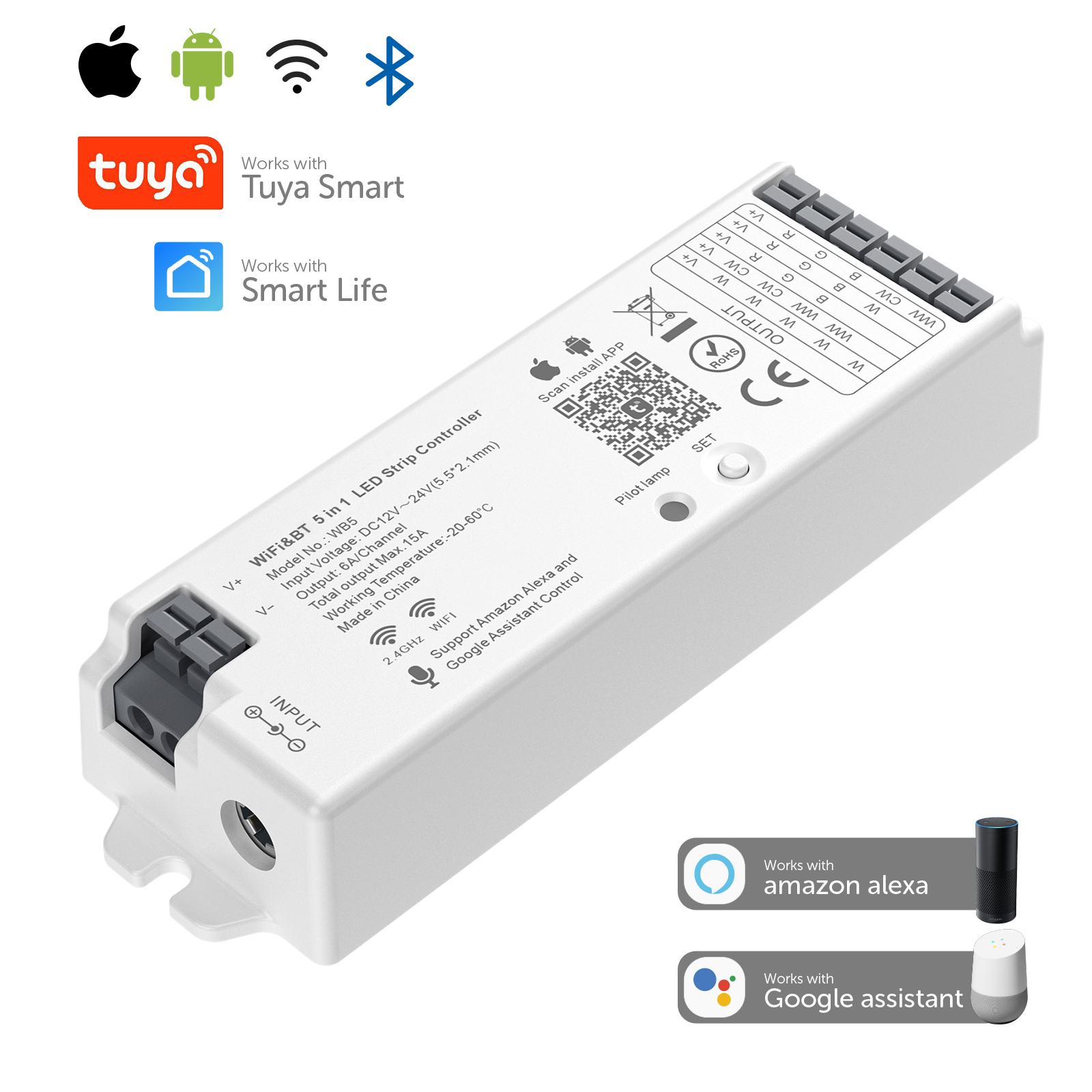
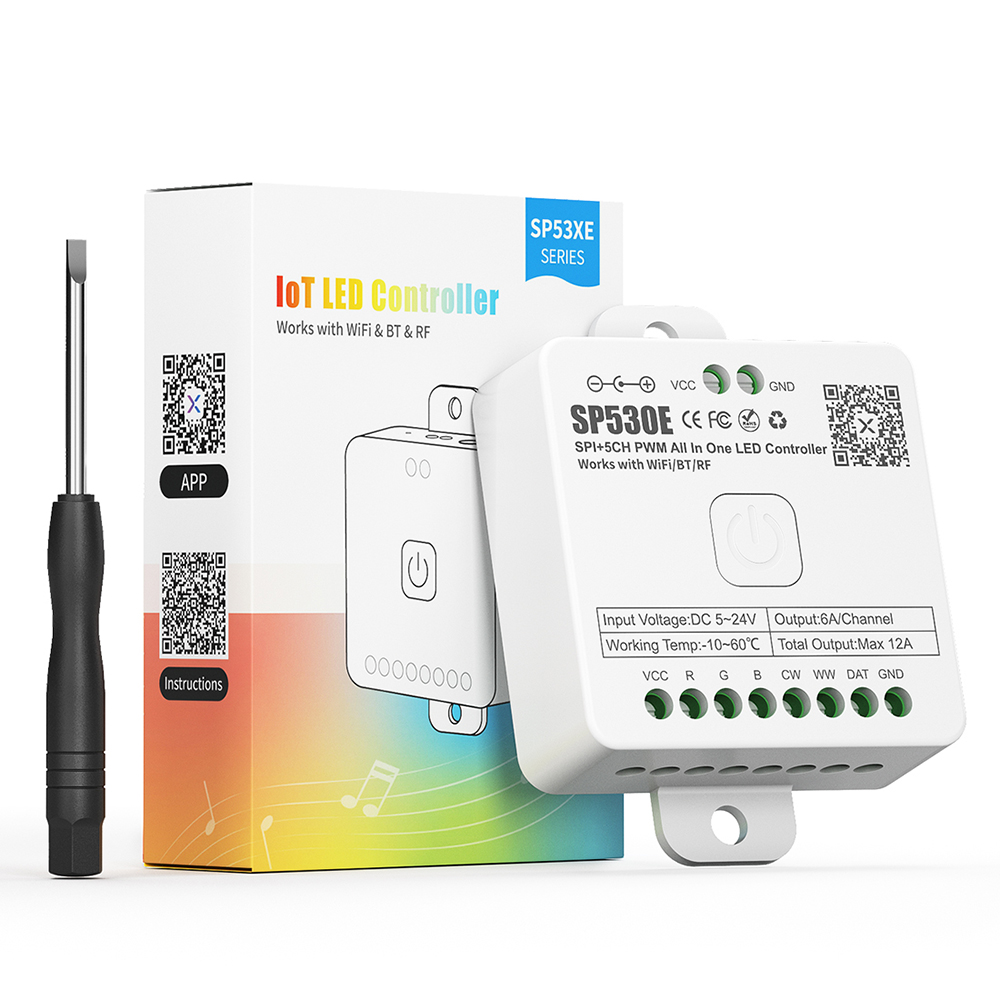
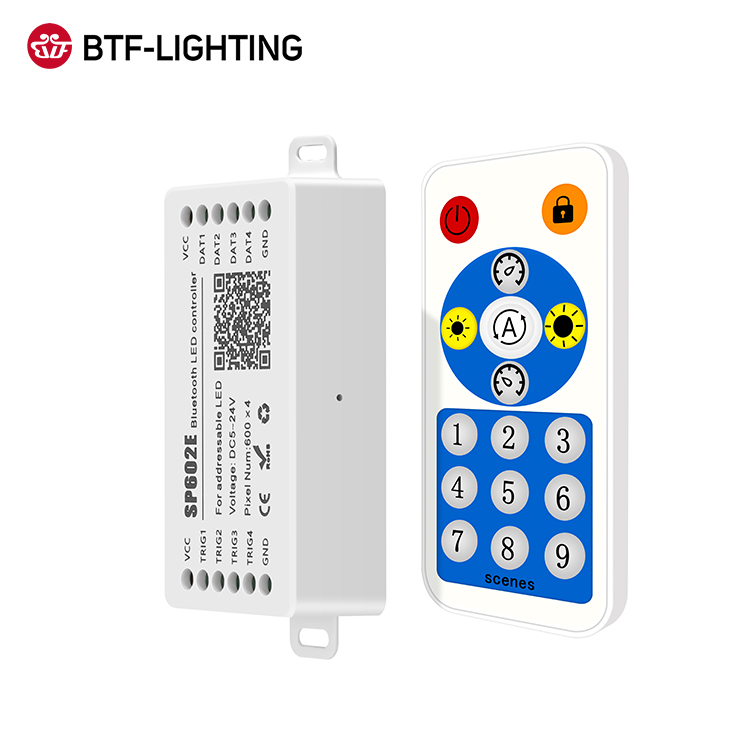
End-users no longer tolerate isolated light controllers. Future-proof procurement requires cross-protocol flexibility. Modern controllers (like the SP530E and WB5 multi-channel series) seamlessly bridge mobile app control (Tuya Smart/Smart Life), voice ecosystem compatibility (Amazon Alexa, Google Home), and pro-stage DMX512/Art-Net Ethernet pixel mapping.
4. Co-Extrusive IP68 Silicone Waterproofing Innovation
Traditional hollow silicone tubing and epoxy resin coatings degrade under UV exposure and yellow within 12–18 months. Modern outdoor procurement favors solid silicone co-extrusion (IP67/IP68). This technique seals the PCB inside optical-grade, non-yellowing silicone, providing resistance against saltwater corrosion, chlorine, UV radiation, and temperatures from -25°C to +70°C.
Custom OEM/ODM Manufacturing Capabilities
Empowering Brands, Importers, and Custom Lighting Integrators with Tailored Hardware Engineering and Private Label Packaging.
Your Blueprint, Our Factory Production Line
With over 7 years of specialized OEM/ODM export experience, Livdo Lighting provides end-to-end customization services for global lighting brands. From custom PCB circuit layout to proprietary controller firmware programming, our engineering team ensures your product stands out in competitive markets.
- Custom FPC Substrate: Custom PCB widths (5mm, 8mm, 10mm, 12mm), PCB color (White, Black, Brown), and copper thickness (2oz / 3oz / 4oz).
- LED Density & Banning: Custom chip placement from 30 LEDs/m up to 960 chips/m FCOB, with strict MacAdam Ellipse 3-step color binning.
- Protocol Integration: Tailored driver IC selection (WS2811, SK6812, GS8208, UCS1903, DMX512 built-in) matching your system specs.
- Private-Label Packaging: Custom reel printing, anti-static moisture-proof bags, barcode labels, and retail box packaging design.
OEM/ODM Project Workflow
- Technical Consultation: Requirements analysis, target voltage, waterproof rating, and IC selection.
- Prototyping & Sampling: Sample CAD PCB design, SMT rapid sampling within 3–5 working days.
- Lab Verification: Integrating sphere photometric analysis, aging test, and environmental chamber testing.
- Mass Production: Automated high-speed SMT placement, 100% burn-in aging, and automated reel winding.
- Global Logistics: Export-grade carton packing, ocean/air freight, and customs documentation support.
Frequently Asked Questions (FAQ) for B2B Procurement
Essential Technical and Commercial Answers to Support Overseas Distributors, Engineering Buyers, and Purchasing Managers.
What is the minimum order quantity (MOQ) for OEM/ODM orders?
For standard stocked models (e.g., standard WS2812B, WS2815, FCOB strips), our sample MOQ starts from just 2 to 5 rolls (5 meters/roll). For customized PCB copper color, custom CCT tuning, private label branding, or bespoke IC protocol integration, the MOQ typically ranges from 500 to 1,000 meters depending on specification complexity.
How do I select between 5V, 12V, and 24V RGBIC LED tape?
Select based on installation distance and power architecture: 5V strips (e.g., WS2812B) suit short, high-density runs (<2m) like wearable matrixes or gaming consoles due to higher current line drop. 12V strips (e.g., WS2815, WS2811) are the industry standard for 5-meter runs without noticeable voltage drop. 24V strips are engineered for long commercial architectural runs up to 10m–15m on a single power feed.
What is the key technical advantage of WS2815 over WS2812B?
WS2815 operates at 12V DC (reducing working current and voltage drop) and features dual-signal wire transmission (Data + Backup Data). If an individual LED or IC chip breaks on a WS2815 tape, the backup signal line continues transmitting data to downstream LEDs. On a WS2812B single-line tape, a single chip failure halts all subsequent pixels.
What quality control measures ensure long-term reliability?
Livdo Lighting enforces a rigorous 4-step quality control system: Incoming Quality Control (IQC) on raw LEDs/ICs/FPC, In-Process Quality Control (IPQC) during automated SMT placement, 100% 8-hour burn-in aging under full load, and Final Quality Control (FQC) inspecting CCT, lumen output, solder strength, and waterproofing prior to packing.
Can your smart pixel controllers integrate with existing DMX/Art-Net systems?
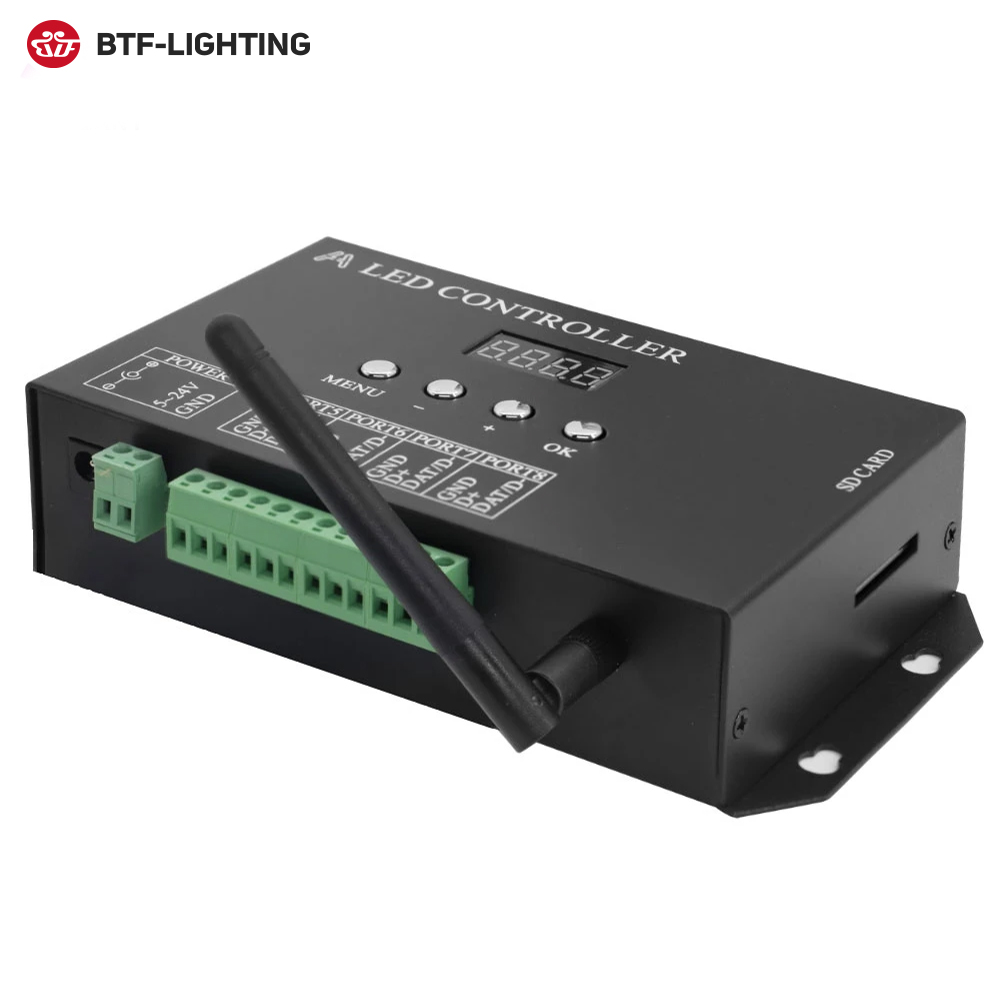
Yes. Controllers such as our SP530E and Art-Net Ethernet pixel controller series support multi-protocol mapping. They can receive signal via WiFi (Tuya App, Alexa, Google Home), 2.4G RF remote, or accept standard DMX512 / Art-Net signals via Ethernet RJ45, outputting TTL/SPI data directly to WS2811, WS2815, SK6812, or GS8208 strips.
What certification documentation is provided for customs clearance?
We supply full compliance packages including CE EMC/LVD reports, RoHS 2.0 material test declarations, FCC testing documents for North America, UKCA marks for the United Kingdom, PSE for Japan, and official SGS onsite audit reports verifying our manufacturing establishment.
Ready to Elevate Your RGBIC Lighting Portfolio?
Contact our engineering sales department today for factory-direct price sheets, custom OEM/ODM sample requests, and technical project consultation.