Flagship RGBW SMD & Addressable LED Strips Showcase
Engineered for commercial contractors, distributors, and OEM brands requiring superior binning, heat dissipation, and digital signal integrity.

BTF LIGHTING DC24V 840Leds/m RGBW RGB Dual White FCOB Addressable RGBWW COB RGBCCT Led Strip
- DC24V
- 840 LEDs/m
- FCOB Addressable
- RGB+CCT
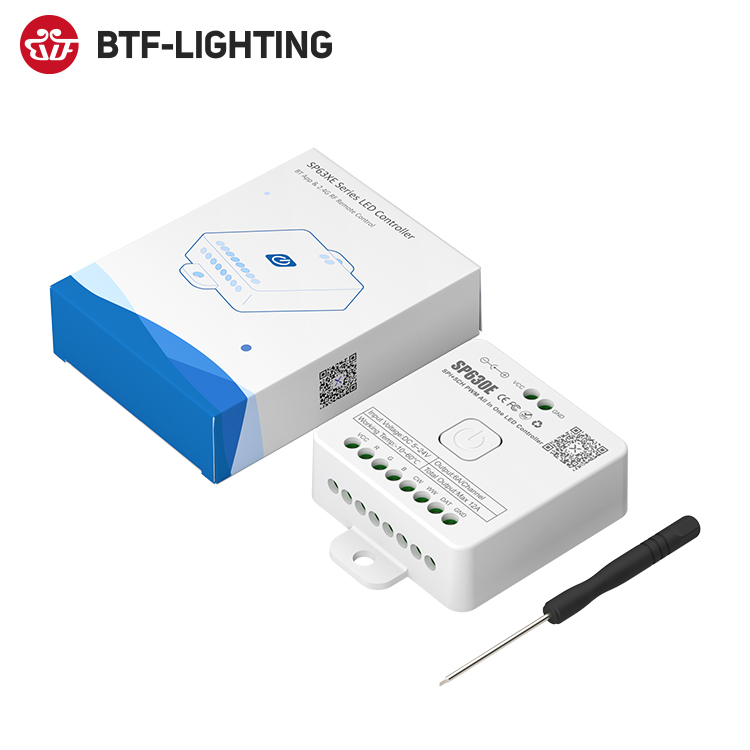
SP630E SPI PWM All in One Bluetooth Music Led Controller WS2811 SK6812 Pixel SMD5050 RGB RGBW CCT COB Led Strip Controller
- SPI + PWM
- Bluetooth Music
- WS2811/SK6812
- Multi-Zone
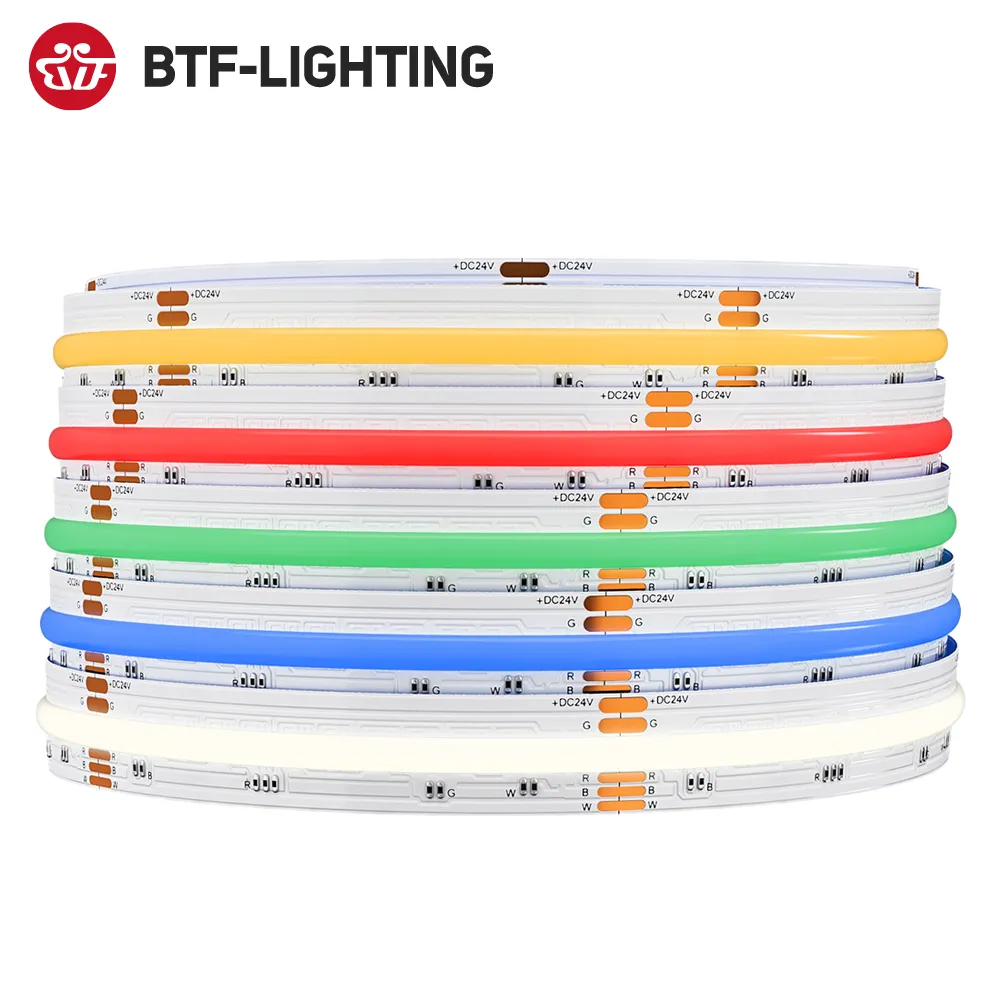
BTF-Lighting FCOB COB RGBW LED Light Strip 5Pin 12mm DC12V 24V 896 LEDs Flexible FOB COB RGBWW Led Strip Light
- DC12V/24V
- 896 LEDs/m
- 12mm PCB
- Seamless COB
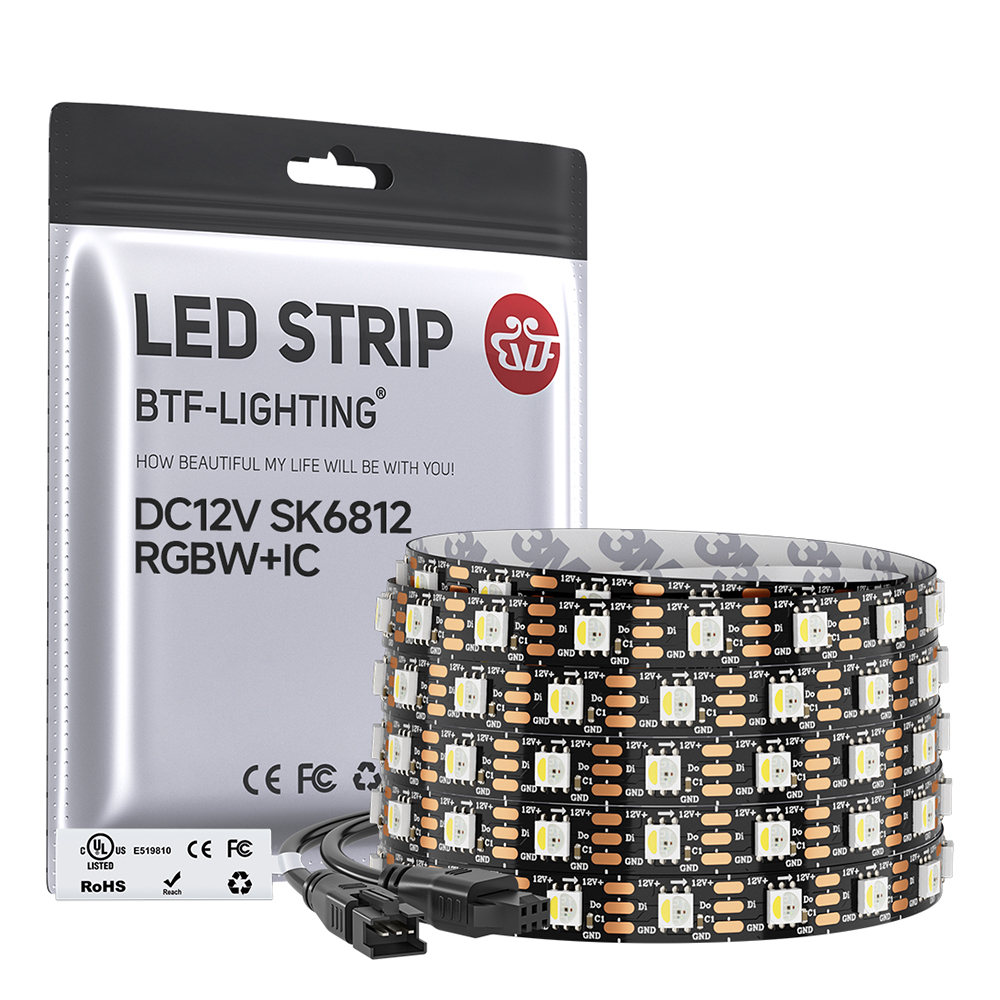
12V SK6812 RGBW Addressable LED Strip Light 60LEDs/m Individually Programmable Digital Pixel LED Tape
- DC12V
- 60 LEDs/m
- SK6812 IC
- Individual Pixel
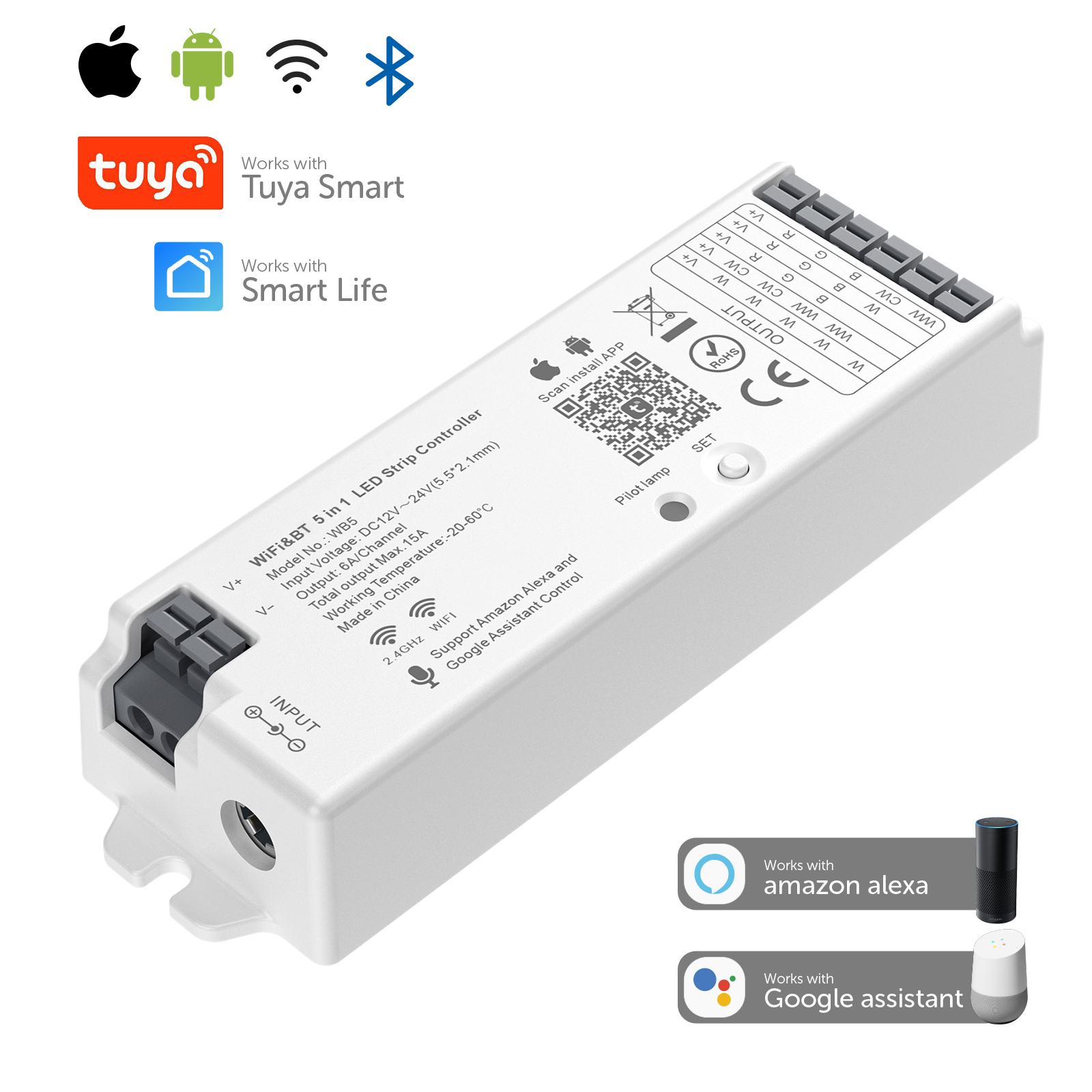
Tuya Wifi Alexa Voice Google Assistance WB5 Controller 5CH RGB RGBW CCT Dimmer 5 in 1 Bluetooth LED Light Strip Controller
- Tuya WiFi
- 5-in-1 Dimmer
- Alexa / Google
- 5 Channels
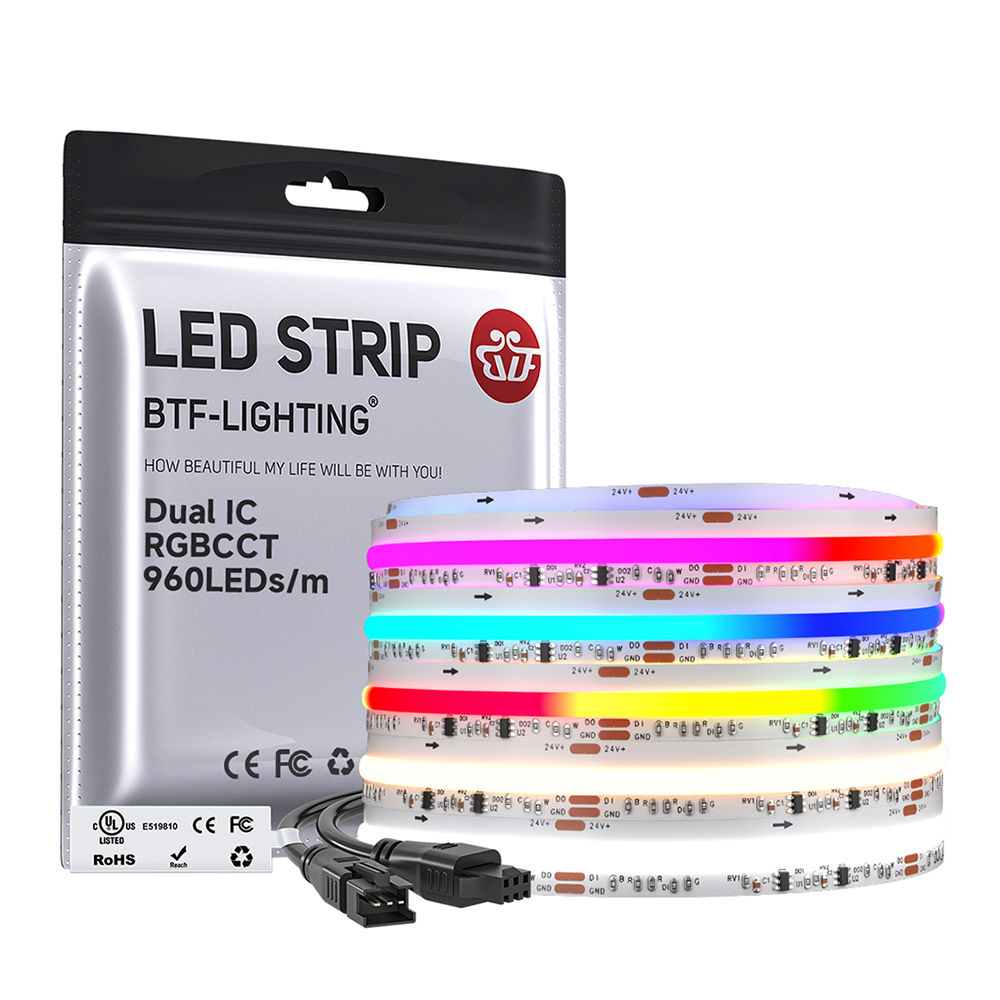
High Density FCOB DC24V 960Leds/m RGBCCTIC Dual IC WS2811 RGB CCT Addressable Digital RGBCCT LED Strip
- DC24V
- 960 LEDs/m
- WS2811 Dual IC
- Digital Chasing
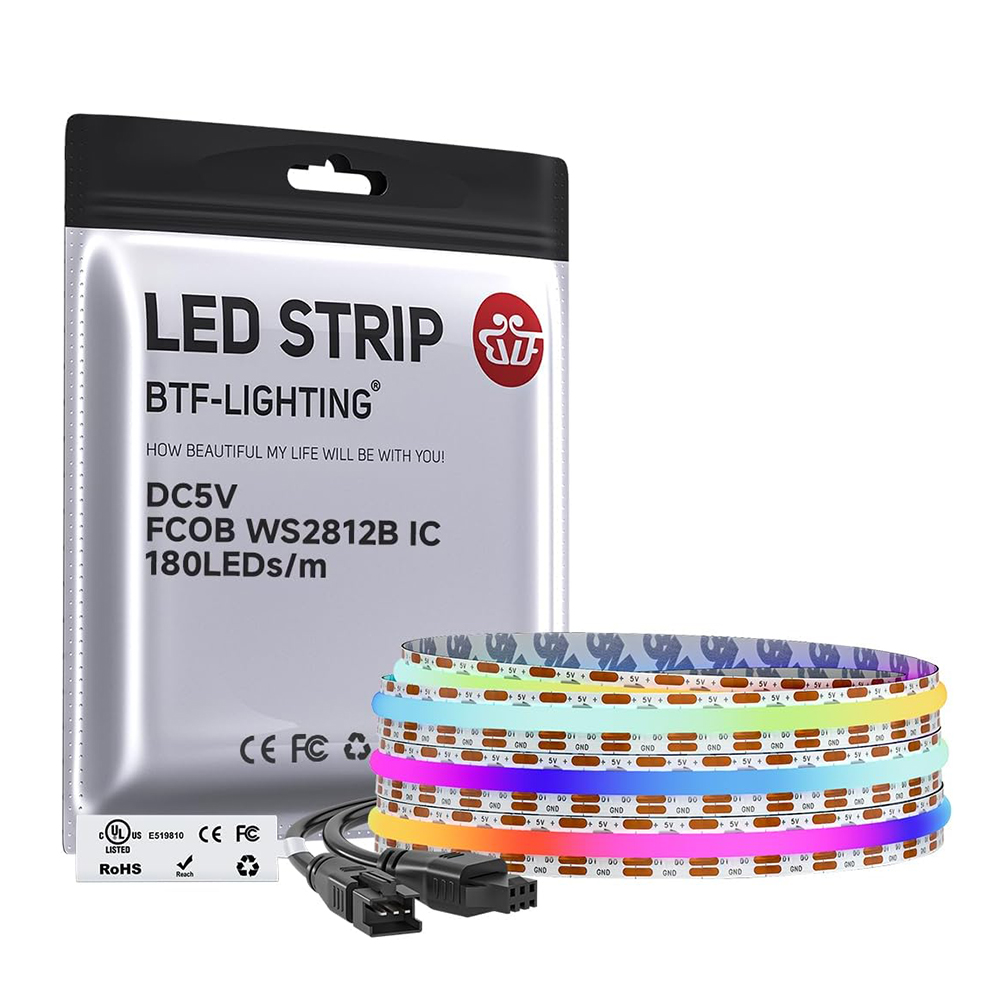
FCOB DC5V 180Leds/m BTF LIGHTING IP30 Non Waterproof WS2812B SPI Chasing Individual Addressable COB Led Strip
- DC5V
- 180 LEDs/m
- WS2812B Protocol
- Pixel COB
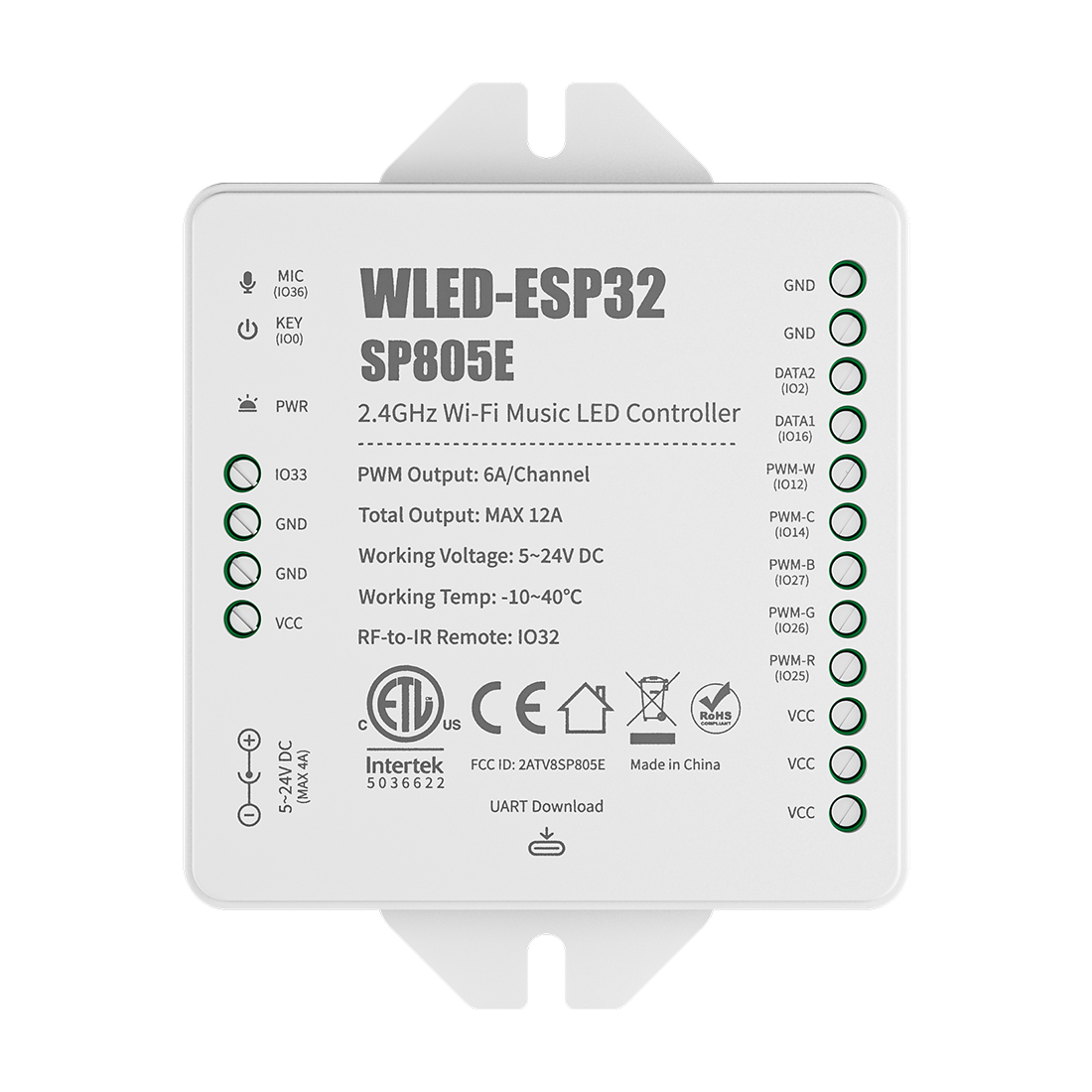
ETL Listed ESP32 WLED SP805E With Mic DIY Dynamic Modes UART Download USB Type-C PWM and SPI LED Strip Controller
- ETL Listed
- ESP32 WLED
- Built-in Mic
- SPI + PWM
Global RGBW SMD LED Procurement Trends (2025–2030)
Key technology shifts driving wholesale buying decisions for architectural lighting integrators, importers, and OEM LED brand owners.
1. The Transition from SMD to Continuous FCOB RGBW
Traditional SMD5050 RGBW LED tapes suffer from distinct hot spots and spatial pixel separation, requiring deep aluminum extrusions with heavy frosted diffusers. Procurement data indicates a massive shift toward Flip-Chip-on-Board (FCOB) RGBW technology. FCOB encapsulates bare diode dies under a uniform phosphor silicone matrix at chip densities exceeding 840 LEDs per meter, achieving dot-free linear illuminance in slim profiles under 10mm height.
2. Higher Operating Voltages (24V to 48V Architectures)
Line loss and voltage drop have historically limited 5V and 12V RGBW LED tape installations to 5-meter max continuous lengths before requiring power injection. Emerging commercial lighting projects demand single-feed long runs up to 15 to 20 meters. B2B buyers are standardizing procurement on 24V DC and 48V DC constant-voltage architectures with integrated constant-current IC drivers, reducing copper wiring labor by over 40% on job sites.
3. 4-in-1 Monolithic vs. Separated Dual-Chip Layouts
Legacy RGBW strips paired a discrete RGB SMD package alongside a standalone white SMD diode (e.g., SMD5050 RGB + SMD2835 White). This resulted in color fringing and asymmetric beam angles. Sourcing trends prioritize 4-in-1 monolithic SMD diodes (Red, Green, Blue, and White integrated into a single lead frame) or RGBCCT 5-in-1 packages that deliver perfectly blended mixed colors and true white rendering (CRI > 90) across 120-degree beam distributions.
4. Advanced SPI Digital Pixel Control & Fail-Safe Backup
Digital pixel control is expanding beyond stage lighting into commercial facades, hospitality backlighting, and dynamic workplace wellness lighting. Importers are moving from single-wire WS2811/WS2812B ICs to dual-signal fail-safe protocols like WS2815 and GS8208. These dual-data line ICs ensure that if an individual LED pixel suffers physical damage, signal transmission continues uninterrupted to subsequent chips, drastically cutting maintenance call-outs.
SMD5050 RGBW vs. FCOB RGBW: Architectural Comparison
A complete photometric and mechanical breakdown to assist lighting specifiers, OEM buyers, and electrical engineers in selecting the optimal linear LED substrate.
| Performance Specification | Standard SMD5050 RGBW Tape | High-Density FCOB RGBW Strip | Addressable SK6812 / WS2814 RGBW |
|---|---|---|---|
| Diode Packaging Density | 60 – 120 LEDs / meter | 784 – 960 LEDs / meter | 30 – 144 LEDs / meter |
| Visual Uniformity | Hotspots visible without deep profile | 100% Dot-Free continuous line | Pixelated dots; controllable per unit |
| PCB Thermal Substrate | 2 oz Rolled Annealed Copper | 3 oz Electrolytic Dual-Layer Copper | 2 oz / 3 oz Double-sided FPC |
| Color Rendering Index (CRI) | Ra 80 (White Channel) | Ra > 90 / Ra > 95 (Custom CCT) | Ra 80 – Ra 90 depending on phosphor |
| Beam Angle & Diffusion | 120° (Requires frosted lens) | 180° ultra-wide spread | 120° focused directional beam |
| Flexibility & Bending Radius | Moderate (Risk of solder crack) | Extreme flex (5mm minimum bend) | Moderate bending radius |
| Voltage Drop Behavior | 10% drop over 5 meters (12V) | < 5% drop over 10 meters (24V) | Requires injection every 5m (5V/12V) |
| Primary Target Application | Cove lighting, direct channel letters | Architectural accents, slim profiles | Stage mapping, dynamic visual effects |
Thermal Impedance & Substrate Engineering
The operational lifespan of an RGBW SMD LED strip is directly dictated by junction temperature ($T_j$). When Red, Green, Blue, and White chips operate simultaneously at 100% duty cycle, thermal output reaches peak density (up to 19.2W per meter). Superior factories utilize 3oz electrolytic dual-layer copper flexible printed circuits (FPC). This low thermal impedance design conducts heat away from the silicone die to the thermal tape backing, maintaining junction temperatures below 65°C and preventing phosphor discoloration or premature lumen depreciation (LM-80 standard compliance).
Phosphor Chemistry & White Channel Binning
A key quality differentiator in wholesale RGBW procurement is white channel color consistency. Low-end suppliers use broad MacAdam 5-step binning, resulting in noticeable chromaticity differences between production lots. Premier manufacturing lines implement 3-step MacAdam Ellipse binning with customized rare-earth YAG/KSF phosphors. Whether your specification requires 2700K warm ambient white, 4000K neutral daylight, or 6500K cool crisp white, strict chromaticity tolerance ensures consistent color harmony across multi-thousand meter installations.
Top 10 Sourcing & Evaluation Criteria for RGBW Manufacturers
When auditing Chinese LED strip factories and wholesalers, use this technical checklist to benchmark manufacturing reliability and compliance.
Verify high-speed Yamaha or Panasonic surface mount technology (SMT) equipment capable of 0.1mm placement tolerance for delicate 4-in-1 SMD and FCOB dies.
Factory must provide lot-specific spectroradiometer test reports validating absolute spectral flux, CCT, SDCM, CRI ($R_a$ and $R_9$), and luminous efficacy ($lm/W$).
Rigorous suppliers enforce a mandatory 8 to 12 hour continuously powered burn-in aging test on 100% of finished reels to isolate early-life LED semiconductor defects.
Insist on integrated silicone liquid co-extrusion (IP67/IP68) rather than yellowing-prone PVC or manual epoxy spray coatings for outdoor structural longevity.
Authentic 3M 9495LE or 3M VHB high-tack backing tape ensures long-term mechanical bonding to aluminum profiles without peeling under thermal expansion.
Ensure the production facility holds valid third-party assessment certification (e.g., SGS onsite audited 2,053+ m² plant) confirming authentic manufacturing assets.
Full product line compliance with CE, RoHS 2.0, FCC, UKCA, PSE, and ETL listing for smart controllers ensures smooth international customs clearance.
In-house software and firmware engineering capabilities for Tuya WiFi, Bluetooth SIG Mesh, Zigbee 3.0, DMX512 decoders, and ESP32 WLED custom protocols.
Ability to engineer private-label FPC silk screening, custom cut intervals, custom wire harnesses, and tailor-made retail reel packaging within 7 days.
Clear 3-year to 5-year replacement warranty backed by traceable component sourcing (Epistar, San'an, Refond, or Nationstar LED chips).
Shenzhen Manufacturing Benchmark & Custom Capabilities
Founded in 2014, Shenzhen Livdo Lighting Technology Co., Ltd. operates an SGS-verified 2,053 m² production facility in Shiyan, Shenzhen—the epicenter of global LED innovation.
Precision Manufacturing & Quality Control
Our factory houses 3 automated SMT assembly lines, reflow soldering tunnels, automatic FPC welding machinery, and specialized waterproof silicone sealing chambers. With an experienced workforce of 83 technical staff and a dedicated internal QC lab, every production lot undergoes rigorous environmental testing—including salt spray corrosion chambers, constant temperature & humidity testing, and pull-strength mechanical stress analysis.
Over 85% of our annual output is exported to lighting distributors, commercial integrators, and e-commerce brand owners across North America, Western Europe, and East Asia.
OEM / ODM Customization Workflow
Frequently Asked Sourcing & Technical Questions
Direct answers from our senior engineering team to solve common procurement, installation, and compatibility issues.
What is the minimum order quantity (MOQ) for wholesale and OEM orders?
For standard stocked products (e.g., standard FCOB RGBW reels or standard WS2812B/WS2815 pixel tapes), MOQ starts at just 2 to 5 rolls (5 meters per roll). For custom PCB widths, special CCT binning, custom silk-screen logos, or private label retail packaging, MOQ ranges from 100 to 500 rolls depending on engineering specifications.
How does SK6812 RGBW differ from WS2814 and WS2815 IC protocols?
SK6812 RGBW operates at DC5V with single-pixel control and an integrated 4-channel PWM driver within a 5050 package. WS2814 is a 4-in-1 RGBW protocol designed for higher DC12V/DC24V operation (often controlling 3 or 6 LEDs per IC segment). WS2815 operates at DC12V with dual-data backup lines, meaning if one pixel burns out, data bypasses the faulty diode and keeps the rest of the strip running.
Why choose 24V over 12V or 5V for commercial RGBW installations?
Operating current ($I$) is halved at 24V compared to 12V for equivalent wattage ($P=V \times I$). Lower amperage reduces resistive copper heating and voltage drop along the flexible printed circuit. This allows longer continuous runs (up to 10 meters) without noticeable dimming at the tail end, requiring fewer power supply units and reducing installation labor.
What safety certifications and test reports are available for customs clearance?
Our products carry full CE, RoHS 2.0, FCC, UKCA, and PSE certifications. Smart controllers (like our ESP32 and Bluetooth models) feature ETL listing. Signed Declarations of Conformity (DoC) and complete photobiological safety (IEC 62471) test reports are provided with all commercial orders for seamless customs compliance.
Request Wholesale Pricing & Factory Specification Catalog
Partner with an SGS-verified Shenzhen factory. Receive instant volume pricing tiers, photometric IES files, customized sample rolls, and direct engineering support for your upcoming LED projects.