Featured Digital RGB / RGBW / FCOB LED Strips & Pixel Controllers
Direct-from-factory addressable lighting engines engineered for seamless architectural integration, high pixel density, and smart protocol compatibility.
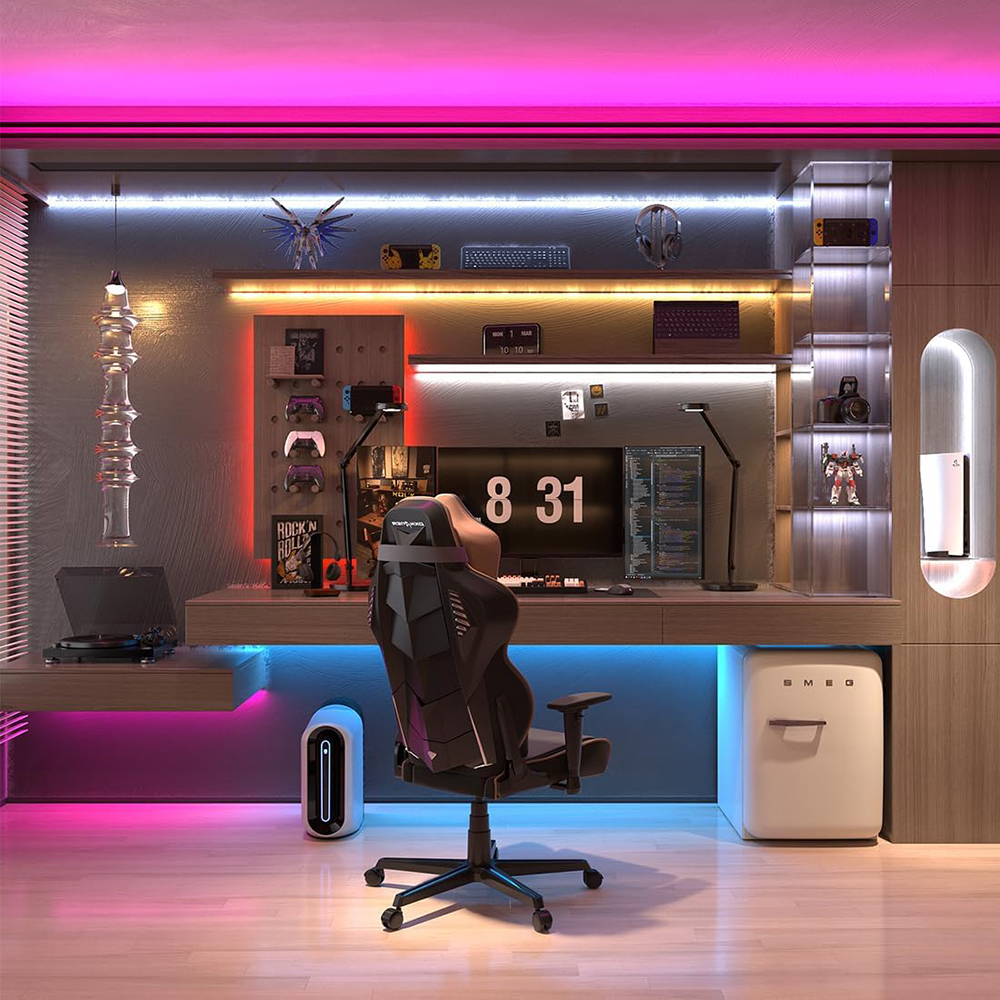


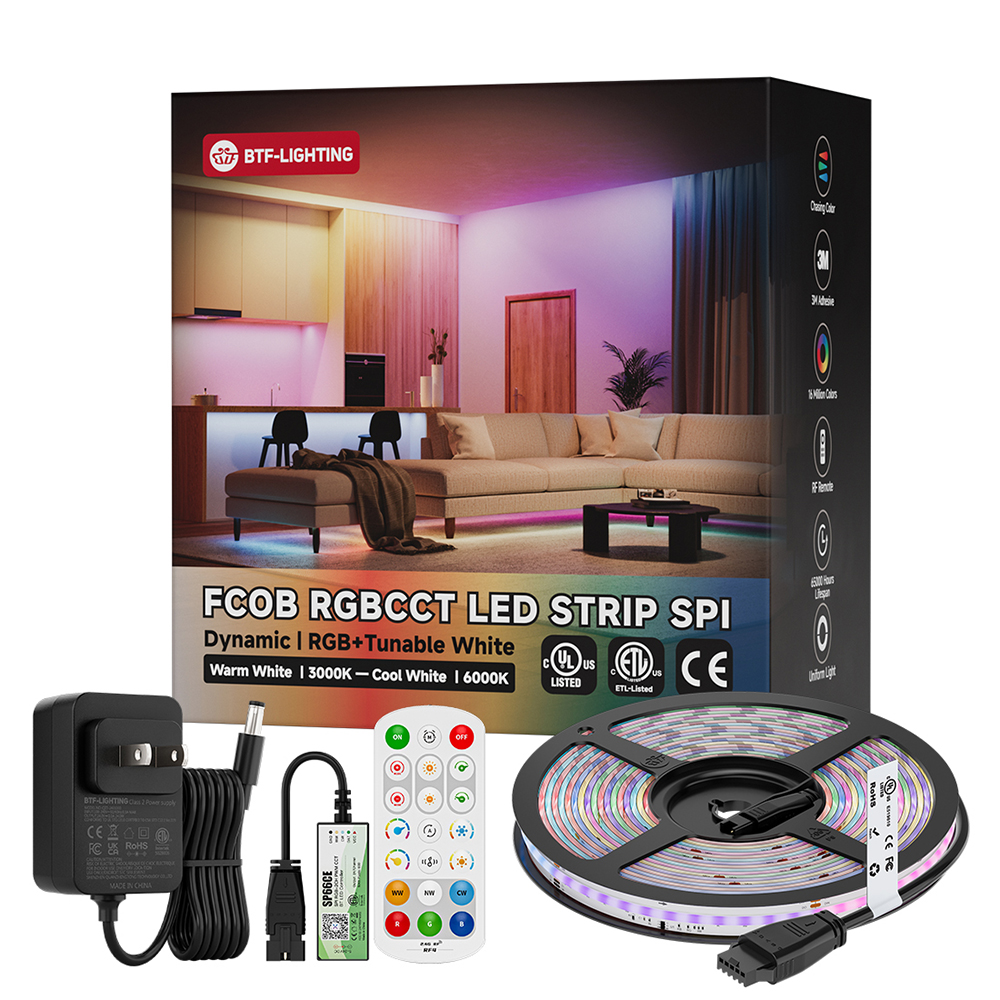
State of Digital Addressable LED Technology: Engineering, IC Architectures, and B2B Sourcing Strategies
An authoritative analysis by Shenzhen Livdo Lighting Technology Co., Ltd. on semiconductor integration, continuous phosphor FCOB technology, signal redundancy, and structural reliability for global OEM/ODM lighting buyers.
1. The Paradigm Shift: From Discrete SMD Packaging to Continuous FCOB Pixel Systems
For over two decades, surface-mount device (SMD) technology—predominantly utilizing SMD 5050, 3528, and 2835 packages—served as the core foundation for flexible LED strip manufacturing. However, traditional SMD-based digital RGB strip lights suffer from inherently high pixel pitch gaps, resulting in visible light hotspots, uneven luminance distribution, and mandatory deep aluminum extrusion profiles equipped with thick opal diffusers to achieve smooth linear illumination.
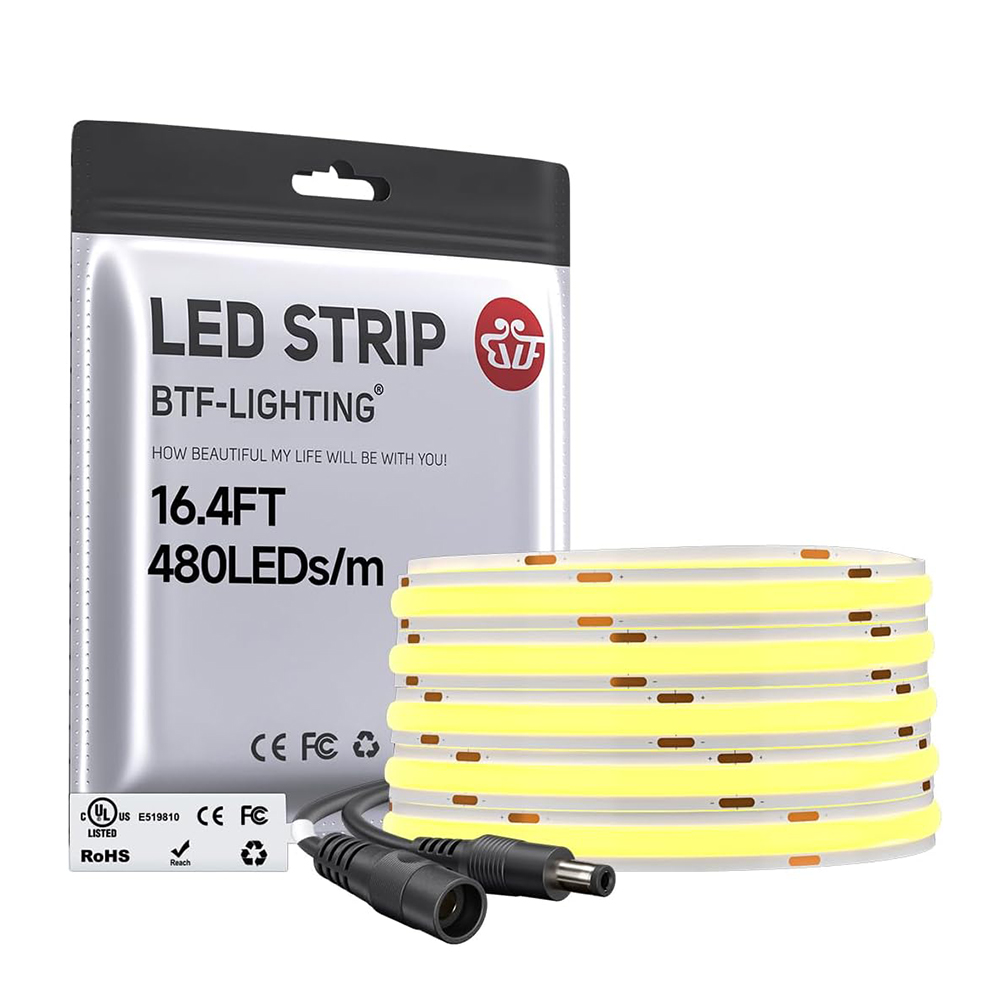
The emergence of Flip-Chip on Board (FCOB or COB) technology has fundamentally transformed architectural digital lighting. By eliminating lead-frame bonding wires and packaging bare semiconductor dies directly onto a flexible printed circuit board (FPC) beneath a continuous layer of linear phosphor matrix, FCOB addressable LED strips achieve ultra-high die densities (ranging from 480 to 960 chips per meter). When combined with integrated circuit (IC) signal drivers such as WS2811, SK6812, or specialized SPI channels, FCOB digital RGB/RGBW strips deliver a seamless, dot-free "line of light" visual effect even in shallow profiles with zero optical diffusion depth.
| Technical Architecture | Standard SMD Digital RGB (5050) | Advanced FCOB SPI Addressable RGB/RGBW | Engineering Advantage |
|---|---|---|---|
| Chip Density | 30 to 144 LEDs / meter | 480 to 960 Chips / meter | +500% light emitting surface continuity |
| Beam Angle & Uniformity | 120° (Requires heavy optical profile) | 180° Continuous linear luminescence | Zero hotspots in ultra-slim aluminum channels |
| Mechanical Flexibility | Moderate (Subject to wire-bond stress) | Superior (Flip-chip die bonded directly) | Significantly lower risk of micro-fractures on bends |
| Thermal Dissipation | Higher thermal resistance per package | Direct chip-to-copper heat path (2oz–4oz FPC) | Lower junction temperature ($T_j$), extended lifespan |
| Color Rendering (CRI) | Typically Ra > 80 | Ra > 90 / TLCI > 95 (for RGBW/RGBCCT) | True-to-life color fidelity for high-end retail/hospitality |
2. Integrated Circuit (IC) Topology & Protocol Engineering
Evaluating digital RGB LED strips requires a granular understanding of the driving Integrated Circuits (ICs). Selecting the proper protocol dictates signal integrity, maximum refresh rates, controller channel allocation, and installation tolerance.
- WS2811 IC Protocol (External Driving, 12V/24V): A time-tested, cost-effective NRZ (Non-Return-to-Zero) single-wire control protocol. Operating typically at 12V or 24V DC, a single WS2811 IC controls a cluster of 3 or 6 LED chips as one addressable pixel. This configuration dramatically reduces operating current per strip, minimizes line voltage drop, and allows long continuous cable runs in commercial interior coves and building facades.
- WS2812B IC Protocol (Built-In 5V Smart Pixel): Integrates the control circuit and RGB chip into a single SMD 5050 package. Operating at 5V DC with individually addressable single-pixel control, WS2812B remains the global industry standard for high-resolution dynamic displays, custom matrix panels, and consumer gaming accent setups.
- WS2815 & GS8208 IC Protocol (12V Dual-Data Redundancy): Addressing the critical single-point failure weakness of standard single-wire strips, WS2815 and GS8208 feature dual-signal data lines (Data Main + Backup Data). If an individual LED chip or internal IC sustains mechanical or thermal damage, the signal seamlessly bypasses the failed pixel, allowing the remainder of the strip run to operate without signal breakdown—an indispensable specification for mission-critical architectural projects.
- SK6812 RGBW (Dedicated White Channel Engineering): Unlike traditional RGB mixed white (which yields a harsh, low-CRI bluish-white tone around 7000K), SK6812 adds a true 4th channel (Warm White 2700K, Neutral White 4000K, or Cool White 6500K). This allows seamless switching between vivid dynamic color animations and high-CRI functional ambient illumination.
- SK9822 / APA102 (Clock + Data Two-Wire Architecture): Operating via dual-wire SPI (Data line + Independent Clock line), these ICs decouple pixel timing from the internal oscillator speed. They deliver ultra-high PWM refresh rates (> 4kHz), eliminating temporal light flicker and rolling band artifacts when recorded by high-speed video cameras in television broadcasting, film production, and stage lighting.
SEO & B2B Engineering Insights: When specifying addressable LED strip products for high-end architectural tenders, choosing 24V FCOB SPI addressable systems with dual-data signal lines (such as WS2815 or customized GS8208 FCOB variants) eliminates up to 80% of post-installation maintenance callbacks caused by voltage drop or single-pixel failures.
3. Electrical Engineering, Voltage Drop, and Thermal Dissipation Management
A common engineering failure in large-scale digital LED strip deployments is current attenuation—commonly known as voltage drop. As electrical current travels through the copper traces of a flexible printed circuit (FPC), resistance causes voltage to diminish along the length of the run. In 5V systems (like WS2812B), visible color shifting (turning pink/red at the end of a 5-meter run) occurs rapidly without double-ended power injection.
At Shenzhen Livdo Lighting Technology Co., Ltd., our engineering team mitigates voltage drop through three primary manufacturing enhancements:
- Heavy Double-Sided Rolled Copper FPC (3oz / 4oz Copper Weight): Utilizing high-purity electro-deposited or rolled-annealed copper layers significantly reduces internal trace resistance ($R_{trace}$), extending continuous power run distances without luminance decay.
- 24V Step-Down Circuit Design: By stepping up the system voltage to 24V DC, current ($I$) is reduced by 75% for an equivalent wattage load ($P=V \times I$). This permits run lengths up to 10 meters on a single power feed while maintaining identical lumen output across every pixel.
- Direct-Bonding Thermal Pad Matrices: Thermal management directly correlates with luminous decay ($L_{70}$) and wavelength stability. Our automated SMT lines apply high-conductivity thermal tape (3M 9495LE / 8810) and thermally enhanced dielectric solder masks to ensure junction temperatures remain below $65^\circ\text{C}$ under 100% full-white load.
Future Procurement & Sourcing Trends in Digital RGB Lighting
Strategic technical forecasts for global distributors, lighting designers, and OEM procurement managers preparing for the next generation of solid-state illumination.
1. Total Transition to High-Density FCOB Addressable Pixels
The market demand for discrete SMD 5050 pixel strips is shifting rapidly toward high-density FCOB RGBIC and RGBCCT pixel tapes. Procurement trends indicate that over 60% of commercial architectural projects will specify dot-free COB pixel structures by 2026 due to aesthetic preferences for continuous linear light channels.
2. Universal Smart Protocol Integration (Matter, Zigbee 3.0 & SPI)
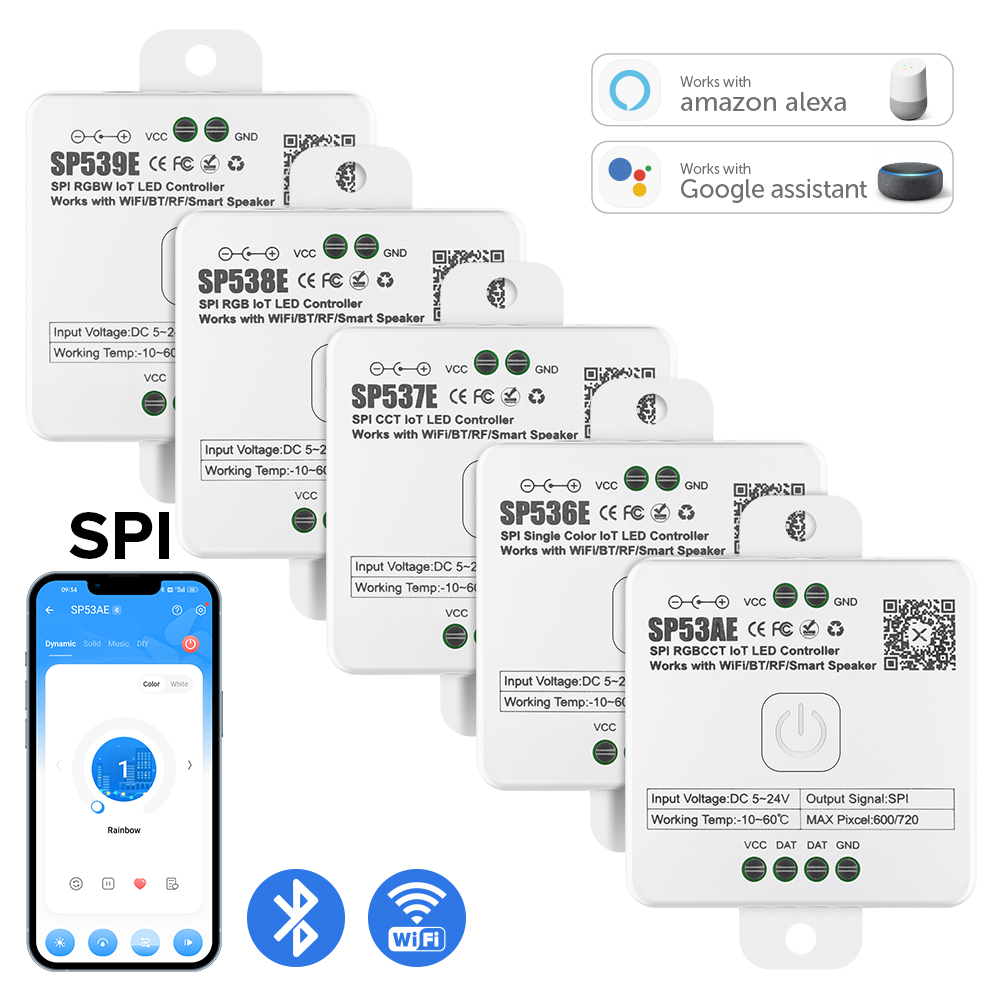
Siloed proprietary RF controllers are losing ground to multi-protocol, unified control ecosystems. Future-proof procurement demands controllers (such as the SP536E series and Tuya Smart WB5 modules) that seamlessly bridge SPI addressable pixels with Matter, Zigbee 3.0, Wi-Fi 2.4GHz, Bluetooth Mesh, and DMX512/RDM stage consoles.
3. Spectrum Precision & High CRI (RGBCCT 5-in-1 / 6-in-1)
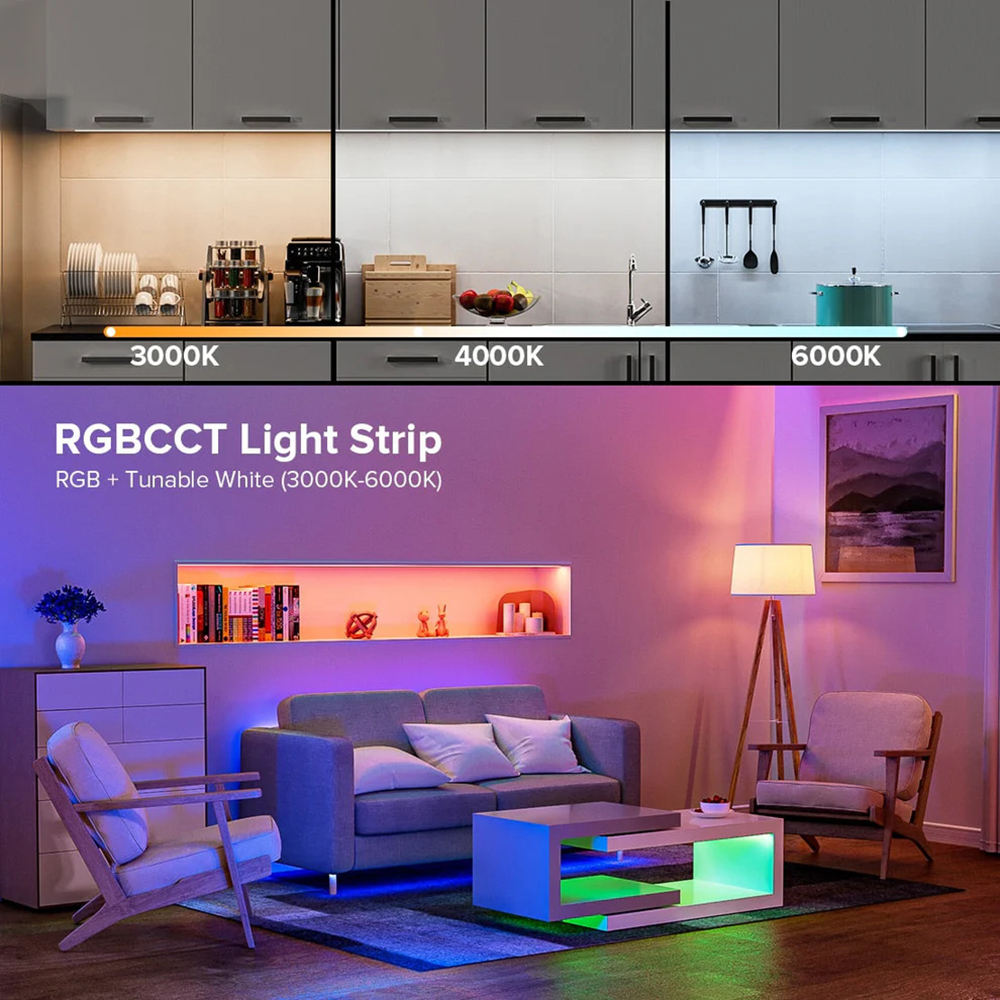
Modern lighting specifiers no longer accept saturated color alone. Sourcing trends prioritize 5-in-1 RGBCCT and 6-in-1 FCOB systems capable of combining dynamic RGB full-color chasing with tunable white light (2700K to 6500K) achieving Ra > 90 and R9 > 80 for museum, retail display, and luxury residential applications.
4. Industrial-Grade Environmental Encapsulation (IP67 / IP68 Silicone Co-Extrusion)
Legacy PVC tube waterproofing is being replaced by integrated silicone co-extrusion technology. Silicone encapsulation resists UV degradation, yellowing, chemical corrosion, and extreme temperatures (-40°C to +80°C), making outdoor addressable linear lighting reliable for oceanfront, swimming pool, and facade installations.
Why Direct Buyers Partner with Shenzhen Livdo Lighting Technology Co., Ltd.
Founded in 2014, Livdo Lighting operates a 2,053 m² SGS-verified manufacturing facility in Shiyan, Shenzhen—the world's capital for LED innovation.
SGS Onsite Verified Factory
Our 2,053 m² production facility, automated SMT lines, aging racks, and team of 83 skilled personnel undergo annual rigorous onsite verification audits conducted by SGS Group.
Complete Certification Compliance
All product lines are fully certified for seamless customs clearance across global destination markets: CE, RoHS, FCC, UKCA, PSE, and ETL listed mark for specialized smart controllers.
Rigorous 100% Quality Assurance
Every production batch undergoes 4 steps of testing: incoming raw component check (IQC), in-line SMT soldering inspection (IPQC), 100% full-power burn-in aging test (OQC), and integrating sphere spectrophotometer CCT/lumen calibration.
OEM / ODM Customization Mastery
With 7+ years of dedicated OEM/ODM experience, we support custom FPC width (5mm to 15mm), tailored copper thickness, specialized LED binning, customized IC firmware protocol matching, private label branding, and custom retail packaging.
Precision SMT & Quality Assurance Workflow
From stencil paste printing, automated high-speed chip placement, and multi-zone reflow soldering to solder joint microscope inspection, continuous silicone extrusion waterproofing, and pulling force wire connection checks—our Shenzhen facility maintains strict ISO9001 quality management protocols to ensure zero-defect shipment for every OEM customer order.
Frequently Asked Questions for B2B Importers & Distributors
Clear, expert engineering answers to assist your sourcing decisions, specification approvals, and logistics planning.
Q1: What is the Minimum Order Quantity (MOQ) for wholesale LED strip orders?
For standard stocked items (such as standard FCOB tapes, WS2812B, WS2815, and SPI controllers), the MOQ starts from 2 to 3 rolls (5 meters per roll) or 1 to 5 pieces for controllers. For custom OEM projects involving bespoke FPC logos, custom PCB widths, specialized CCT binning, or custom packaging, the MOQ is typically 1,000 meters or confirmed on a per-project basis.
Q2: What is the technical difference between FCOB and traditional SMD LED strips?
FCOB (Flip-Chip on Board) attaches bare LED dies directly onto the flexible PCB traces under a continuous linear phosphor matrix at high density (480–960 chips/m), delivering seamless, dot-free lighting without a diffuser. Traditional SMD (Surface Mount Device) strips use individual packaged LEDs (like 5050 or 2835) mounted at spaced intervals, which produce visible light spots unless installed inside deep aluminum channels with frosted covers.
Q3: How do I choose between addressable IC models: WS2811, WS2812B, WS2815, and SK6812?
Select WS2812B (5V) for short, ultra-dense single-pixel projects; select WS2811 (12V/24V) for long architectural runs requiring low voltage drop where 3 or 6 LEDs per pixel is acceptable; select WS2815 (12V) when dual-data backup signal redundancy is required so one failed pixel won't disrupt the rest of the strip; and choose SK6812 when a dedicated White channel (RGB + Warm/Cool White) is required for ambient lighting.
Q4: What international safety and electromagnetic compliance certifications do your products hold?
Our products carry comprehensive documentation including CE (EMC & LVD), RoHS, FCC, UKCA, PSE, and Declaration of Conformity. Selected smart controllers hold the ETL Listed mark for North American market compliance. Furthermore, our factory facility is officially verified onsite by SGS Group.
Q5: Do you provide full OEM/ODM manufacturing and private-label packaging?
Yes. Backed by 7+ years of OEM experience, we provide end-to-end OEM/ODM services. We can customize operating voltage (5V/12V/24V/36V/48V), PCB width, copper weight, LED density, IC chip model, waterproof IP rating (IP20, IP65 silicone coating, IP67 silicone tube, IP68 solid injection), custom lead wire connectors, brand logo printing, and customized anti-static bag packaging.
Q6: What payment terms, trade currencies, and incoterms do you support?
We accept wire transfer (T/T), Letter of Credit (L/C), PayPal, and Western Union in USD, EUR, or CNY currencies. Delivery terms include EXW (Factory direct), FOB (Shenzhen/Hong Kong), CFR, CIF, and express courier (DHL/FedEx/UPS) for fast sample turnarounds.
Q7: How does Livdo Lighting ensure batch-to-batch color consistency (MacAdam Ellipse)?
We enforce strict LED chip binning protocols. All LED chips and phosphor matrices are sourced from certified single-bin manufacturing lots, maintaining color consistency within a 3-step MacAdam Ellipse SDCM (<3 SDCM) across repeat orders, eliminating CCT variance for multi-phase architectural projects.
Q8: How can I request pricing, product datasheets, or engineering samples?
You can click any of our interactive catalog buttons on this page to trigger an instant inquiry dialog with our sales engineering team, or email us directly at [email protected] with your project specifications.
Ready to Accelerate Your Lighting Business with a Top China LED Factory?
Get direct manufacturer wholesale pricing, official SGS audit reports, complete test certificates, and full OEM engineering support today.