
1. Technical Foundations: Artnet SPI Ethernet Control in High-Density LED Installations
Modern architectural and dynamic visual lighting design requires an exponentially higher data throughput than traditional analog dimming or basic DMX512 networks can accommodate. DMX512 is fundamentally limited to 512 control channels per universe operating over an RS-485 physical layer at a baud rate of 250 kbps. When orchestrating massive pixel-mapped matrixes—such as building facades, luxury resort perimeter coves, or immersive entertainment venues—a single universe only drives 170 RGB pixels (512 / 3 = 170.66). To overcome this bandwidth bottleneck, international lighting engineers and systems integrators rely on Art-Net over Ethernet (TCP/IP) mapped to Serial Peripheral Interface (SPI) protocols.
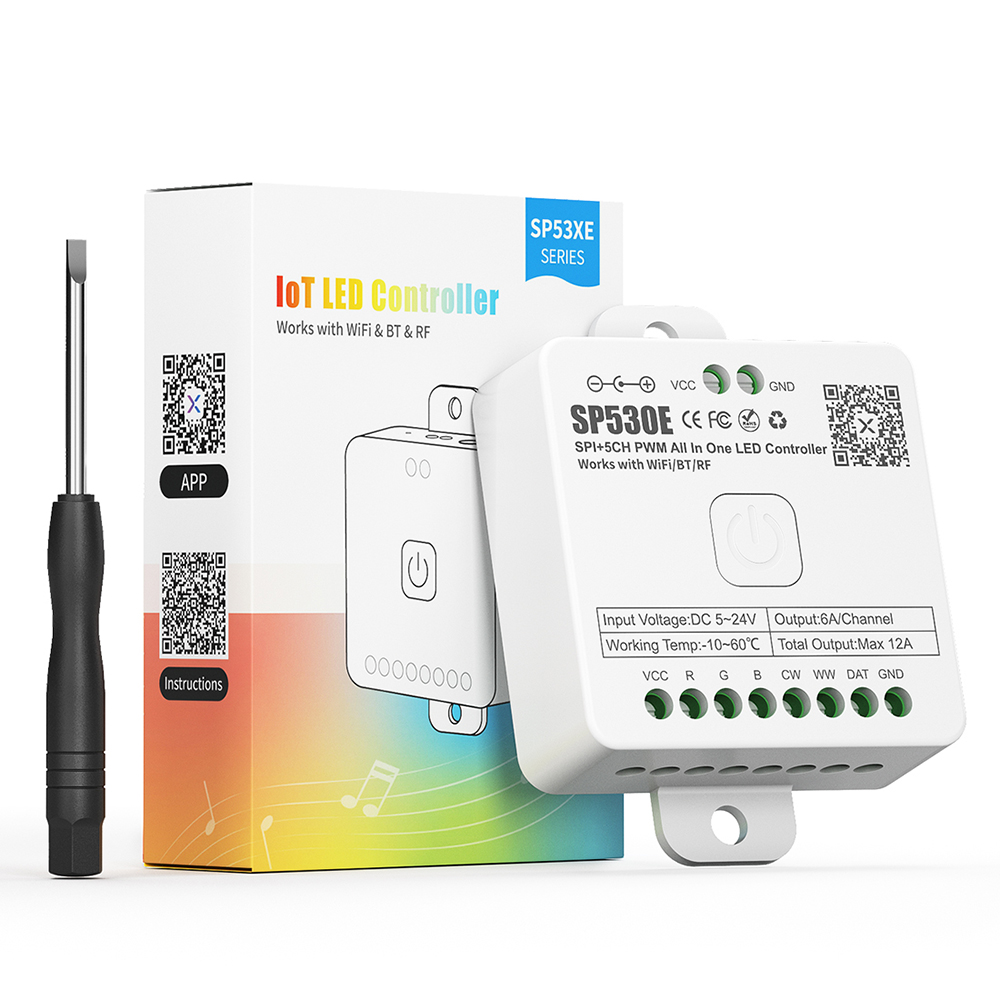
Art-Net III and Art-Net IV protocols wrap DMX lighting control data inside standard UDP Ethernet packets, transmitting data across 10/100/1000 Mbps network infrastructure. This allows thousands of DMX universes to travel down a single Cat5e/Cat6 cable without signal degradation or latency. An Artnet SPI Ethernet Pixel Controller serves as the critical hardware bridge: it receives multi-universe Ethernet packets from lighting control software (such as MADRIX, Resolume, LightJams, or onyx) or hardware consoles, processes the Art-Net payload in real time using high-speed ARM Cortex microprocessors, and translates the raw lighting data directly into high-speed SPI timing protocols (TTL/CMOS data and clock signals) required by addressable digital LED driver ICs.
Technical Information Gain Factor: SPI protocols lack standard error correction over long wire distances. When translating Ethernet to SPI, physical distance between the Ethernet controller output terminals and the first LED pixel must be carefully managed. High-end Artnet-to-SPI converters utilize differential RS-422 signal drivers at the controller head, converting the TTL signal into a balanced differential pair that travels up to 300 meters over twisted-pair copper before converting back to single-ended SPI at the strip edge.
SPI Protocol Selection & Microchip Timing Dynamics
Selecting the correct driver IC logic is essential when deploying pixel-controlled LED systems. As an OEM manufacturer, Shenzhen Livdo Lighting Technology Co., Ltd. designs SPI decoders and addressable strip configurations tailored to specific timing parameters:
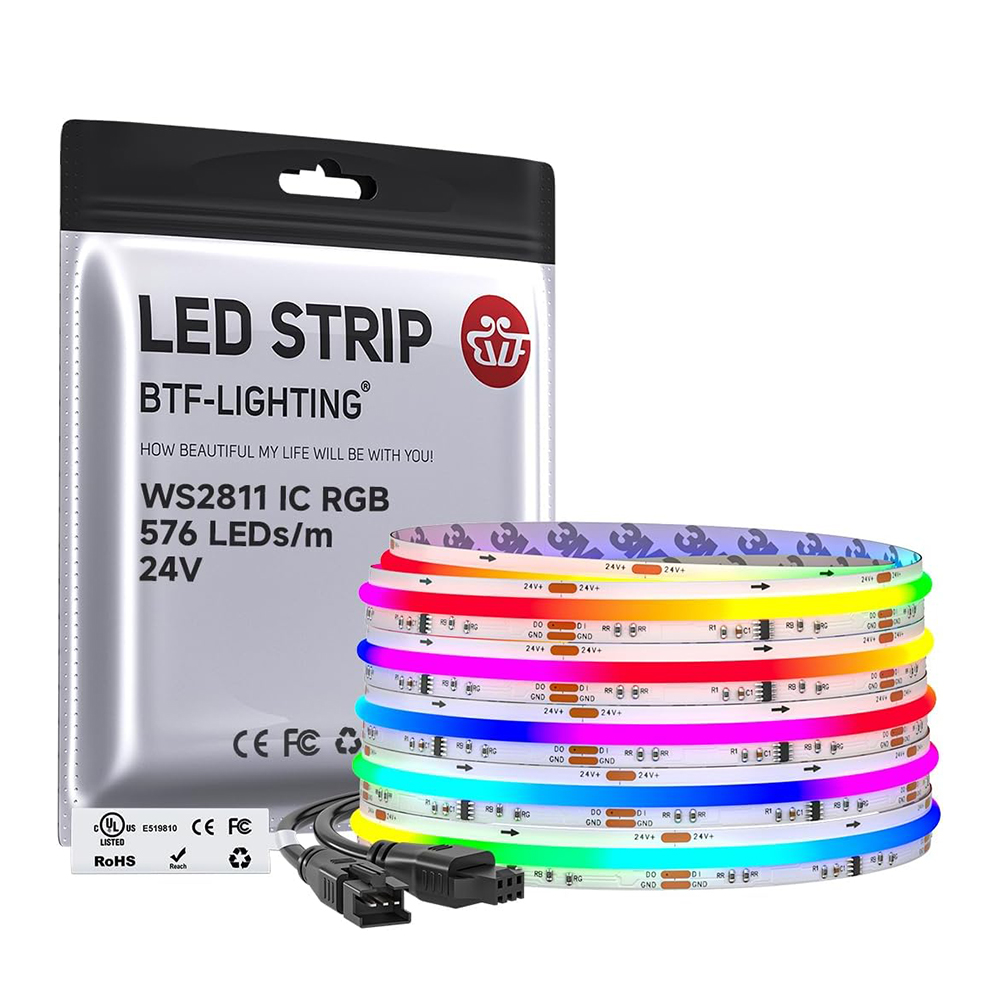
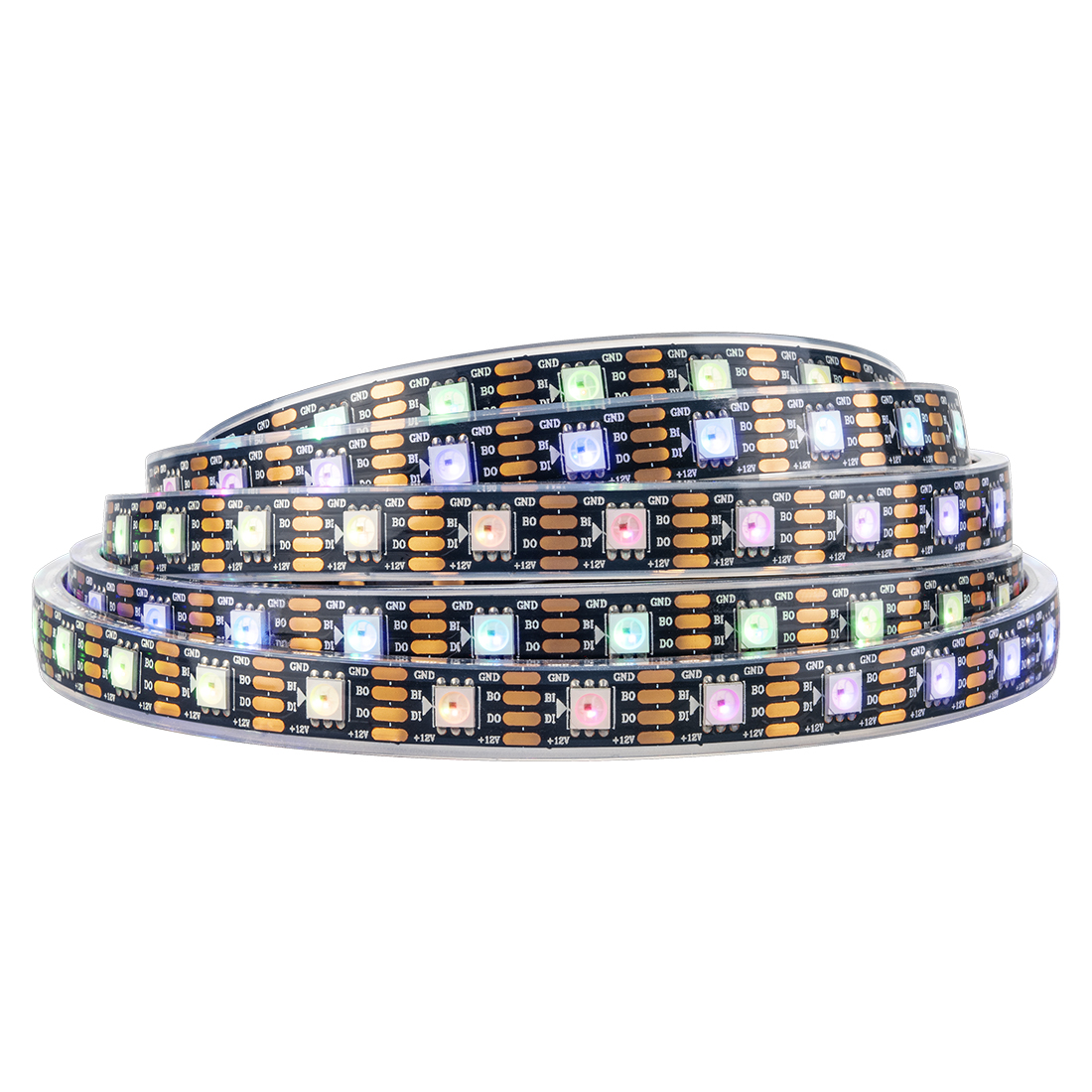
- Single-Wire Data Protocols (e.g., WS2811, WS2812B, SK6812): These chips rely on strict non-return-to-zero (NRZ) timing pulses (typically 800 kHz frequency). The controller output pin toggles data at precise microsecond intervals. While cost-effective, if one pixel suffers physical damage, the data stream down the rest of the chain terminates unless dual-data redunancy is engineered into the strip.
- Dual-Signal Redundant Protocols (e.g., WS2815, GS8208): Engineered for high-reliability commercial projects. WS2815 operates on DC12V and features a main Data line (DIN) and a Backup Data line (BIN). If an individual LED chip fails or is mechanically torn off, the signal bypasses the broken pixel, allowing the remainder of the strip run to function seamlessly without data dropout.
- Clock + Data Dual-Wire Protocols (e.g., SK9822, APA102): Utilizing separate Data (DAT) and Clock (CLK) lines, these ICs remove the strict timing dependency of single-wire chips. They allow refresh rates exceeding 4 kHz to 20 kHz, completely eliminating flicker during high-speed video recording, slow-motion broadcasting, or theatrical camera operation.
2. Engineering & Localized Application Scenarios Serving Kingstown, St. Vincent & The Grenadines
Kingstown, as the primary commercial hub and port capital of Saint Vincent and the Grenadines (SVG), is experiencing rapid development across luxury hospitality, eco-tourism resorts, marine yachting infrastructure, and municipal waterfront renovations. Implementing advanced pixel-addressable lighting systems in Kingstown presents distinct environmental and electrical challenges that standard commercial-grade hardware fails to address.
A. Coastal Salinity & High-Humidity Environmental Resilience
Installations along Port Kingstown, Villa Beach, and neighboring Grenadine island developments (such as Bequia and Canouan accessed via Kingstown supply hubs) face harsh maritime environments. Salt-laden marine air rapidly oxidizes exposed copper FPC traces and corrodes Ethernet RJ45 network terminals on pixel controllers.
To withstand Kingstown's tropical marine climate (featuring ambient temperatures averaging 28°C to 32°C combined with up to 85% relative humidity), Livdo Lighting's Artnet SPI Ethernet Controllers and pixel strip assemblies are engineered with marine-grade protective measures:
- IP67 / IP68 Silicone Solid-Extrusion Waterproofing: Unlike standard PVC tubed strips which turn yellow and crack under intense Caribbean UV radiation, our outdoor pixel strips utilize micro-optical grade silicone co-extrusion that resists UV degradation, salt mist, and thermal expansion.
- Conformal Coated PCB Assemblies: Control unit mainboards undergo automated multi-layer conformal coating, protecting integrated microcontrollers, Ethernet PHY chips, and terminal blocks against moisture condensation and airborne salinity.
B. Luxury Resort & Waterfront Hospitality Facade Lighting
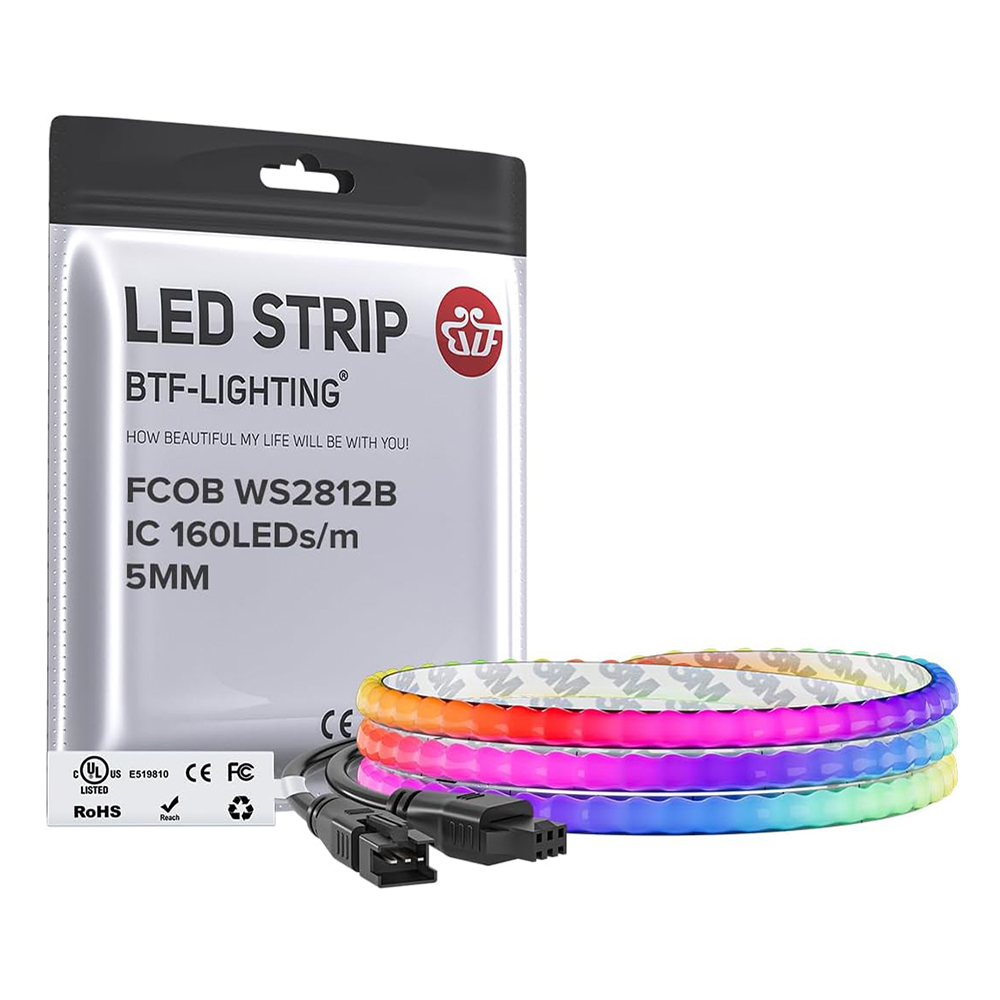
Hotels and luxury private villas surrounding Kingstown require smooth dynamic architectural accenting—such as flowing water effects along overhangs, dynamic sunset color washes, and discreet cove illumination. Standard SMD pixel strips suffer from visible LED "hotspots" when mounted in shallow architectural channels. By pairing our Artnet SPI Ethernet Decoders with FCOB (Flip-Chip on Board) SPI Addressable Strips, designers achieve a continuous, dot-free line of animated light at 720 to 840 chips per meter, even when viewed up close.
C. Island Power Grid Stability & Voltage Drop Mitigation
Electrical grids in island environments can experience minor voltage fluctuations and thermal line loss. Long architectural lighting runs operating on DC5V experience severe voltage drop over just 2 to 3 meters, resulting in color shifts (e.g., white turning pink at the end of a run). Livdo Lighting solves this for Kingstown contractors by supplying DC12V (WS2815) and DC24V (WS2811 / FCOB SPI) pixel systems, cutting operating current by 50% to 75% for identical wattage, extending single-feed run lengths to 10–15 meters without brightness decay.
3. Comprehensive Technical Matrix: Hardware Protocol Comparison
Use the authoritative comparison table below to determine the ideal protocol hardware for your structural project in Kingstown or international installations:
| Protocol / IC Type | Operating Voltage | Max Signal Cable Distance | Refresh Rate Capacity | Fault Tolerance | Primary Localized Application |
|---|---|---|---|---|---|
| Art-Net to WS2811 | DC12V / DC24V | 15m (Unbuffered TTL) / 300m (Diff) | ~800 kHz | Standard (Series Chain) | Long architectural coves, exterior building perimeter lining |
| Art-Net to WS2815 | DC12V | 15m (Unbuffered TTL) / 300m (Diff) | ~800 kHz | High Redundancy (Dual Data Line) | High-end resort facades, hard-to-access marine soffits |
| Art-Net to SK6812 | DC5V / DC12V | 10m (Unbuffered TTL) | ~800 kHz | Standard (RGB+W 4-Channel) | Interior hospitality, true-white accent cove lighting |
| Art-Net to SK9822 | DC5V | 5m (Data + Clock Pair) | > 15 MHz (Ultra-High) | High Speed Timing | TV/Broadcast studios, stage performance, slow-mo camera spaces |
| Art-Net to FCOB SPI | DC12V / DC24V | 12m (Unbuffered TTL) | ~800 kHz | Linear Dot-Free Continuous | Luxury hotel lobby features, wall washing, high-end retail |
4. Localized Caribbean Lighting Trends & Technical Integration Frameworks (2026+)
As Caribbean architecture trends toward smart digital building management systems (BMS) and eco-conscious luxury, electrical engineers and lighting distributors serving Saint Vincent and the Grenadines are adapting to three major technical evolutions:
1. Transition from DMX512 to Ethernet Architecture
Legacy installations restricted by 512 channels are being retrofitted with IP-addressable Art-Net/sACN nodes, allowing software routing over standard gigabit switches without rewiring physical DMX lines.
2. Widespread Adoption of FCOB SPI Technology
Traditional discrete SMD LEDs are being replaced by continuous phosphor linear COB LED arrays driven by SPI chips, providing seamless lighting lines inside architectural extrusion profiles.
3. Redundant Dual-Data Line Standardisation
Commercial clients in Kingstown now mandate dual-signal backup protocols (WS2815/GS8208) to protect multi-story facade investments against maintenance downtime caused by single-pixel failures.
5. Enterprise Advantages & Quality Rigor: Shenzhen Livdo Lighting Technology Co., Ltd.
Founded in 2014 in Shiyan, Shenzhen, Shenzhen Livdo Lighting Technology Co., Ltd. is a specialized high-tech manufacturer focused on high-density FCOB flex strips, individually addressable pixel strips, and intelligent SPI/PWM control systems. Our enterprise infrastructure is built to serve international B2B importers, engineering contractors, and OEM lighting brands with uncompromising standards.
SGS-Verified Manufacturing Facilities
Our 2,053 square meter modern factory space has passed comprehensive onsite audits by SGS Group. Operating 3 automated SMT high-speed placement lines, reflow soldering suites, precision silicone extrusion machinery, and dedicated aging racks, we maintain rigorous control over every stage of assembly.
Comprehensive Quality Control (QA/QC) System
Quality reliability is non-negotiable when sending lighting products across global supply chains to destinations like Kingstown. Livdo Lighting enforces a strict 4-stage inspection workflow:
- Incoming Raw Material Testing (IQC): Binning verification of LED chips, thermal conductivity testing of FPC copper foil, and silicon chip timing verification for all driver microchips.
- In-Line Automated Optical Inspection (IPQC): Real-time SMT solder joint inspection via optical microscopes to prevent cold joints or bridging on high-density SPI circuits.
- 100% Full-Load Aging Test: Every roll of pixel strip and every Artnet controller undergoes 8 to 24 hours of continuous powered burn-in aging in controlled environmental chambers to eliminate infant mortality defects.
- Integrating Sphere & Salt Mist Verification (OQC): Photometric parameters (CCT, CRI, Lumen output, Duv) are logged using spectroradiometer integrating spheres. Waterproof IP67/IP68 units undergo salt-spray chamber testing to confirm marine corrosion immunity.
6. B2B Procurement FAQ for Buyers & Engineers in Kingstown
Direct answers to technical and procurement inquiries common among commercial buyers, electrical contractors, and importers operating in Saint Vincent and the Grenadines:
Request an Engineering Quote or Custom OEM Proposal
Partner directly with a verified Shenzhen factory for your upcoming architectural, hospitality, or commercial lighting projects serving Kingstown and global markets.
Send an Inquiry