

Architectural Engineering & Supply Chain Strategy for Aiwo Importers
As the global solid-state lighting market transitions from static single-color illumination toward dynamic, human-centric, and software-defined pixel architectures, commercial importers and lighting engineering contractors serving Aiwo demand more than off-the-shelf LED strips. Securing a reliable supply chain requires deep technical oversight of semiconductor packaging, thermal management physics, IC protocol stability, and color rendering metrics. As a premier RGB LED chips exporter and wholesaler for Aiwo, Shenzhen Livdo Lighting Technology Co., Ltd. delivers factory-direct engineering expertise tailored to the specific climatic, electrical, and aesthetic requirements of the regional Aiwo ecosystem.
Semiconductor Packaging Chemistry: SMD 5050 vs. Flip-Chip COB (FCOB)
For B2B buyers in Aiwo, selecting between surface-mount device (SMD) packaging and direct Flip-Chip on Board (FCOB) technology represents a crucial engineering trade-off between peak lumen output and spatial beam uniformity:
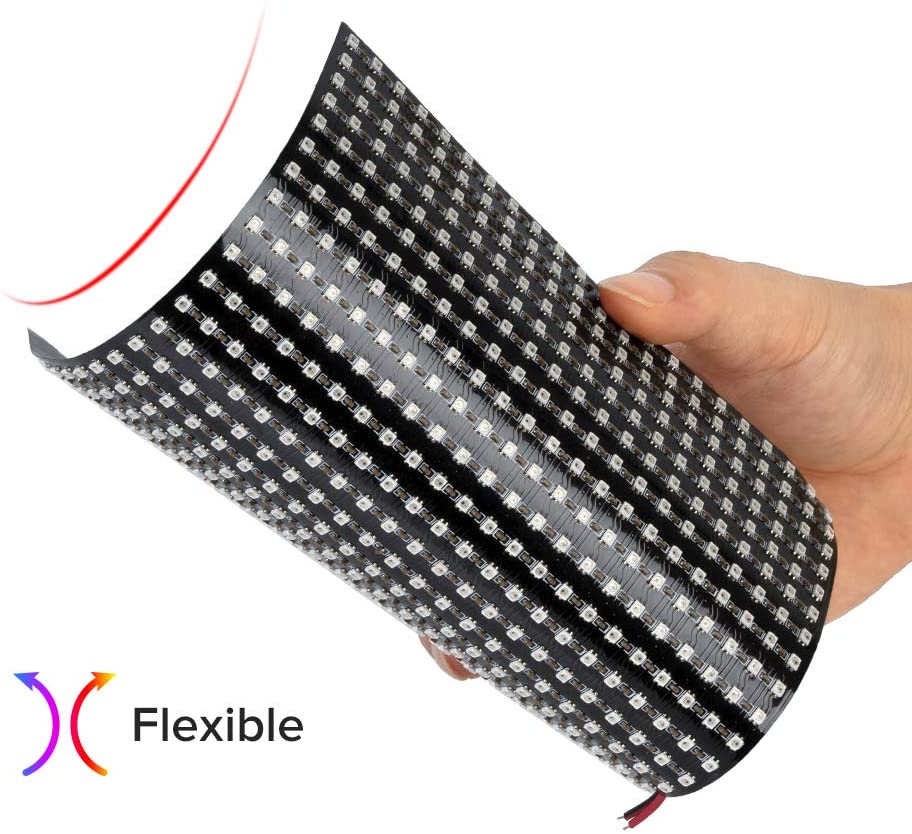
- SMD 5050 & 2427 LED Chips: Traditional SMD architecture packages Red, Green, and Blue diodes into a plastic leaded chip carrier (PLCC). While SMD 5050 offers high peak luminous intensity and versatility for 4-in-1 (RGBW) or 5-in-1 (RGBCCT) configurations, its discrete spacing (e.g., 30, 60, or 144 LEDs per meter) creates visible light hotspots or "pixelation" when mounted in shallow aluminum extrusions.
- Flip-Chip COB (FCOB) Innovation: FCOB eliminates bonding wires by directly bonding inverted diode dies to the flexible copper PCB. Encapsulated under a continuous linear phosphor matrix, FCOB strips achieves chip densities ranging from 480 to 960 chips per meter. This yields a uninterrupted, 180-degree dot-free line of light without the optical diffusion losses associated with heavy frosted polycarbonate covers.
| Technology Parameter | SMD 5050 / 3528 RGB | FCOB (Flip-Chip COB) RGB | Addressable SPI Pixel (WS2815) |
|---|---|---|---|
| Linear Die Density | 30 – 144 LEDs/m | 480 – 960 Chips/m | 60 – 144 Pixels/m |
| Beam Angle & Spotting | 120° (Requires Diffuser) | 180° (Seamless Dot-Free) | 120° (Programmable Spots) |
| Thermal Resistance (Rthj-c) | 45 – 60 K/W | 15 – 25 K/W (Direct Copper) | 35 – 50 K/W |
| Voltage Drop Behavior | High on 5V, Moderate on 12V | Minimal on 24V (3oz PCB) | Signal Backup (Dual Data Line) |
| Target Aiwo Application | High-Power Flood / Backlighting | Low-Profile Cove / Architectural | Dynamic Facades & Media Arrays |
Voltage Decay Dynamics & Signal Integrity Engineering
A primary challenge reported by lighting contractors in Aiwo is color shift and voltage attenuation over extended linear runs. When current flows through thin FPC traces, copper resistance causes an IR drop, leading to dimmed red shift at the far end of a 5-meter or 10-meter reel.
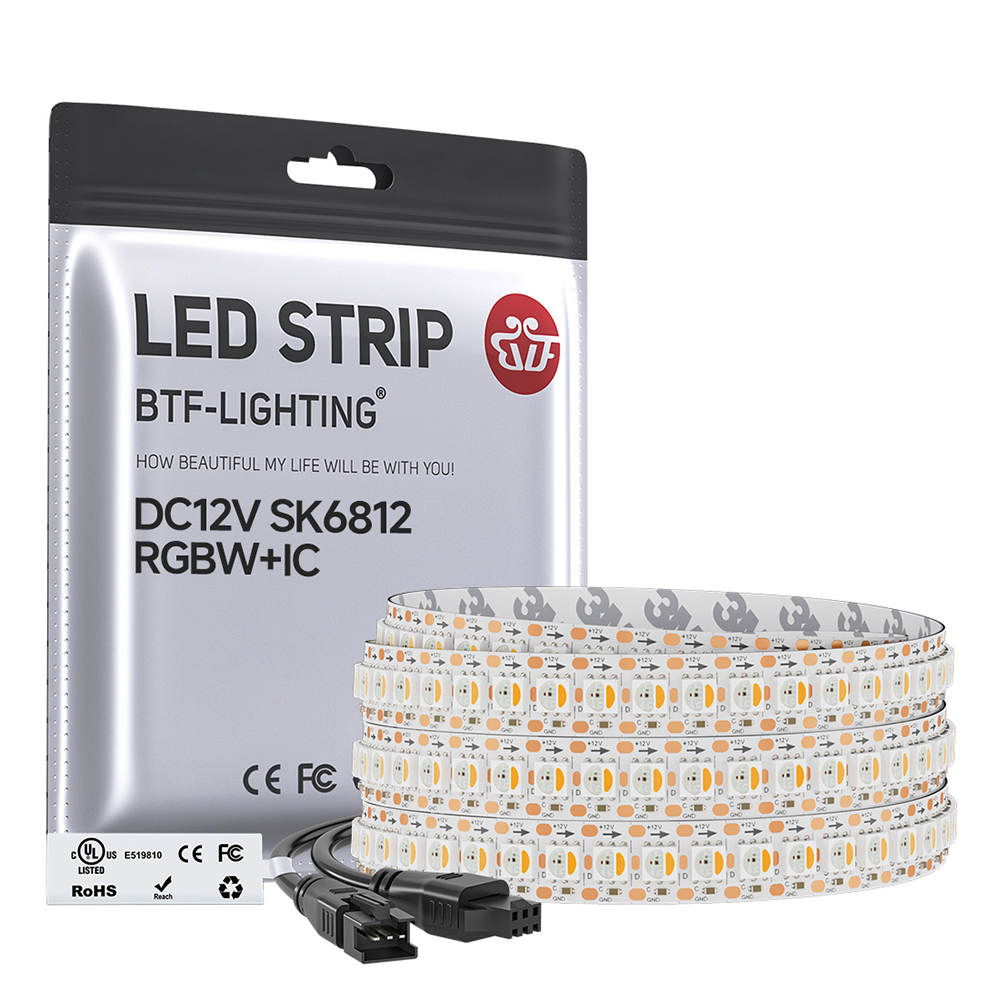
To solve this, our manufacturing process utilizes 3-Ounce (105µm) rolled-annealed copper FPC substrates coupled with 24V DC circuit topologies. By doubling operating voltage from 12V to 24V, operating current is halved for the equivalent wattage (P = V × I), effectively reducing resistive heat losses by 75% (P_loss = I² × R). Furthermore, for individually addressable pixel protocols, we recommend the WS2815 IC chip over legacy WS2812B. The WS2815 operates natively at 12V DC and features a dual-signal backup data line (Data + Break-resume Data). If a single pixel sustains physical damage during installation in an Aiwo commercial site, downstream signal transmission remains unbroken.